
Viessmann boiler installation starts with the exact model and the connected heating and hot-water arrangement. Share the equipment details and your project or concern with SkyLimit Heating and Gas. Confirm the accepted scope and appointment availability before booking.
Call 778-892-5119 or request an assessment.
Gas smell or a CO alarm? Leave with everyone, including pets. From outside call 911 or FortisBC at 1-800-663-9911. Do not restart equipment, operate switches or use a phone indoors. Do not re-enter until professionals say it is safe.
Viessmann Boiler Installation: What a High-Quality Install Includes
Viessmann systems are often chosen for quiet operation, efficiency, and strong controls. To get those results in a real home, the installation must deliver these outcomes:
- Right-sized equipment based on actual demand, not the old unit’s label.
- Even zone delivery, so one area doesn’t lag behind the rest of the season.
- Predictable pressure conditions that reduce top-ups and air entry.
- Reliable condensate routing (condensing models) that doesn’t clog, backflow, or become “invisible” to service.
- Airflow support via correct venting and intake routing.
- Verified start-up and final checks before handover.
- Service-friendly layout so annual maintenance is straightforward, not a wrestling match.
Keyword gap (brand-specific, natural use): We build a service-ready Viessmann boiler installation layout so future maintenance can be done properly with access to key components, isolation points, and inspection areas.
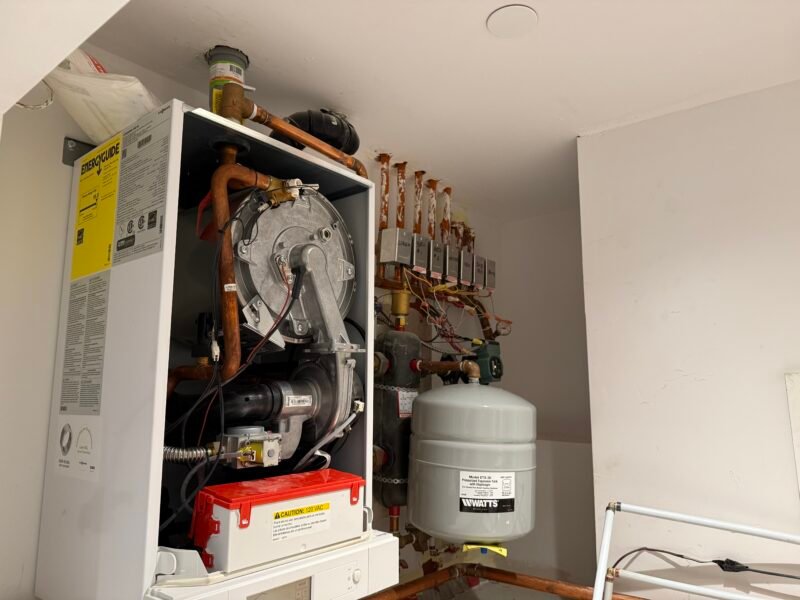
Before Installation: Planning That Prevents Callbacks
Great installs are planned before a tool comes out. We start by understanding the home, the zones, and the distribution type (baseboard, radiators, radiant floor, or a mix). That’s how you avoid the classic post-install complaints: cold zones, short cycling, noise, and inconsistent performance.
Replacement vs New Installation
Replacement installs require extra attention to system condition. If the loop has debris, trapped air, or long-term pressure issues, the new boiler may inherit problems unless they’re addressed. New installs involve more design decisions about zoning and distribution. Either way, we plan for performance and service access.
Sizing and Heat Demand (How We Reduce Short Cycling)
Oversizing is one of the most common reasons new boilers feel “busy” and inefficient. The boiler fires hard, shuts off quickly, then repeats. That pattern wastes energy and adds wear. Undersizing creates comfort gaps in colder weather. We size the system based on your home’s demand and your zone layout.
Keyword gap: We aim to prevent short cycling on Viessmann boiler installation through correct sizing and flow/zoning planning that supports longer, smoother run times.
Multi-Zone Hydronic Design (Where Comfort Is Won)
Many Viessmann installs serve multi-zone homes (upstairs/downstairs, suites, additions, radiant + baseboard). Zone design affects comfort more than people realize. We confirm how zones are controlled (valves vs pumps), how each zone responds today, and what improvements are needed for balanced heat delivery.
Keyword gap: We plan Viessmann boiler installation for multi-zone hydronic heating so zones respond cleanly without one zone “stealing” flow from the rest.
Water Quality and System Condition (Especially on Replacements)
Older systems can carry sludge and debris that restricts flow and stresses circulators. That reduces heat transfer and can lead to noisy operation and uneven heating. We assess evidence of contamination and recommend protection steps when warranted.
Keyword gap: In many older systems, flushing the hydronic system before Viessmann boiler replacement can protect the new boiler and improve overall circulation. We recommend it based on evidence, not as a default add-on.
Permits, Inspections, and Code-First Safety
A Viessmann boiler installation is safety-critical work because it involves gas, venting, condensate (for condensing systems), and hydronic pressure. Even if a home “seems fine,” an installation that ignores code expectations can create long-term risk: failed inspections, resale complications, warranty headaches, and unsafe operating conditions. That’s why we treat compliance as part of quality, not a separate extra.
Depending on your location and project scope, permits and inspections may be required for gas appliance work and venting. We plan installations to meet local requirements and follow professional safety practices from day one. For official BC guidance, see Technical Safety BC. For efficiency education, see ENERGY STAR.
Installation Day: Step-by-Step Process
Installation day should feel organized: clean layout, correct connections, and a start-up process that confirms performance. The goal is a system you can rely on, not a system you have to constantly “tweak.”
Step 1: Mechanical Room Setup and Clean Layout
We install with service access in mind. That means clear space for panels, clean piping runs, proper supports, and wiring that is neat and traceable. A tidy install reduces leak risk, reduces vibration, and makes future troubleshooting faster.
Step 2: Hydronic Piping and Flow Strategy
Hydronic heating depends on flow. If the flow is inconsistent, you’ll see cold zones, noise, and cycling problems even with a brand-new boiler. We install and configure the system to support consistent circulation and balanced zone delivery.
Step 3: Condensate Routing and Neutralizer (Condensing Models)
Condensing systems produce condensate that must drain reliably. Poor routing is a common cause of nuisance issues later. We route the drain for long-term reliability and keep it inspectable.
Keyword gap: We include condensate neutralizer setup for Viessmann condensing boiler, where appropriate, so the condensate pathway remains reliable and the installation stays professional long-term.
Step 4: Venting and Air Intake
Airflow support is critical. We install venting and intake routing that remains reliable over time, with terminations positioned to reduce restriction risks (debris, snow/ice, insects). This is a common difference between a smooth-running system and repeated shutdown complaints.
Step 5: Gas and Electrical Integration
We verify safe gas connection practices and ensure electrical and control integration supports zoning and normal operation. Each thermostat call is checked so zones respond the way they should.
Commissioning and Final Verification (Proof Stage)
This is where “installed” becomes “ready.” A premium boiler deserves a proper start-up process. We fill and pressurize the system, purge air thoroughly, confirm zones respond, and perform final checks before handover.
- Fill and pressurize correctly
- Purge the air so circulation is quiet and consistent
- Confirm zone-by-zone response
- Check cycling patterns and adjust for smoother operation
- Re-check for leaks once warm
- Confirm condensate drainage (condensing models)
- Confirm venting/intake support
- Final run test before leaving
After Installation: Walkthrough, Warranty, and Next Steps
After your Viessmann boiler installation, you should receive a clear walkthrough. You should understand what’s normal, what’s not, and what maintenance looks like going forward.
What You Receive After Installation
- Summary of work completed and checks performed
- Basic operating guidance for your zones
- What warning signs matter (leaks, repeated shutdowns, unusual sounds)
- Recommendation for annual maintenance via Viessmann Boiler Service
- Documentation summary so you’re not guessing later
Workmanship Warranty
We provide a workmanship warranty on the installation (based on your company policy). The manufacturer’s warranty is separate and applies to equipment terms. A workmanship warranty is meaningful when the installation is clean, serviceable, and verified at start-up.
Before vs After Installation (What Most Contractors Don’t Explain)
Homeowners usually care about two things: “How disruptive will this be?” and “How do I know it was done properly?” A professional installation should answer both clearly.
Before Installation (Preparation Tasks)
- Site protection and planning: protect floors and access points, plan a safe removal route (replacement jobs), and confirm mechanical room access.
- System assessment: confirm zoning layout, distribution type (baseboard/radiant/radiators), and any known problem zones.
- Water quality reality check: assess debris/sludge risk and decide whether flush/filtration should be recommended based on evidence.
- Venting/intake route planning: confirm a logical path that stays serviceable and avoids common restriction risks.
- Condensate routing plan (condensing models): confirm a drain route with proper slope and long-term inspectability.
After Installation (Handover Tasks)
- Walkthrough: explain what’s normal (sounds, warm-up timing) and what is not (leaks, repeated shutdowns, new loud noises).
- Zone confirmation: verify each zone responds and heats as expected.
- Service plan: recommend the timing of your first maintenance visit.
- Documentation: provide a clear summary of installation and verification steps.
What Impacts Viessmann Boiler Installation Cost (Without Guessing Numbers)
Customers often ask for a quick price, but the honest answer is: cost depends on the system, not just the boiler. A high-quality installation quote typically changes based on:
- Replacement vs new install: removal, disposal, and system correction work can add scope.
- Number of zones: multi-zone systems take more verification time and often need more balancing work.
- Distribution type: baseboard vs radiant vs mixed systems affects design complexity.
- Venting/intake routing difficulty: longer or more complex routing increases labour and materials.
- Condensate routing/neutralizer needs: Condensing models require reliable drainage and service access.
- System condition: older loops with debris/air problems may justify flush/filtration recommendations.
Common Viessmann Installation Mistakes (And How We Prevent Them)
Most post-install complaints are predictable. They happen when installers rush the details that control hydronic comfort. Common issues we prevent include:
- Oversizing: leads to short cycling and higher wear. We size for real demand and zone design.
- Poor service access: tight, messy layouts lead to incomplete future maintenance. We build a service-ready layout.
- Ignoring contamination risk: debris in older loops can restrict flow and stress components. We recommend protection based on evidence.
- Weak venting/intake planning: unstable airflow support can cause shutdowns under load. We strive for stability and inspectability.
- Rushed commissioning: skipping purge and zone verification leads to cold zones and noise complaints. We verify performance before handover.
Your First 30 Days After Installation (Quick Owner Checklist)
For the first few weeks, pay attention to simple signals. These checks help you catch small issues early:
- Confirm all zones heat consistently (no “one room always cold” pattern).
- Watch for recurring pressure drops or frequent top-ups.
- Listen for persistent gurgling or banging noises (brief purge noise can be normal, chronic noise is not).
- Check for visible moisture or staining near the boiler, valves, or condensate drain line.
- If you see repeat shutdowns or lockouts, stop resetting and use Viessmann Boiler Repair for diagnosis.
Licensed & Insured
Request current contractor licence and insurance details before arranging work. Boiler installation is safety-critical work involving gas, venting, and hydronic pressure. Professional licensing and insurance protect you and your property.
FAQ: Viessmann Boiler Installation
1) What affects the Viessmann boiler installation cost?
System complexity: number of zones, distribution type, piping upgrades, venting routes, condensate setup (condensing models), gas/electrical modifications, and whether system cleaning/protection is recommended.
2) How long does installation take?
Time depends on replacement vs new install and overall complexity. Final verification and start-up checks are part of doing it right.
3) Is Viessmann a good choice for baseboard heating?
Yes, when zone design and flow strategy are planned correctly.
4) Is Viessmann suitable for radiant floor heating?
Yes, when the system is designed correctly and zones are balanced for consistent comfort.
5) When should I schedule the first annual service?
After installation, annual maintenance helps keep performance consistent. Start here: Viessmann Boiler Service.
Related Brand Installations
- Navien Boiler Installation
- Bosch Boiler Installation
- IBC Boiler Installation
Areas We Work for Boiler Installation
We install boilers across Metro Vancouver and the Fraser Valley. Installation scheduling can depend on system complexity (zones, venting route, and condensate drainage for condensing boilers).
Metro Vancouver: Vancouver • Burnaby • Coquitlam • Port Coquitlam • Port Moody • New Westminster
North Shore: North Vancouver • West Vancouver
South of Fraser: Surrey • Delta • Ladner • Tsawwassen • White Rock • Langley
Fraser Valley: Maple Ridge • Pitt Meadows • Mission • Abbotsford
Ready to Book a Site Assessment?
If you’re considering a Viessmann boiler installation, the fastest way to avoid mistakes is a quick assessment of zones, venting/condensate routing, and mechanical-room access. If you’re currently experiencing shutdowns or repeated lockouts, start with Viessmann Boiler Repair so the root cause is confirmed and corrected first.
Keep the Design Decisions and Commissioning Record
Ask for the design decisions and relevant commissioning results for the actual installation. The handover should distinguish completed checks from outstanding work and explain which connected heating and hot-water functions were verified. Equipment selection alone is not a complete record of the installation.
1) The Hidden Comfort Drivers: Flow, ΔT, and Zone Balance
Hydronic comfort is not only about the boiler. It’s about how heat is delivered through the loop. When flow is mismatched or zones are unbalanced, homeowners feel it immediately: one area heats fast while another lags, the system gets noisy, and the boiler may short-cycle. During a Viessmann boiler installation, we pay attention to the “hidden drivers” that most contractors don’t explain:
- Flow suitability: the system must move water consistently through each zone, so heat transfer stays predictable.
- Temperature spread (ΔT): We look for healthy heating performance patterns that indicate proper heat transfer, not “hot supply and weak return” conditions that hint at flow issues.
- Zone balance: We confirm that zoning control (valves or pumps) allows each zone to receive heat without one zone dominating the system.
Keyword gap (natural use): This is a major reason we design Viessmann boiler installation for multi-zone hydronic heating differently than a basic one-zone setup. Multi-zone requires verification, not assumptions.
2) Service-Ready Layout Is a Performance Feature, Not a “Nice to Have.”
Most installers talk about performance but forget serviceability. A messy mechanical room layout often leads to incomplete future maintenance, rushed diagnostics, and shortcuts. That eventually becomes a reliability issue. We build a service-ready Viessmann boiler installation layout so a technician can actually access key components, isolate sections properly, and perform full annual maintenance without turning your mechanical room into a disaster zone.
Service-ready layout supports:
- Cleaner troubleshooting (less time guessing, more time verifying)
- Better annual maintenance quality
- Lower risk of accidental damage during future service
- Faster response when repairs are needed
3) Condensing Install Detail Most People Miss: Condensate Reliability Over Time
Condensing boilers rely on a condensate pathway that stays clear and stable. A drain that works “today” can still be a future problem if it’s routed poorly or hard to inspect. We route condensate for long-term reliability and clear access, and we include a condensate neutralizer setup for Viessmann condensing boiler where appropriate, so the installation remains professional and serviceable long-term.
4) What You Receive After Installation: A Real Commissioning Summary
Instead of vague reassurance, you should receive a summary that proves the system was started correctly. After your Viessmann boiler installation, we provide a clear commissioning-style handover that includes:
- Verified start-up confirmation: system runs cleanly under real demand
- Zone verification notes: each zone responds correctly and delivers heat
- Pressure stability observations: no abnormal swings once warm
- Condensate and venting checks: condensing drain and terminations verified
- Next-step service plan: when to book your first annual visit through Viessmann Boiler Service
Keyword gap (natural use): This is why we follow a commissioning checklist for Viessmann boiler installation and treat the final run test as non-negotiable. It’s the proof stage that prevents callbacks.
Mini Case Example: What a “Good Install” Fixes That the Old Boiler Never Could
Here’s a common real-world scenario: a home with upstairs/downstairs zones where the upstairs always lagged. The old boiler “worked,” but comfort was inconsistent, and the system made noise. In many cases, the root problem isn’t the boiler brand. It’s zoning balance, air management, and circulation conditions. A high-quality Viessmann boiler installation addresses that by confirming zone response, stabilizing flow conditions, purging air properly, and verifying performance under load. The result is what homeowners actually want: even heat, quieter operation, and fewer winter surprises.
If you’re already dealing with recurring lockouts or shutdowns before replacement, don’t guess. Start with Viessmann Boiler Repair so the real cause is identified, then install with confidence.
Helpful references: Viessmann Canada and ENERGY STAR.
Keep the correct Viessmann documents with the equipment
Use the Viessmann Canada download library to identify the installed model’s documents. A product-family name is not sufficient for applying another generation’s service or installation instructions. Confirm Canadian equipment and project requirements for the actual work.
Content, links and model-scope wording reviewed October 16, 2026. No completed project or technician review is claimed.
FOLLOW SKYLIMIT IN GOOGLE Add SkyLimit as a Preferred Source so Google can highlight our BC gas-fireplace and HVAC guidance more often for you in Top Stories, AI Overviews and AI Mode. If the button does not load, open Google Preferred Sources settings.Make SkyLimit a Preferred Source