
VANCOUVER GAS FIREPLACE INSTALLATION
Planning a gas fireplace installation in Vancouver? SkyLimit can assess the opening, room, gas supply, approved vent route, electrical needs, City permit path and finish-work boundaries before equipment is ordered. We plan inserts, built-in and linear fireplaces, compatible replacements and selected freestanding units for detached homes, townhomes and strata properties.
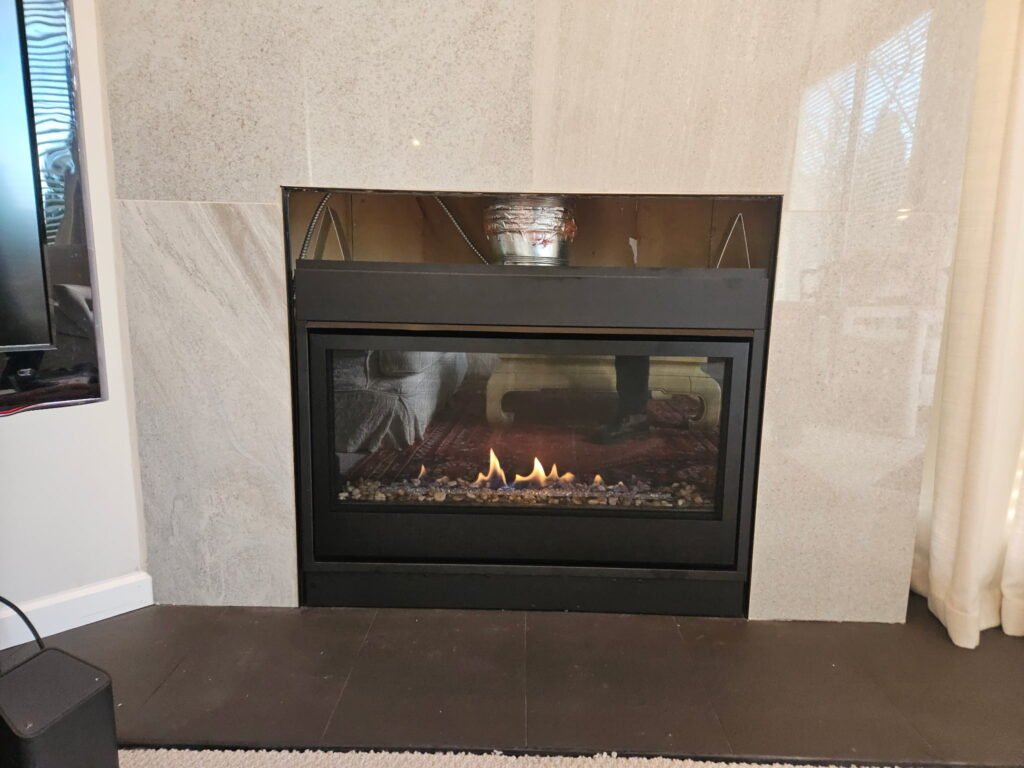
Send four items for a useful first review: a full photo of the fireplace or proposed wall, the existing appliance rating plate if there is one, the control or remote area, and a short description or video of the current startup sequence. We can then identify the next practical step and arrange a site-specific assessment.
- Site-specific planning
- Clear written scope
- Permit and strata coordination
Gas Fireplace Installation Vancouver: Quick Answer
A Vancouver installation should begin with the property, not a catalogue. Confirm the fireplace type, certified clearances, vent route, gas capacity, electrical needs, permit authority, strata requirements and finishing responsibilities first. That assessment determines which models fit, what other trades are needed and what belongs in the written quote.
For a regional overview, visit our gas fireplace installation service page. If the existing unit is malfunctioning rather than unsuitable, start with gas fireplace repair in Vancouver so a repairable control or ignition problem is not mistaken for a replacement project.
Which Gas Fireplace Type Fits Your Vancouver Home?
The right category depends on the existing opening, wall construction, vent path and intended use. Inserts usually suit masonry fireplaces, while built-in or zero-clearance units suit framed walls. Linear fireplaces need early heat-management planning, and replacements must be compatible with the existing opening and approved vent system.
| Fireplace type | Typical fit | Questions to resolve |
|---|---|---|
| Direct-vent gas insert | Existing masonry wood-burning fireplace | Firebox dimensions, enclosure condition, approved liner or vent system, gas route and surround fit |
| Built-in or zero-clearance fireplace | New feature wall, renovation or new construction | Framing, clearances, vent termination, service access, non-combustible materials and finishing sequence |
| Linear gas fireplace | Contemporary wall or media-wall design | Heat management, TV and mantel location, wall depth, wiring, access panels and finish materials |
| Compatible replacement | Older gas fireplace being removed | Opening dimensions, vent approval, gas capacity, removal, trim coverage and repair of surrounding finishes |
| Freestanding gas stove | Room where a framed fireplace is not preferred | Certified clearances, floor protection, traffic path, gas supply and approved vent route |
For energy comparisons, Natural Resources Canada recommends using the EnerGuide Fireplace Efficiency rating rather than relying on appearance or maximum input alone. The selected model must also be certified for use in Canada and installed according to its certified instructions.
What Must Be Checked Before a Fireplace Is Ordered?
Ordering too early can lock the project into an appliance that does not fit the opening, vent route or finishing plan. A pre-installation review should confirm the exact model, fuel, certified components, gas load, power requirements, clearances, service access, permit path and responsibilities of every participating trade.
- New installation, replacement, insert or conversion from a solid-fuel fireplace
- Room size and whether the goal is zone heat, occasional comfort or visual ambience
- Fireplace opening, framed cavity, chase, chimney and exterior termination conditions
- Existing gas service, pipe route and connected load
- Electrical power for ignition, blower, lighting, remote receiver or controls
- Television, mantel, cabinetry and combustible-finish locations
- Framing, non-combustible board, stone, tile, paint and final finishing responsibilities
- Strata, property-manager or building-envelope approval
A written proposal should name the appliance and distinguish regulated gas work from electrical, carpentry, masonry and decorative finishing. That separation makes quotes easier to compare and reduces expensive changes after framing begins.
How Does the Installation Process Work?
A reliable project follows a coordinated sequence from assessment to handover. Site conditions and the manufacturer’s instructions determine the details, but the usual path is assessment, model and scope confirmation, permits and approvals, site preparation, gas and vent work, appliance connection, commissioning, inspection coordination and operating guidance.
- Assess the site: Review the proposed location, opening, room, exterior or chimney conditions, gas route, electrical access and construction constraints.
- Confirm the appliance: Record the exact model, options, control package and every required certified vent component.
- Define the scope: Identify removal, gas piping, venting, electrical work, framing, non-combustible materials, finishing and cleanup responsibilities.
- Plan approvals: Determine the City or TSBC gas-permit route and any building, mechanical, electrical or strata requirements before regulated work begins.
- Install and connect: Protect the work area, complete approved gas and vent work, place and level the unit, and connect applicable controls and power.
- Commission and hand over: Verify the ignition and shutdown sequence, flame response, controls and applicable safety checks; explain operation and maintenance documents.
A straightforward compatible replacement may need fewer visits than a new built-in or media-wall project. Product availability, permit processing, strata review, inspections and the sequence of other trades determine the full schedule, so a universal completion promise would be misleading.
Who Issues Gas Permits in Vancouver?
The City of Vancouver issues many local gas permits, while Technical Safety BC handles installations outside the City’s stated pressure and connected-load limits. The City says all new natural-gas installations and alterations require a gas permit, and regulated work may begin only after the applicable permit is issued.
The City’s current scope includes fully detached homes on a single meter at 2 psig or less and other buildings at 2 psig or less where total connected load is 409,600 BTU/h (120 kW) or less. Higher-pressure or higher-load installations are directed to Technical Safety BC. Review the current City of Vancouver gas-permit requirements for the property.
The City also states that the applicant must have the required business licence and be a licensed gas contractor or an eligible homeowner. Owners of strata units, non-strata duplexes and homes used for business cannot use the City’s homeowner exception. Depending on the project, building, mechanical or electrical permits may also apply.
Can a Wood-Burning Fireplace Be Converted to Gas?
Some masonry fireplaces can accept a certified gas insert, but the original enclosure cannot be assumed suitable. The opening, chimney, combustible clearances, appliance certification and approved vent system must be reviewed. If the firebox or solid-fuel enclosure needs modification, current TSBC safety-order requirements become especially important.
Technical Safety BC’s July 30, 2026 safety order addresses gas appliances installed into existing solid-fuel fireplaces. It states that when a masonry firebox or solid-fuel enclosure must be modified to accommodate the insert, a certified zero-clearance kit specified for that insert must first be installed. Read the TSBC safety order for gas appliances in solid-fuel fireplaces.
This is not the same as placing an unapproved burner or freestanding appliance inside an old wood-burning firebox. The exact proposed insert and enclosure must be assessed before demolition, cutting or ordering begins.
What Changes in a Condo or Strata Property?
A strata installation requires both technical planning and written building approval. The appliance may sit inside the unit, while the exterior wall, roof, chimney, vent termination or gas distribution system is common property. Confirm the alteration path before purchasing equipment or scheduling work that affects the envelope.
- Check bylaws and obtain the required strata or property-manager approval.
- Confirm who controls the exterior wall, roof, chimney and vent termination.
- Ask whether a building-envelope consultant or engineer must review penetrations.
- Confirm contractor-document, parking, loading, elevator and work-hour requirements.
- Define protection, cleanup and restoration responsibilities for common property.
- Preserve access for future maintenance and component replacement.
Do not select a unit from interior measurements alone. A rejected vent location or inaccessible service panel can make an otherwise attractive fireplace impractical for the building.
What Determines Gas Fireplace Installation Cost?
Cost is driven by the appliance and the work needed to install it correctly, not by the city name alone. Model and options, vent route, gas piping, removal, permits, electrical work, access, framing and finish materials can change the scope substantially, so a site-specific written quote is more useful than a generic price.
- Insert, built-in, linear, replacement or freestanding appliance
- Exact trim, media, blower, lighting, remote and control package
- Length and complexity of the certified vent route
- Gas-line distance, access and available capacity
- Removal and disposal of the old appliance
- Framing, non-combustible board, tile, stone, mantel or cabinetry
- Electrical work and coordination with other trades
- Permit fees, inspections and strata-document requirements
- Parking, elevator bookings, stairs and occupied-home protection
Use our gas fireplace installation cost guide to understand quote categories, then request a written scope for the actual property. The proposal should show what is included, excluded and dependent on another trade.
Should You Repair or Replace the Existing Fireplace?
A non-working fireplace does not automatically need replacement. Remote, receiver, thermopile, ignition, blower and control faults may be repairable when compatible parts remain available and the installation is otherwise acceptable. Replacement is more reasonable when reliability, parts availability, vent compatibility or renovation goals make repair impractical.
If the unit will not start, review why a gas fireplace will not turn on. Intermittent shutdowns may relate to the issues covered in gas fireplace shutdown troubleshooting. For a working unit that needs cleaning and performance checks, book gas fireplace service in Vancouver.
Can a Television Go Above a Gas Fireplace?
Sometimes, but the selected fireplace’s certified clearances and heat-management instructions must control the design. Television recesses, mantels, shelves, wiring, finishing materials, ventilation details and service access should be coordinated before framing closes. A generic diagram or photo from another model cannot approve the proposed wall.
Include the television and mantel in the first assessment. The fireplace requirements can then be coordinated with the designer, framer, electrician and finish contractor. A visually clean media wall still needs compliant clearances and practical access to components.
What Happens During Commissioning and Handover?
Commissioning confirms that the completed fireplace operates as an installed system. The technician should verify applicable gas, venting, ignition, flame, control and shutdown conditions; confirm decorative media and access requirements; and explain normal operation, shutoff information, maintenance documents and the project’s permit or inspection path.
- Applicable gas-system integrity or pressure checks
- Certified vent components, assembly and termination conditions
- Ignition sequence, burner response and shutdown
- Remote, thermostat, wall switch, fan and lighting functions
- Log, glass, liner or decorative-media placement
- Required clearances and service access
- Operating instructions and appliance shutoff information
- Applicable permit, inspection and manufacturer documents
LOCAL SERVICE AREA
Which Vancouver Neighbourhoods Do We Serve?
SkyLimit plans gas fireplace installation throughout the City of Vancouver, subject to appointment availability and project fit. Tell us the neighbourhood, property type and access conditions when you call. Those details help distinguish a detached-home insert from a downtown strata replacement or a renovation involving several coordinated trades.
- Downtown and Yaletown
- West End
- Kitsilano and Fairview
- Mount Pleasant
- Grandview-Woodland
- Hastings-Sunrise
- Renfrew-Collingwood
- Kensington-Cedar Cottage
- Riley Park and South Cambie
- Kerrisdale and Arbutus Ridge
- Dunbar-Southlands and West Point Grey
- Oakridge, Marpole and Sunset
People searching for a “gas fireplace installer near me” usually need local access planning more than repeated neighbourhood keywords. Parking, loading, elevator bookings, common-property rules and the vent termination can matter as much as distance.
Is a FortisBC Fireplace Rebate Available?
There is no universal $250 rebate for every fireplace installation. FortisBC currently presents a $250 fireplace add-on only within specific qualifying connect-to-gas or wall-furnace programs, subject to eligible equipment, customer, property, timing and application rules. Confirm the active program before choosing equipment or relying on an incentive.
Review the current FortisBC connect-to-gas rebate conditions. A quote can identify the fireplace and installation details, but FortisBC determines final eligibility.
What Four Things Should You Send Before Calling?
Four simple items make the first conversation faster and more accurate: a full photo of the fireplace or proposed wall, a clear rating-plate photo, a photo of the wall switch, receiver or remote area, and a description or short video showing the startup sequence and any failure.
- Full photo: Include the floor, mantel, nearby wall, opening and surrounding finish.
- Rating plate: Photograph the manufacturer, model and serial information without dismantling the appliance.
- Control area: Show the remote, receiver, wall switch, thermostat and accessible lower control compartment.
- Startup sequence: Explain what happens from the first command through ignition, burner operation or shutdown.
Also mention whether the property is detached, a townhouse or a strata unit; whether the project includes a television or custom finish; and whether the existing fireplace burns wood or gas.
Gas Fireplace Installation Vancouver FAQ
These answers cover the decisions Vancouver homeowners most often need before requesting an assessment. Final requirements still depend on the exact appliance, property, gas system, vent route and authority having jurisdiction. Treat them as planning guidance, then confirm the scope in writing for the address and selected model.
Do I need a gas permit to install or replace a fireplace in Vancouver?
The City states that all new natural-gas installations and alterations require a gas permit. The City or Technical Safety BC may be the issuing authority depending on the building, delivery pressure and total connected load. Other permits can apply when the project changes electrical, mechanical or building work.
Can existing fireplace venting be reused?
Only when the new appliance’s certified instructions permit that vent system and its type, size, configuration and condition are acceptable. A similar diameter or appearance does not establish compatibility.
Can a gas fireplace be installed in a Vancouver condo?
It may be possible, but the project normally needs a licensed contractor and written strata approval when it affects common property, an exterior wall, roof, chimney, gas distribution or vent termination. Confirm the approval path before buying the fireplace.
Is an insert the same as a built-in fireplace?
No. An insert is designed for a suitable existing fireplace enclosure, commonly a masonry wood-burning fireplace. A built-in or zero-clearance model is installed within a framed assembly created for that certified appliance.
Will a gas fireplace operate during a power outage?
It depends on the ignition and control system. Some models offer limited operation or battery backup, while fans, lights or other functions may be unavailable. Check the exact manufacturer’s instructions before selecting a unit for outage use.
Can I purchase the fireplace before the assessment?
It is safer to confirm compatibility first. The model must be approved for Canada, fit the opening or framed cavity, use an acceptable vent route, match the gas and electrical conditions, and include all required certified components.
How long does installation take?
The appliance work may be shorter for a compatible replacement than for a new built-in fireplace. Permit processing, product availability, strata approval, inspection scheduling and framing, electrical or finish work determine the complete project timeline.
Who Reviewed This Installation Guide?
SkyLimit Heating and Gas Ltd. owns the content, while technical reviewer details remain a controlled publishing field. The permit, conversion-safety, efficiency and rebate statements were checked against current City of Vancouver, Technical Safety BC, Natural Resources Canada and FortisBC information on September 29, 2026.
Technical reviewer: [ADD FULL NAME AND CURRENT BC GAS QUALIFICATION AFTER REVIEW]
Permit requirements and incentive programs can change. Recheck the official source and the selected appliance instructions before regulated work or a rebate application.
PLAN THE NEXT STEP
Request a Vancouver Installation Assessment
Send the four photos or details above and describe the result you want. SkyLimit can assess the opening or wall, vent route, gas and electrical conditions, permit path, strata constraints and finishing boundaries, then provide a written project scope for the work it can undertake at the property.