
Gas Fireplace Won’t Turn On? Common Causes and Professional Solutions
When your gas fireplace won’t turn on, the cause may be as simple as dead remote batteries or as technical as a weak thermopile, dirty pilot assembly, failed ignition module, damaged wall switch, or gas-control problem. This guide helps Vancouver homeowners perform a few safe checks, understand what may have failed, and know when to stop troubleshooting and call a licensed gas technician.
Quick Answer
If your gas fireplace is not lighting, first confirm that the remote or thermostat is calling for heat, the batteries are fresh, the wall switch is on, and the pilot is present where your model uses a standing pilot. Do not remove sealed panels, bypass safety controls, force a gas valve, or attempt internal electrical testing without proper training. If you smell rotten eggs, hear hissing, see soot, or notice delayed ignition, leave the area and follow FortisBC emergency guidance rather than continuing to troubleshoot.
What “Won’t Turn On” Can Actually Mean
Homeowners often use one sentence to describe several very different failures. Identifying the exact symptom helps narrow the likely cause before any parts are replaced. A fireplace that does absolutely nothing is not the same problem as one that clicks, lights briefly, or has a pilot but no main flame.
Remote display works, fireplace does not
Pilot is out
Pilot is on, burner stays off
Repeated clicking
Flame starts then shuts down
Blower works but no flame
Intermittent operation
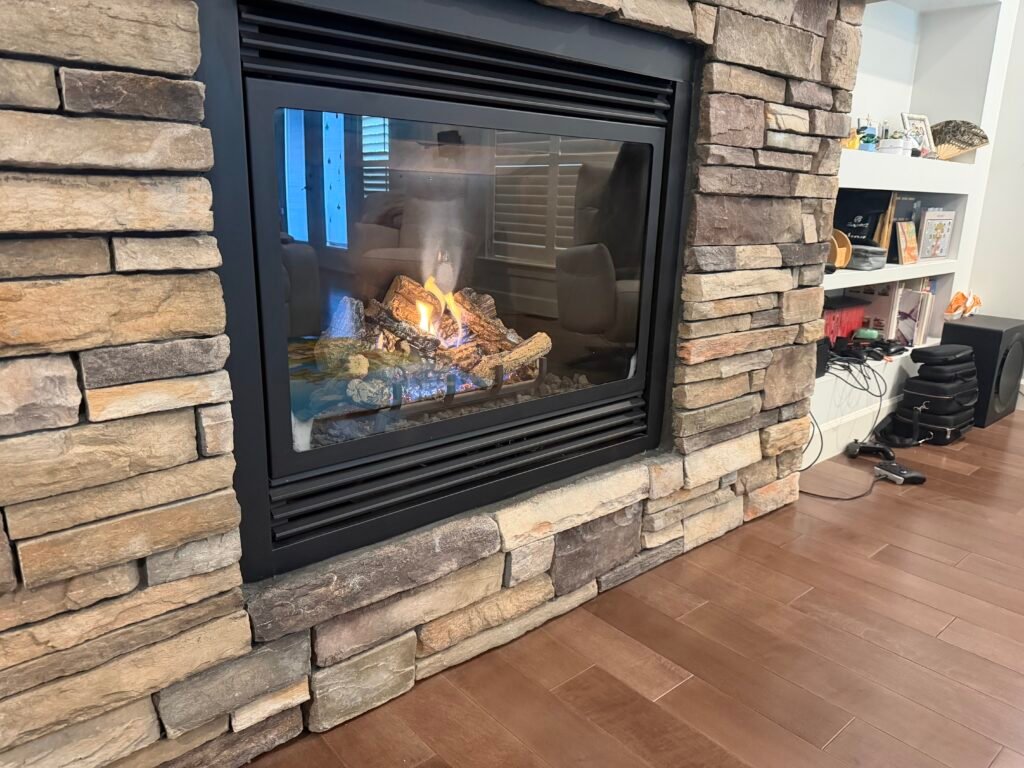
Why Your Gas Fireplace Won’t Turn On
Modern gas fireplaces combine gas controls, low-voltage switches, flame-sensing devices, receivers, ignition components, and venting safeguards. One weak link can prevent the appliance from starting. These are the causes we commonly investigate during gas fireplace repair in Vancouver.
Dead Remote or Receiver Batteries
Many fireplaces use batteries in both the handheld remote and the receiver located near the firebox controls. A remote screen may still appear normal even when the batteries are too weak to send a reliable signal. Corrosion inside a battery tray can also interrupt the circuit.
Wall Switch or Thermostat Failure
A worn wall switch, loose low-voltage connection, damaged thermostat, or broken wire can stop the call for heat from reaching the control system. The fireplace may be mechanically sound but never receive the instruction to ignite.
Pilot Light Problem
On standing-pilot models, the pilot must be stable and properly positioned. Dust, lint, oxidation, weak gas flow, or a partially restricted pilot orifice can create a small or unstable flame that cannot reliably heat the safety sensor.
Weak Thermopile or Thermocouple
These flame-sensing components generate a small electrical signal when heated by the pilot. As they age, their output can fall below the level needed to keep the pilot valve open or energize the main burner circuit. Proper diagnosis requires measurement under operating conditions, not guesswork.
Ignition Module or Spark Failure
Electronic-ignition fireplaces depend on a module, electrode, wiring, and grounding path. A failed module, cracked ignitor, loose connector, moisture, or poor ground may cause no spark, weak spark, or repeated clicking without ignition.
Receiver or Control Board Problem
Remote receivers and integrated control boards can fail after age, heat exposure, battery leakage, or electrical disturbance. Symptoms may include intermittent starts, unresponsive controls, unexpected shutdowns, or operation only in manual mode.
Gas Valve or Gas Supply Issue
A closed appliance shutoff, supply interruption, regulator issue, or failed gas valve can prevent ignition. Gas-pressure and valve testing should be performed by a qualified gas technician using appropriate instruments.
Dirty Burner or Incorrect Airflow
Debris around the burner, misplaced logs, blocked ports, renovation dust, or venting problems can interfere with ignition and flame stability. Log placement matters because the manufacturer designs a specific path for gas and flame movement.
Safety Lockout
Some fireplaces stop retrying after several failed ignition attempts. The lockout protects the appliance from repeatedly releasing gas without a proven flame. Reset instructions vary by manufacturer, so follow the model-specific reset procedure in the manufacturer’s manual.
Pilot Light Is On but the Gas Fireplace Burner Won’t Light
A lit pilot does not prove that the main burner can receive and complete a heating command. First identify the fireplace’s model and control system. A standing-pilot millivolt fireplace and an electronic IPI or CPI fireplace can show the same symptom while requiring different diagnostic tests. Do not order a valve or sensor from this symptom alone.
Standing-pilot millivolt fireplaces
The technician may need to evaluate pilot flame contact, thermopile performance under operating conditions and the switch, wiring, receiver and valve command circuit. A pilot that stays lit is not proof that every part of that circuit works. Read the gas fireplace thermopile problems guide for the related symptoms. The applicable model manual controls test methods and acceptable readings.
Electronic fireplaces with a pilot-only symptom
On an electronic fireplace, identify whether the pilot is running in continuous-pilot mode or appeared during an unsuccessful startup attempt. Report any beeps, continued sparking, error indication or shutdown. A technician then follows the model’s control sequence rather than applying a millivolt-system diagnosis. Use the gas fireplace receiver problems guide when the command or control response is unclear.
What should you tell the technician?
Send the rating plate, a full fireplace photo and a description of what happens after the heating command. These observations help prepare for diagnosis:
- Does the pilot remain steady, change or go out?
- Does the remote display change, beep or show an error?
- Does sparking continue after the pilot appears?
- Did the problem follow a battery change, power interruption or building gas work?
Follow only the user steps in your exact appliance manual. Do not jumper terminals, bypass controls, force the valve or repeatedly attempt ignition when operation is abnormal. Regency’s fireplace care guidance also directs thermopile and thermocouple replacement to an authorized, factory-trained dealer; its procedures must not be assumed to apply to other models.
If the pilot remains lit but the burner still does not start after the permitted user checks, request gas fireplace repair. Review gas fireplace gas valve problems to understand why valve replacement requires evidence from testing.
Will Your Gas Fireplace Work During a Power Outage?
Some gas fireplaces can provide heat without household electricity; others need the approved battery backup or a powered component to operate. Check the exact appliance manual. A gas supply alone does not confirm that ignition, controls and any required powered venting can function.
Start with the System, Not the Brand Name
- Standing-pilot millivolt system
- The pilot can generate power for the burner-control circuit, but the remote receiver may still need batteries. Confirm the model’s outage instructions and whether any installed accessories require electricity.
- Electronic ignition with approved battery backup
- Use only the specified battery type, holder and procedure. The handheld remote and appliance backup are separate power sources. Do not attach an improvised battery pack or assume one universal installation sequence.
- System with required powered components
- If your installation requires mains-powered venting or another essential component, follow its documented operating limits. Never bypass a proving switch or interlock to make the burner run.
The Flame Works, but the Fan Is Off: Is That a Failure?
Backup power for ignition does not necessarily power the room-air blower or lights. For example, the Regency U1500E-11 manual states that its fan does not operate during a power outage. Valor’s getting-started guidance describes battery-powered receiver and remote operation for its gas fireplaces. These examples explain different designs; your own model’s manual remains the reference.
If the burner operates but warmth feels different, read our gas fireplace not producing heat guide before treating an unpowered fan as a failed motor.
Prepare Before the Next Outage
- Save the appliance model number and its outage instructions.
- Identify the user-accessible remote, receiver and backup battery locations.
- Keep the specified batteries available and inspect accessible holders for leakage according to the manual.
- Ask during gas fireplace service which functions remain available without mains power.
If normal operation does not return after electricity is restored, record the display, receiver response and ignition behaviour. Our gas fireplace remote not working guide helps describe a communication symptom; persistent failure needs diagnosis rather than repeated resets.
What You Can Check Before Booking Repair
These checks do not require removing the sealed glass, adjusting gas components, bypassing switches, or testing live wiring. Stop immediately if anything looks damaged or you are unsure how your fireplace is configured.
1. Check the control mode
Confirm the wall switch, thermostat, remote, or receiver is set to ON or HEAT rather than OFF, TIMER, or an unexpected schedule.
2. Install fresh batteries
Replace batteries in the remote and receiver with new, correctly oriented batteries. Inspect the tray for leakage or white-green corrosion.
3. Confirm household power
If your model uses a fan, electronic ignition, or control module, verify that the circuit breaker has not tripped and the appliance switch has not been turned off. If power is present but the electronic ignition sequence still does not begin or repeatedly locks out, continue with Gas Fireplace Control Module Problems.
4. Look through the glass
Without opening the firebox, check whether a standing pilot is visible, whether the flame appears unusually small, and whether soot or debris is present.
5. Review the model manual
Use only the manufacturer’s reset or relighting instructions for your exact model. Procedures differ between standing-pilot and electronic-ignition systems.
6. Try one normal start
After completing basic checks, request heat once and observe what happens. Repeated cycling can make diagnosis harder and may trigger a safety lockout.
Stop Troubleshooting If You Smell Gas
Natural gas is odourized so leaks can be noticed by a rotten-egg or sulphur-like smell. If you smell gas, hear hissing, or a gas alarm activates, do not operate switches, phones, flames, or anything that could create a spark. Leave the building, keep the door open as you exit, and call the FortisBC emergency line at 1-800-663-9911 or 911 from outside.
Also arrange professional service if you see soot, hear abnormal booming, experience repeated delayed ignition, or notice headaches, nausea, dizziness, lethargy, or other flu-like symptoms that improve outdoors. Carbon monoxide cannot be seen or smelled. FortisBC recommends regular gas-appliance maintenance and working carbon monoxide alarms.
How SkyLimit Diagnoses a Fireplace That Will Not Ignite
A good diagnosis follows the appliance’s operating sequence instead of replacing the most famous part on the internet. We identify where the sequence stops, test the related components, explain the findings, and repair only what is supported by the evidence.
Review the Symptom
We ask what happens at startup, whether the failure is constant or intermittent, and whether the fireplace recently underwent renovation, cleaning, battery replacement, or another repair.
Inspect the Appliance
We examine the control compartment, pilot and burner area, wiring, venting indicators, log position, glass condition, soot patterns, and signs of overheating, contamination, or moisture.
Test the Operating Sequence
Depending on the system, we verify the call for heat, pilot flame, sensor output, switch continuity, receiver response, spark quality, module operation, valve response, and relevant gas pressure.
Explain the Findings
Before completing a non-routine repair, we explain the failed component, contributing conditions, available options, and whether repair remains sensible for the age and condition of the unit.
Repair and Verify Safety
After the approved work, we run the fireplace through a complete cycle, verify stable ignition and flame, check controls, inspect for abnormal operation, and leave the work area clean.
Parts That May Need Service or Replacement
Thermopile and Thermocouple
These parts should be tested rather than replaced automatically. A weak reading may be caused by age, but it can also result from poor pilot contact, contamination, wiring resistance, or another issue in the safety circuit.
Pilot Assembly and Ignitor
The pilot assembly may require careful cleaning, adjustment, or replacement. Electronic systems may need an ignitor electrode, spark cable, or grounding correction when the spark is absent or poorly positioned.
Remote Receiver and Wall Switch
Receivers, switches, and low-voltage wiring can create intermittent failures that mimic larger control problems. Testing the signal path often prevents unnecessary replacement of expensive parts.
Ignition Module and Gas Valve
These components manage ignition timing and gas flow. They require correct model identification and professional testing because similar symptoms can come from power, grounding, sensor, pressure, or wiring faults.
Gas Fireplace Brands We Service
SkyLimit Heating works on many common gas fireplace brands found in Vancouver homes, townhomes, and condos. Parts availability and diagnostic procedures vary by model and production year, so having the model and serial number available can make the service process more efficient.
Fireplace Repair for Vancouver Homes and Condos
Gas fireplaces in Vancouver face a few recurring conditions: long periods without use, renovation dust, aging remote systems, coastal moisture, restricted access in condos, and older units with discontinued components. We service fireplaces throughout Vancouver, including Downtown, Yaletown, Kitsilano, Kerrisdale, Dunbar, Mount Pleasant, East Vancouver, South Vancouver, Marpole, West Point Grey, and nearby communities.
Before the visit, send a clear photo of the fireplace, the control area if accessible without disassembly, and the rating plate showing the model and serial number. Also describe whether the pilot is on, whether clicking is present, and whether the problem started suddenly or became worse over time. These details help us prepare, but they do not replace on-site testing.
For complete local service information, visit our main Fireplace Repair Vancouver page or call 778-892-5119.
Related Fireplace Services and Guides
Use these pages to compare repair, installation, brand-specific service, and local coverage. All links below point to existing SkyLimit service and troubleshooting resources.
Replacement optionGas Fireplace InstallationExplore replacement and new-installation options when an older unit is unsafe or no longer economical to repair.View installation service →
Brand-specific serviceMontigo Fireplace RepairDedicated troubleshooting and repair information for Montigo gas fireplaces.View Montigo service →
Nearby service areaFireplace Repair North VancouverLocal repair information for homes and condos across North Vancouver.View North Vancouver service →
Nearby service areaFireplace Repair BurnabyRepair, cleaning, parts, and maintenance support for Burnaby homeowners.View Burnaby service →
Book an appointmentContact SkyLimit HeatingSend service details, photos, model information, and your preferred appointment time.Contact our team →
Gas Fireplace Won’t Turn On FAQ
Why does my gas fireplace do nothing when I flip the switch?
The wall switch, thermostat, receiver, batteries, low-voltage wiring, household power, or control module may not be sending or receiving the call for heat. A technician can trace the control circuit and determine where the signal stops.
Can a weak thermopile stop the main burner from lighting?
Yes. On many standing-pilot systems, the thermopile produces the electrical output used by the main burner circuit. Low output under load can prevent the gas valve from opening even though the pilot remains lit. Pilot flame quality and circuit resistance should also be checked.
Why is my fireplace clicking but not lighting?
Repeated clicking often means the ignition system is attempting to create or prove a flame. Possible causes include no gas reaching the burner, a dirty or misaligned electrode, weak spark, poor grounding, moisture, pilot problems, or a failed ignition module.
Should I relight the pilot myself?
Only follow the manufacturer’s instructions printed on the appliance or in the manual for your exact model. Do not continue if you smell gas, cannot identify the controls, see damaged components, or the pilot repeatedly goes out.
Can dead batteries affect a gas fireplace even when the home has power?
Yes. Many fireplaces use battery-powered remote receivers or backup systems that are separate from household electricity. Replace batteries in both the remote and receiver, and inspect for corrosion.
How long does a gas fireplace repair usually take?
Many common diagnostic and repair visits can be completed during one appointment when the correct part is available. Older models, concealed wiring problems, intermittent faults, or discontinued components may require additional time or a return visit.
Is it safe to keep trying the fireplace if it starts intermittently?
Intermittent operation should not be ignored. Stop using the appliance if you notice gas odour, delayed ignition, soot, booming, unstable flame, unusual sounds, or physical symptoms. Otherwise, arrange diagnosis before the failure becomes more severe.
Professional help in Vancouver
Still Can’t Get Your Gas Fireplace to Turn On?
SkyLimit Heating provides professional gas fireplace diagnosis and repair across Vancouver. We test the operating sequence, explain the cause clearly, and complete approved repairs with attention to safety, cleanliness, and reliable operation.