
Gas Fireplace Not Producing Heat? Common Causes and Repair Options
If your gas fireplace turns on but barely warms the room, the problem may not be the flame itself. Restricted airflow, a weak blower, dirty burner ports, incorrect control settings, venting problems, poor gas pressure, or a fireplace that is simply too small for the space can all reduce useful heat.
This guide explains what you can safely check, what requires professional testing, and how SkyLimit Heating diagnoses low-heat complaints across Metro Vancouver and the Fraser Valley.
Quick Answer
A gas fireplace not producing heat may have a dirty burner, weak flame, blower problem, blocked airflow, low gas pressure, incorrect thermostat or remote setting, poor heat distribution, or a venting issue. Some fireplaces are designed mainly for appearance and will never heat like a furnace. The first step is to determine whether the fireplace has lost performance or was never sized to heat the room in the first place.
Check blower, airflow and control settings.
Burner, gas pressure or supply may need testing.
Heat distribution or blower may be the issue.
Overheating, venting or control faults may be involved.
Table of Contents
How Much Heat Should a Gas Fireplace Produce?
Not every gas fireplace is intended to heat an entire home. Some decorative units are built mainly for flame appearance. Others are rated as room heaters and can provide meaningful supplemental heat. Before diagnosing a failure, a technician needs to know the model, rated input, room size, ceiling height, insulation, exterior exposure and how the unit distributes warm air.
A fireplace that has always struggled in a large open-plan room may be undersized rather than broken. On the other hand, a unit that heated the same room comfortably last winter and now feels weak has probably developed a performance problem.
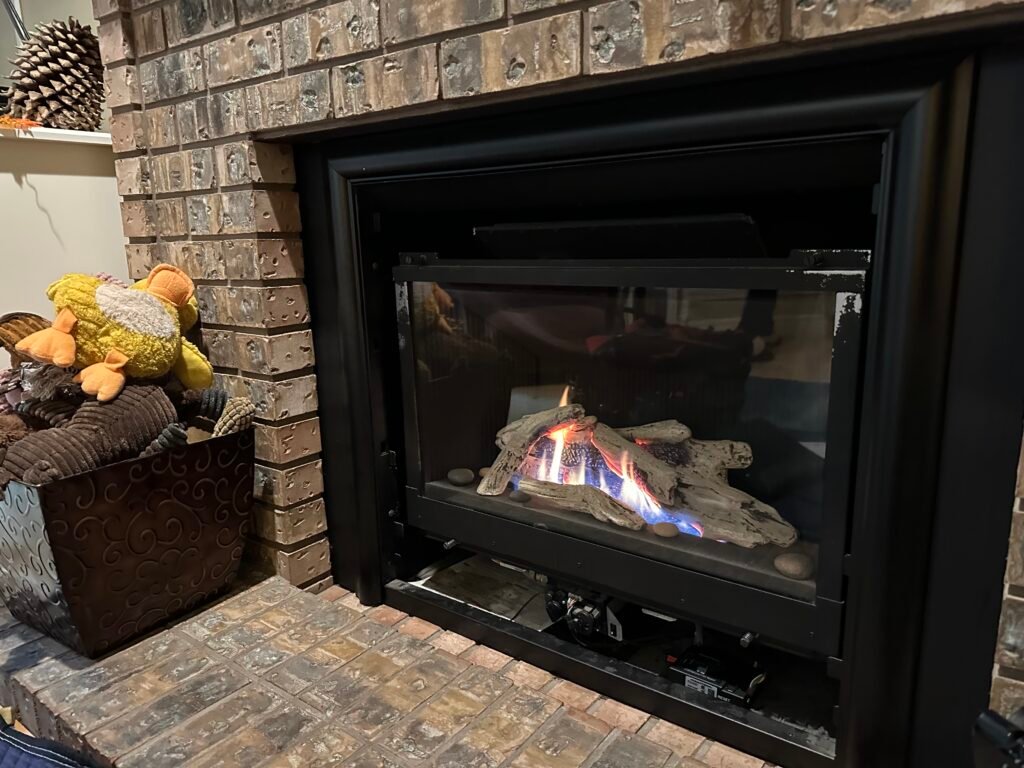
What Low-Heat Problems Look Like
Weak or Small Flame
The burner lights, but the flame remains lower than normal even at the highest setting.
Hot Glass, Cold Room
The firebox becomes hot, yet warm air is not moving into the living space.
Blower Never Starts
The burner operates, but the fan stays silent after the fireplace reaches operating temperature.
Heat Drops Over Time
The fireplace starts strong, then loses flame or airflow as components warm up.
Uneven Heating
One side of the firebox or room warms while another remains noticeably cooler.
More Gas, Same Heat
The fireplace appears to run longer without delivering the comfort it once provided.
12 Common Reasons a Gas Fireplace Is Not Producing Enough Heat
Blower Fan Not Working
Many fireplaces rely on a convection blower to move heated air into the room. A failed motor, temperature switch, speed control, wiring fault or seized bearing can leave most of the heat trapped around the firebox. If the flame looks normal but the fan stays silent after warm-up, follow our gas fireplace blower not working diagnostic guide.
Blower Set Too Low
Some remotes control flame height and fan speed separately. It is surprisingly easy to raise the flame while leaving the blower off or at minimum speed.
Dirty Burner Ports
Dust, lint, pet hair and combustion residue can partially restrict the burner. The result may be a smaller flame, uneven heat and poor burner performance.
Low Gas Pressure
Insufficient inlet or manifold pressure can reduce flame height and heat output. Pressure must be measured with the correct instrument and compared with the manufacturer’s specifications.
Incorrect Flame Setting
Many modern fireplaces allow flame modulation. A low setting may look attractive but provide limited heat. Control programming and thermostat modes should be checked before parts are replaced.
Blocked Convection Openings
Furniture, rugs, decorative panels, dust or stored items can restrict lower intake and upper discharge openings. Poor airflow reduces heat transfer and may also cause overheating.
Dirty Fan or Air Cavity
Dust accumulation on fan blades and inside convection passages reduces airflow. Renovation dust is particularly troublesome because it settles deeply into motors, burners and controls.
Incorrect Log Placement
Ceramic logs must remain in the manufacturer-approved position. Incorrect placement can alter flame distribution, create soot and reduce effective burner performance.
Venting or Draft Problem
Restricted or damaged venting can affect combustion quality and may trigger protective shutdowns. It can also change the flame pattern and reduce dependable output.
Thermostat or Remote Fault
A thermostat may satisfy too early, read temperature from a warmer location, or intermittently interrupt the burner. Receiver batteries, wiring and control settings may also be involved.
Fireplace Is Undersized
A low-BTU decorative fireplace may never heat a large open room, especially one with high ceilings, exterior glass or weak insulation.
Heat Loss in the Room
Drafty windows, open stairways, high ceilings, poor insulation and very cold exterior walls can absorb heat faster than the fireplace supplies it.
Symptom-to-Cause Guide
| What You Notice | Likely Area to Check | Recommended Next Step |
|---|---|---|
| Normal flame but little room heat | Blower, convection path, fan control | Check fan setting and book airflow diagnosis |
| Weak flame at maximum setting | Burner, gas pressure, supply, valve | Professional combustion and pressure testing |
| Heat improves only after a long delay | Blower temperature switch or fan motor | Test blower activation and electrical circuit |
| Flame changes or shuts down when hot | Safety controls, venting, gas pressure | Stop repeated cycling and arrange inspection |
| Fireplace has never heated the room well | Appliance size and room heat loss | Review model rating and replacement options |
The Fireplace Fan Runs, but the Air Does Not Feel Warm
A running blower moves air; it does not prove that the main burner is producing heat. First distinguish a fan-only symptom from a fireplace that burns normally but no longer warms the room. Observe through the glass without touching hot surfaces or removing the safety barrier.
| What you observe | What it helps distinguish | Useful next step |
|---|---|---|
| Fan runs; only the pilot is visible | Air movement without main-burner heat | Review heat demand and read our pilot-on, burner-off explanation. |
| Main flame is present; airflow feels weak | Heat delivery versus burner operation | Check the user fan setting and visible air openings. See the fireplace blower guide for fan symptoms. |
| Airflow is noticeable; the room stays cold | Current output, room heat loss and appliance suitability | Tell us whether this is a new loss of performance or how the fireplace has always behaved. |
Does Every Gas Fireplace Need a Fan?
No. Heat delivery depends on the appliance design. Regency explains how blowers circulate heated room air, while Valor describes inserts designed to provide radiant heat and natural convection without requiring a fan. A missing or quiet fan alone therefore does not establish a heating fault. Check the exact model before buying a blower or assuming an accessory will solve the complaint.
Three Details That Make the Service Call More Useful
- Identify whether the main burner is on, only the pilot is on, or all flames are off.
- Record the selected flame, fan and thermostat modes and when the change began.
- Describe airflow as absent, weak or normal, and note any new noise, soot or shutdown.
Do not adjust gas pressure or remove sealed glass to increase heat. For a new performance loss, book fireplace repair in Vancouver; for routine cleaning and operating checks, review our gas fireplace service scope. Diagnosis should establish the cause before recommending a part or replacement.
The Remote Says the Room Is Warm, but I Still Feel Cold. Can Its Location Matter?
Yes, if your fireplace uses the handheld remote as its thermostat sensor. The control may respond to the temperature around the handset rather than where you are sitting. Check the owner manual first: not every remote measures room temperature, and some systems use a separate sensor.
Valor explains that handset location can affect temperature regulation on the systems covered by its remote-control placement guidance. Direct sunlight or a cold outside wall can influence the reading. This is a control check, not proof that the burner, blower or venting is working correctly.
Confirm the sensing device
Identify the fireplace and handset models. Find which device measures temperature and which operating mode is selected. A manual flame setting and thermostat mode serve different purposes.
Describe its location
Tell us if the handset sits in sunlight, by an outside wall or in a different part of the room. Use the manufacturer’s placement instructions and keep it outside required fireplace clearances and away from children.
Report the mismatch
Include the displayed room temperature, target temperature, selected mode and where you feel cold. Note whether the flame reduces or stops while that area remains uncomfortable.
What If the Fireplace Still Cannot Warm the Space?
Correct sensor placement cannot compensate for an appliance fault or a room heating requirement beyond the fireplace’s capacity. If heat delivery has recently declined, arrange diagnosis. If the flame cycles normally, compare thermostat cycling with an unexpected shutdown. If commands are not reaching the appliance, use the gas fireplace remote troubleshooting guide.
Do not remove the glass, change gas pressure or bypass a safety control to increase heat. Share the model and temperature mismatch when you request fireplace diagnosis in Vancouver. Section updated: October 12, 2026.
Safe Checks You Can Do Before Booking Service
Check Flame and Fan Settings
Confirm the remote or wall control is not set to low flame, eco mode or minimum blower speed. Replace remote batteries if the display is weak or inconsistent.
Keep Air Openings Clear
Move furniture, rugs, baskets and decorations away from lower intake and upper discharge openings. Never block required clearances.
Listen for the Blower
Most blowers start only after the fireplace warms. Note whether the fan starts, hums, rattles, runs slowly or never activates.
Compare Current Performance
Think about whether the unit has always heated poorly or whether output changed recently. This distinction saves diagnostic time.
How We Diagnose Low Heat Output
Confirm the Complaint
We verify flame level, blower operation, control settings, room conditions and whether the problem is new or longstanding.
Inspect Burner and Firebox
Burner ports, pilot, logs, glass, gasket, air openings, soot patterns and visible contamination are checked.
Test Gas Pressure and Flame
Inlet and manifold pressures are compared with the rating plate and manufacturer data. Flame height and combustion behaviour are evaluated.
Test Blower and Controls
The fan motor, speed control, temperature switch, remote receiver, thermostat and wiring are tested under operating conditions.
Inspect Venting and Airflow
Accessible venting, exterior termination, convection openings and signs of overheating or restricted airflow are reviewed.
Explain Repair or Replacement Options
You receive a clear explanation of what is limiting heat, which repair is justified and whether a larger or more efficient fireplace would better suit the room.
Repair or Replace the Fireplace?
Repair Usually Makes Sense When
- The blower, control, burner or sensor has one confirmed fault.
- The fireplace previously heated the room well.
- Approved replacement parts remain available.
- The glass, firebox and venting are in good condition.
- The repair cost is reasonable compared with replacement.
Replacement May Be Better When
- The unit was undersized from the beginning.
- Several major components are failing.
- Critical parts are obsolete.
- The firebox, glass or vent system has significant damage.
- You want stronger heating performance and modern controls.
When replacement is the better option, review our fireplace installation Vancouver service.
Gas Fireplace Brands We Service
For brand-specific diagnosis, see our Montigo fireplace repair page.
Trusted External Resources
FortisBC recommends keeping appliance air openings clear and including burner, gas valve, ignition system, door gasket, venting and air-opening checks in professional fireplace service. Regency also recommends annual maintenance and vent inspection by a licensed gas service provider.
Frequently Asked Questions
Why is my gas fireplace on but not heating the room?
The blower may be off or faulty, airflow may be restricted, the flame may be weak, controls may be set incorrectly, or the fireplace may be undersized for the room.
How long should the blower take to start?
Many fireplace blowers wait until the firebox warms before switching on. If the fireplace becomes hot and the fan never starts, the motor, temperature switch, control or wiring may need testing.
Can a dirty fireplace produce less heat?
Yes. Dust and debris can restrict burner ports, blower blades and convection passages. Renovation dust can be especially damaging to burners, fans and motors.
Can low gas pressure cause a weak flame?
Yes. Low inlet or manifold pressure can reduce flame height and heat output. Pressure testing should be completed by a licensed gas technician.
Does a higher flame always mean more room heat?
Usually it increases burner output, but the room may still feel cold if the blower is off, airflow is blocked or the fireplace is undersized.
Can I move the ceramic logs to get more heat?
No. Logs must remain in the manufacturer-approved position. Incorrect placement can create soot, delayed ignition and unsafe flame contact.
Should I replace a fireplace that does not heat well?
Not automatically. If performance recently declined, a repair may restore normal output. Replacement makes more sense when the appliance was undersized, parts are obsolete or multiple major components are failing.
How often should a gas fireplace be serviced?
Annual professional maintenance is commonly recommended to inspect the burner, gas valve, ignition system, gaskets, venting, air openings, glass and blower.
Can blocked venting reduce heat output?
Venting problems can affect combustion, flame stability and safety controls. They may reduce dependable heat or cause the fireplace to shut down.
Do you repair fireplace blowers and fan controls?
Yes. SkyLimit Heating diagnoses blower motors, speed controls, temperature switches, receivers, wiring and related airflow problems for many fireplace brands.
Still Getting Flame but Not Enough Heat?
SkyLimit Heating can test the burner, gas pressure, blower, thermostat, remote, airflow, venting and safety controls to identify where the heat is being lost.