
Gas Fireplace Making Noise? Common Causes, Sounds & Repair Options
A gas fireplace making noise can point to very different problems depending on whether you hear clicking, buzzing, humming, rattling, whistling, popping, grinding, or a boom during ignition. Some sounds are harmless expansion noise. Others point toward the blower, ignition system, burner, receiver, gas valve, or a safety issue that should be professionally inspected.
Quick Answer
Clicking usually points toward ignition or flame-sensing issues. Buzzing and humming often come from the blower, receiver, valve, electrical controls, or vibration. Grinding and rattling commonly involve the fan or loose components. Whistling may relate to airflow or gas-flow conditions. A loud pop or boom at ignition can indicate delayed ignition and should be inspected before further use.
Ignition, flame sensor, pilot, receiver
Blower, control, valve, vibration
Fan wheel, motor, debris, bearings
Expansion or delayed ignition
Table of Contents
Gas Fireplace Noise Problem Finder
The sound itself is only half the clue. When it happens matters just as much. A click before ignition is different from clicking after the flame appears. A rattle that starts with the blower is different from a rattle that begins as the firebox heats.
| Sound | Common Cause | When to Call |
|---|---|---|
| Clicking | Igniter, pilot, sensor, receiver, control | Clicks repeatedly or burner will not stay lit |
| Buzzing | Valve, receiver, electrical control, vibration | New, loud, worsening, or paired with odour |
| Humming | Blower motor, transformer, relay, vibration | Fan becomes hot, or airflow weakens |
| Rattling | Loose panel, fan wheel, debris, bracket | Persistent or increasing with fan speed |
| Grinding | Blower bearing, motor, fan contact | Service soon to avoid motor damage |
| Whistling | Airflow, burner, gas-flow condition | New, loud, or accompanied by flame changes |
| Popping | Metal expansion or ignition | Loud pop at ignition or delayed flame |
| Booming | Possible delayed ignition | Turn off and arrange inspection |
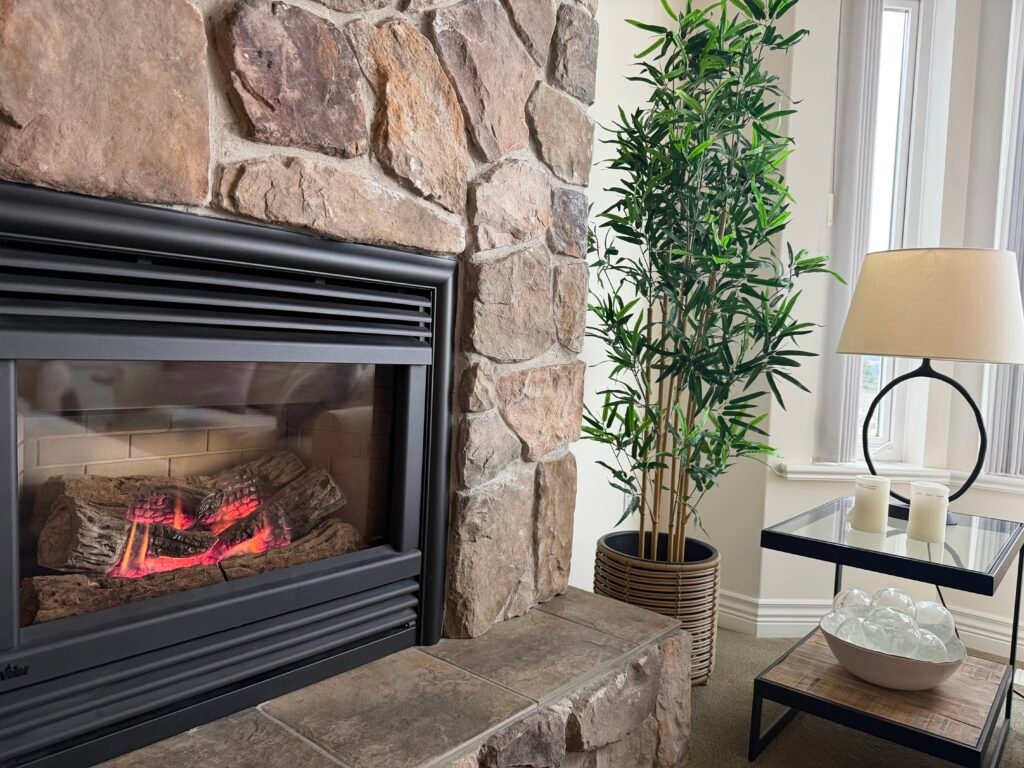
Gas Fireplace Clicking Noise
A few clicks during electronic ignition can be normal. Continuous clicking is different. If the fireplace keeps sparking after the burner lights, repeatedly tries to ignite, or cycles on and off, the ignition system is not completing its normal sequence.
Common causes of repeated clicking
- Dirty or weak pilot flame
- Dirty ignition or flame-sensing electrode
- Poor flame-sensing signal
- Ignition module problem
- Receiver or remote-control fault
- Loose or damaged wiring
- Burner not lighting promptly
For a deeper troubleshooting guide, see Gas Fireplace Keeps Clicking.
Buzzing or Humming From the Fireplace
A low hum can be normal when a blower motor or electrical control is energized. A buzz that suddenly becomes louder, appears only when the valve opens, or changes with fan speed deserves investigation.
Possible sources
- Blower motor vibration
- Loose fan housing or access panel
- Receiver or control module
- Electrical relay or transformer
- Gas valve or valve coil
- Loose mounting hardware transferring vibration into the chassis
Rattling, Grinding or Squealing When the Blower Starts
If the fireplace is quiet until it warms up and the noise begins when the blower starts, the fan assembly becomes the most likely source.
Common blower problems
- Dust and pet hair on the blower wheel
- Debris touching the rotating fan
- Loose mounting bracket
- Fan wheel rubbing against its housing
- Worn motor bearings
- Failing blower motor
- Decorative panel amplifying normal vibration
If the blower is the clear source, see Gas Fireplace Blower Not Working for fan-specific troubleshooting.
Whistling or High-Pitched Noise
A whistle can be produced by air or gas passing through a narrow or restricted opening. The exact source matters because burner ports, air shutters, and gas pressure are part of the fireplace’s combustion system.
Possible causes
- Restricted or dirty burner ports
- Combustion-air restriction
- Gas-flow or pressure condition
- Incorrect air-shutter or burner configuration
- Blower airflow through a restricted opening
Do not enlarge burner ports or adjust gas pressure to chase a whistle. Those changes affect combustion and safety, not merely noise.
Popping, Ticking and Expansion Sounds
Metal expands as a fireplace heats and contracts as it cools. Small ticks or light pops from the firebox, decorative panels, or vent components can therefore be normal.
Normal expansion is more likely when
- The burner lights promptly and smoothly
- The sound occurs gradually as the fireplace heats or cools
- There is no gas odour
- There is no soot or abnormal flame behaviour
- The fireplace continues operating normally
A Loud Boom at Ignition Is Different
A loud pop or boom when the burner finally lights can indicate delayed ignition. If several seconds of clicking are followed by a sudden ignition event, stop using the fireplace and have the ignition and burner system inspected.
Possible causes include
- Dirty or partially blocked burner ports
- Pilot or electrode position problem
- Weak ignition source
- Incorrect log placement
- Gas pressure or burner setup issue
Safe Checks Before Booking Service
- Note when the noise begins: startup, burner operation, blower startup, or shutdown.
- Observe the flame: look for delayed ignition, weak flame, soot, or flame lifting.
- Turn the blower off temporarily: if your model allows separate fan control, check whether the sound disappears.
- Check obvious exterior items: decorative trim or nearby objects may vibrate.
- Record the noise: a short phone recording can help explain an intermittent symptom.
Do not adjust these yourself
- Gas valve or regulator
- Gas pressure
- Burner orifice
- Pilot assembly
- Air shutter without manufacturer specifications
- Sealed vent components
Gas Safety and Licensed Work in British Columbia
Some fireplace noises can be resolved by cleaning or securing a non-gas component. Others require work on the burner, pilot, valve, gas pressure, ignition system, or venting. Regulated gas work in British Columbia should be performed by an appropriately licensed or authorized contractor.
For safety information and contractor verification, use the official resources below:
How to Describe a Fireplace Noise Before the Appointment
Tell us when the sound begins and what the fireplace does at that moment. “It rattles when the room-air fan starts” is more useful than “the fireplace is loud.” A recording can document a symptom, but it cannot confirm the failed component or safe combustion.
- Locate the stage: before a flame appears, during steady burning, when the blower starts, or while cooling.
- Describe the change: new or longstanding, occasional or continuous, faint or suddenly louder.
- Include what you can see: delayed flame, repeated sparking, shutdown, soot, or reduced airflow.
- Identify the appliance: send the model number and a full fireplace photo along with the sound description.
Choose the Guide That Matches the Sequence
Repeated clicking around ignition
Read gas fireplace keeps clicking and note whether a flame appears before the clicking continues.
Noise begins with room-air movement
Read gas fireplace blower troubleshooting and describe any change in airflow or fan sound.
Noise is followed by shutdown
Read gas fireplace shutdown troubleshooting and note whether the pilot remains on.
Record Only When It Is Safe
Keep the phone away from hot glass and leave the safety barrier in place. Do not remove panels, touch a running fan, change gas settings or repeat an abnormal ignition to capture a better clip. If the noise has already stopped, a written description is enough to start the booking conversation.
If you smell gas, leave the building and call FortisBC at 1-800-663-9911 or 911 from outside, following FortisBC’s gas-leak guidance. For a non-emergency noise concern, request fireplace repair in Vancouver with the details above.
How We Diagnose a Noisy Gas Fireplace
1. Reproduce the Sound
The fireplace is operated through ignition, burner operation, blower activation, and shutdown to determine exactly when the noise appears.
2. Isolate the Source
We determine whether the sound follows the ignition system, burner, gas valve, blower, electrical controls, fireplace chassis, or venting.
3. Inspect Ignition and Burner Components
- Pilot condition and flame
- Electrode position
- Burner cleanliness
- Ignition sequence
- Log placement
4. Inspect Blower and Controls
- Fan wheel and bearings
- Motor performance
- Mounting brackets
- Receiver and wiring
- Control components
5. Repair and Retest
After repair, the fireplace is operated again to confirm normal ignition, flame pattern, blower operation, and sound level.
Common Gas Fireplace Noise Repairs
Blower Cleaning
Remove dust, pet hair, and debris causing imbalance or fan contact.
Blower Replacement
Replace worn motors or damaged fan assemblies that grind, squeal, or vibrate excessively.
Ignition Repair
Correct electrode, pilot, sensor, wiring, or ignition-control faults.
Burner Service
Clean contaminated burner ports and correct flame or log conditions.
Vibration Correction
Secure brackets, panels, or components after the true source is identified.
Gas / Control Diagnosis
Test valve, pressure, controls, and combustion conditions when indicated.
Related Fireplace Guides
Why Choose SkyLimit Heating?
- Licensed and insured gas service
- Professional diagnosis before parts replacement
- Ignition, burner, blower, receiver, control and vibration troubleshooting
- Service for major gas fireplace brands
- Serving Metro Vancouver and the Fraser Valley
Frequently Asked Questions
Why is my gas fireplace clicking?
Brief clicking during electronic ignition may be normal. Repeated clicking can involve the igniter, pilot flame, flame sensor, receiver, wiring, or ignition control.
Why does my gas fireplace make a buzzing noise?
Buzzing can come from a blower motor, electrical control, receiver, gas valve, loose component, or vibration transferred through the fireplace chassis.
Why does the fireplace rattle when the fan turns on?
The blower wheel may be dirty, loose, contacting its housing, or connected to a motor with worn bearings. Loose panels can also amplify vibration.
Is popping from a gas fireplace normal?
Small ticking or popping sounds as metal heats and cools can be normal. A loud pop or boom during delayed ignition should be professionally inspected.
Why is my fireplace making a grinding sound?
Grinding commonly points toward the blower motor, worn bearings, fan-wheel contact, or debris. Continued operation can worsen the damage.
Why does my gas fireplace whistle?
A high-pitched whistle can involve airflow, burner ports, combustion-air restrictions, gas-flow conditions, or blower airflow.
Is a booming sound dangerous?
A boom during ignition can indicate delayed ignition. Turn the fireplace off and have the ignition and burner system professionally inspected.
Can dust make a fireplace blower noisy?
Yes. Dust, pet hair, and renovation debris can collect on the blower wheel, create imbalance, restrict airflow, and contribute to rattling or motor noise.
Should I turn off a noisy gas fireplace?
Turn it off if the sound is loud, new, worsening, associated with delayed ignition, gas odour, soot, abnormal flame, overheating, or grinding mechanical components.
Do you repair noisy gas fireplaces in Vancouver?
SkyLimit Heating provides gas fireplace troubleshooting and repair for ignition, burner, blower, control, vibration, and related operating problems across Metro Vancouver and the Fraser Valley.
Stop Guessing What That Fireplace Noise Means
If your gas fireplace clicks continuously, buzzes, rattles, grinds, whistles, pops, or booms at ignition, SkyLimit Heating can identify the actual source and recommend the appropriate repair.