
FIREPLACE COMPONENT GUIDE · BRITISH COLUMBIA
Gas Fireplace Igniter Problems: No Spark, Weak Spark, Clicking & Failed Pilot Ignition
A clicking gas fireplace does not automatically have a bad igniter. The spark may be missing, weak, jumping to the wrong place, or working normally while pilot gas, the pilot assembly, wiring, grounding, receiver, or electronic controls prevent ignition.
QUICK ANSWER
Why Is My Gas Fireplace Clicking but Not Lighting?
Clicking usually means the ignition system is attempting to create a spark, but it does not prove that the spark is strong, correctly positioned, or that pilot gas is reaching the ignition point. The useful diagnostic question is: Can you see a spark, where is it jumping, and does the pilot flame appear?
SPARK DIAGNOSTIC MATRIX
Read the Spark Before Replacing the Igniter
| Observed Pattern | What It Suggests | Next Area |
|---|---|---|
| No click, no spark | Ignition sequence may not start | Power, batteries, receiver, switch, module, wiring |
| Clicking, no visible spark | Spark may ground elsewhere | Ignition wire, electrode ceramic, ground |
| Weak/inconsistent spark | Spark quality/location inadequate | Electrode, lead, ground, power |
| Strong spark, no pilot | Igniter may be functioning | Pilot gas, pilot assembly, supply |
| Pilot lights, spark continues | Flame may not be recognized | Flame sensing, ground, wiring, controls |
| Several tries on cold/damp days | Cold-start/draft condition possible | Model-specific operating guidance |
Piezo, Millivolt and Electronic Ignition Are Not the Same Thing
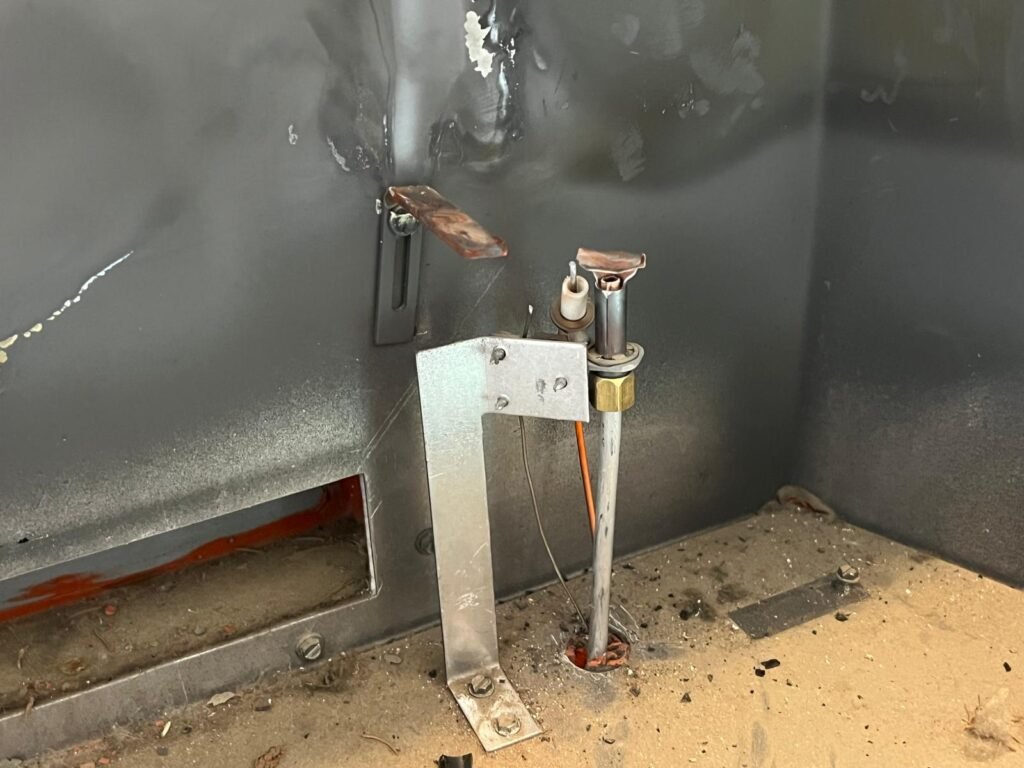
“Igniter” is often used as a catch-all term, but fireplaces do not all create and control ignition the same way. Older or non-electronic systems may use a manually operated piezo igniter to create a spark at the pilot. Electronic systems can use an ignition control, receiver, batteries or power supply, and an electrode as part of a sequenced start-up.
That distinction matters because “the igniter is broken” can actually describe a dead receiver, a control system that never starts, a damaged electrode lead, or a pilot that receives spark but no usable gas flow.
What Causes Gas Fireplace Igniter Problems?
1. Damaged or Disconnected Ignition Wire
A disconnected, damaged, or bare ignition lead can prevent the spark from reaching the intended point. Manufacturer troubleshooting literature also identifies wiring faults and unwanted grounding as causes of no-spark conditions.
2. Cracked Electrode Ceramic
The ceramic insulator can crack. Instead of producing a useful spark at the pilot, high voltage may arc where it should not. Clicking therefore does not guarantee a useful spark.
3. Incorrect Electrode Position or Spark Path
Spark needs to occur where the system was designed to light the pilot mixture. Electrode position is model-specific, so generic internet measurements should not be copied to another fireplace.
4. Poor Grounding
Grounding is part of the ignition circuit. A poor ground can produce no spark or an erratic spark that resembles component failure.
5. Power or Battery Problem
Some electronic ignition fireplaces depend on batteries or another electrical supply. Check only the user-serviceable items identified in the owner’s manual.
6. Pilot Assembly Problem
A visible spark with no pilot flame shifts attention toward pilot gas delivery, contamination, pilot hardware, or spark location. Continue to Gas Fireplace Pilot Assembly Problems.
7. Receiver or Control Module Problem
On an electronic system, the electrode is only one part of the sequence. See Gas Fireplace Receiver Problems and Gas Fireplace Control Module Problems.
Why a Fireplace May Need Several Ignition Attempts on a Cold or Damp BC Day
Multiple ignition attempts do not always mean the igniter is failing. Regency explains that some electronic ignition appliances can experience cold-start conditions when colder, heavier air in the venting system interferes with establishing stable draft. The pilot may light and then go out, and repeated unsuccessful attempts can place some systems into a safety lockout.
This distinction is particularly useful in British Columbia because the symptom can appear weather-related. Document the outside conditions, whether the pilot initially lights, and whether the system enters lock-out. Follow the exact manufacturer instructions for the installed model rather than repeatedly forcing ignition.
Strong Spark but No Flame? The Igniter May Not Be the Problem
If a strong spark repeatedly jumps at the intended pilot location but no pilot flame appears, replacing the igniter without further diagnosis can waste money. The next questions concern pilot gas, pilot assembly condition, gas supply, and whether the appliance is completing its manufacturer-defined ignition sequence.
If the pilot lights but spark continues, the system may be struggling with flame recognition rather than spark generation. That can involve sensing, grounding, wiring, or electronic controls.
LISTEN FOR THE SEQUENCE
Clicking Before a Flame or After It Appears: What Should You Report?
The timing of the clicking helps locate the interrupted stage; the sound alone does not identify a failed part. Tell the technician whether there was no flame, a small pilot flame, or an established main-burner flame when the clicking continued. Electronic ignition sequences differ by model, so a generic online countdown is not a reliable pass/fail test.
- A · Clicking starts, but no flame appears
- Report whether this happened immediately after the ON command and whether the appliance stopped trying by itself. Hearing the click does not establish where the spark travelled. Do not remove the glass or reach into the firebox to get a closer view.
- B · A pilot appears, but clicking continues
- Describe whether the pilot stayed visible, flickered out, or disappeared when the sequence ended. This is different from a fireplace that never produced a flame. Regency describes continued sparking and lockout in some cold-start situations; that example does not establish the cause on every appliance. Read Regency’s cold-start explanation.
- C · The burner lights, then clicking returns
- Record whether the burner went out before the clicking returned, or whether the sound occurred while a flame remained visible. If the interruption happened after several minutes of operation, include that detail when reviewing fireplace shutdown symptoms.
A useful message for your service booking
“After I selected ON, it clicked. I saw a small pilot flame, but the main burner never lit. The clicking then stopped and the pilot went out. The fireplace model is ___.”
Use what you already observed; do not restart an abnormal appliance just to complete this description or record a video. Include any displayed code exactly as shown, plus the model number. Codes and reset procedures belong to the specific control system.
If there was a bang, gas odour, or damaged glass, follow the gas and carbon-monoxide emergency guidance. For a non-emergency ignition fault, share your observations when booking fireplace diagnosis; leave electrode adjustments, wiring tests and safety-control checks to the technician.
What Manufacturer Troubleshooting Tells Us About “No Spark”
Regency’s P33S troubleshooting guide is a useful example of why no-spark diagnosis should not stop at the word “igniter.” For that specific piezo system, the manufacturer lists separate causes including a faulty or disconnected wire, electrode/pilot relationship, cracked electrode ceramic, and improper grounding.
Those exact specifications belong to that model. The transferable lesson is the method: inspect the complete spark circuit and use the service manual for the exact appliance.
What Can You Check Before Booking Service?
- Note whether you hear clicking and whether a spark is visible.
- Record whether the pilot lights briefly, never lights, or lights while sparking continues.
- Check user-serviceable batteries only if the owner’s manual identifies them.
- Find the model and serial number.
- Share an existing recording if you have one; do not repeat abnormal ignition to make a video.
- Note whether the problem mainly appears during cold or damp weather.
What We Check on a Gas Fireplace Ignition Service Call
- Identify the model and ignition platform.
- Reproduce the complaint from command through spark, pilot and burner operation.
- Inspect the spark path, including electrode, ceramic, lead, connections and grounding.
- Separate spark failure from pilot failure.
- Check related controls where appropriate, including receiver, module and power source.
- Cycle-test after repair to catch intermittent faults.
When Ignition Troubleshooting Becomes Regulated Gas Work in BC
Technical Safety BC states that regulated gas work in British Columbia must be performed by a licensed contractor, a person employed by a licensed contractor, or another person authorized to perform the work. Homeowner observation and ordinary owner-manual tasks are different from altering gas components or safety circuits.
Technical Safety BC: Gas Licences · Find a Licensed Contractor in BC
If It Is Not the Igniter, Follow the Symptom
Diagnose the Ignition Sequence, Not Just the Clicking Sound
SkyLimit Heating approaches ignition complaints by identifying the installed control system and tracing the sequence from command to spark, pilot flame and main-burner operation. That helps distinguish an actual igniter/electrode fault from a receiver, module, pilot, wiring, grounding, or gas-valve problem before parts are recommended.
Gas Fireplace Igniter Problems FAQ
Why is my gas fireplace clicking but not lighting?
Clicking indicates an ignition attempt, but the spark may be missing, weak, incorrectly located, or working normally while pilot gas or another control problem prevents ignition.
Can a gas fireplace igniter click and still be bad?
Yes. You can hear an ignition action while the spark fails to reach the intended pilot location because of an electrode, wire, ceramic, grounding, or related fault.
Why do I have a strong spark but no pilot flame?
If the spark is strong and correctly located, the igniter may be functioning. Pilot gas delivery, the pilot assembly, gas supply, or another stage may require diagnosis.
Why does the spark continue after the pilot lights?
The system may not be recognizing flame correctly. Flame sensing, grounding, wiring, electrode condition, and controls may need model-specific testing.
Why does my fireplace take several attempts to ignite when it is cold outside?
On some electronic ignition fireplaces, cold or damp conditions can affect draft during start-up. Check manufacturer guidance before assuming the igniter has failed.
Is a gas fireplace igniter the same as the control module?
No. The electrode/igniter creates or delivers a spark at the pilot, while an electronic control module can coordinate several stages of the ignition sequence.
Can I replace a gas fireplace igniter myself in British Columbia?
Simple owner tasks should stay within the appliance manual. If work involves regulated gas-appliance service, safety controls, gas components, or alterations, BC licensing and permit requirements may apply.
Clicking Is a Clue. It Is Not a Diagnosis.
If your fireplace has no spark, a weak spark, repeated clicking, pilot ignition failure, or intermittent cold-start problems, SkyLimit Heating can trace the ignition sequence and identify the failed stage before parts are ordered.