
FIREPLACE COMPONENT GUIDE
Gas Fireplace Gas Valve Problems: Symptoms, Causes, Testing & Repair
A gas valve controls fuel flow to the pilot and main burner, but a fireplace that will not light does not automatically need a new valve.
Weak thermopile output, a failed wall switch, loose wiring, pilot problems, ignition controls, or an interrupted safety circuit can all make a healthy valve appear defective. Proper diagnosis checks what the valve is being asked to do before condemning it.
✓ Licensed & Insured ✓ Metro Vancouver ✓ Gas Fireplace Diagnostics
QUICK ANSWER
How Do You Know if a Gas Fireplace Valve Is Bad?
A suspected gas valve should be diagnosed as part of the complete control circuit. Common clues include a pilot that will not remain established on certain standing-pilot systems, a pilot that stays lit while the main burner will not open, intermittent burner operation, or a valve that receives the correct control input but does not respond as specified by the manufacturer. Those symptoms can also come from other components, so testing matters.
SYMPTOM-TO-CIRCUIT MAP
Symptoms That Can Look Like a Bad Gas Valve
Pilot Lit, Burner Won’t Start
Thermopile output, switch circuit, wiring, receiver, or valve may be involved.
Pilot Won’t Stay Lit
Thermocouple, pilot flame, or the valve’s pilot safety mechanism may need diagnosis.
Burner Works Intermittently
A marginal millivolt circuit can imitate an intermittent valve failure.
Switch Does Nothing
The wall switch or low-voltage control circuit should be checked before the valve is blamed.
Fireplace Shuts Off Warm
Heat-related wiring, thermopile, receiver, safety, or valve problems can create this pattern.
Gas Odour or Suspected Leak
Stop treating this as ordinary troubleshooting. A suspected gas leak requires immediate safety action.
COMPONENT BASICS
What Does a Gas Fireplace Gas Valve Do?
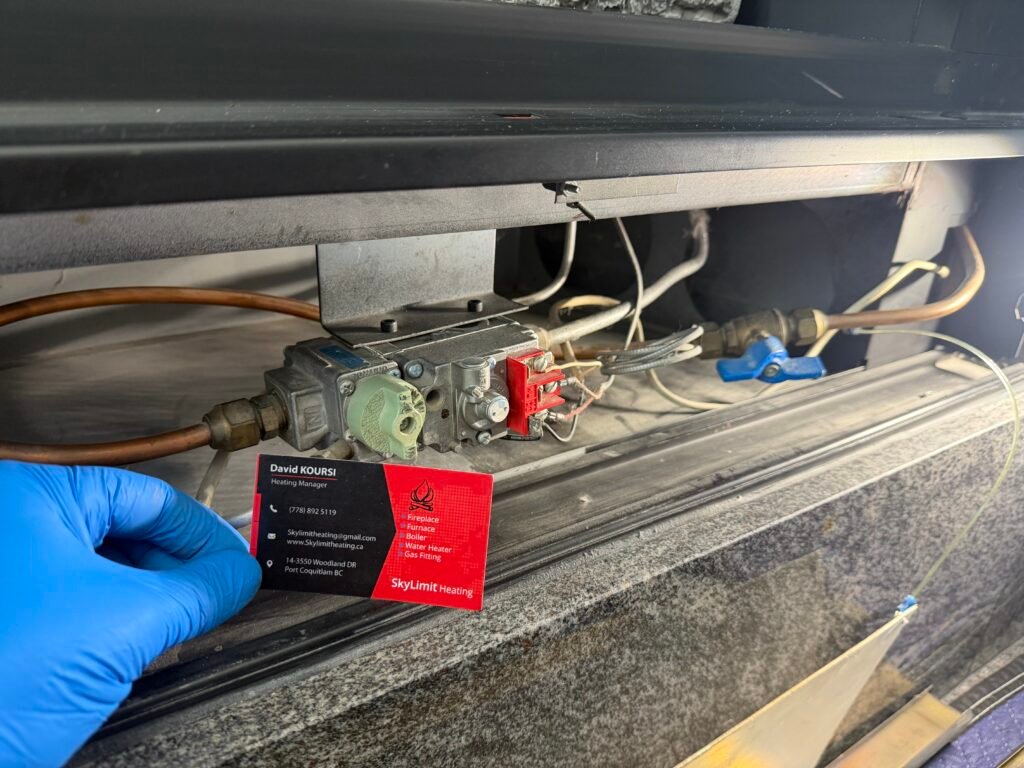
The gas valve is the controlled gateway between the appliance gas supply and the pilot or burner. Its exact construction depends on the fireplace. Traditional standing-pilot systems may use a millivolt valve with pilot safety and main-burner control functions, while electronic ignition fireplaces may use valves operated by an ignition module or control board.
A valve does not normally decide by itself that the room needs heat. It responds to the control and safety conditions built into the fireplace. On a millivolt system, that can include energy produced by the thermopile and a completed circuit through a wall switch, thermostat, remote receiver, or wiring. On an electronic system, an ignition control may energize the valve only after the required ignition sequence and safety checks occur.
Replacing the valve because “the burner does not come on” skips most of the diagnostic process. First determine whether the valve has the correct pilot conditions, electrical or millivolt input, control command, and safety circuit required for that model.
BEFORE CONDEMNING THE VALVE
8 Causes of Gas Valve-Like Fireplace Problems
1. Weak Thermopile Output
A thermopile may generate enough energy to appear functional but not enough usable voltage under load to operate the main valve reliably. Read Gas Fireplace Thermopile Problems for the dedicated diagnostic path.
2. Thermocouple or Pilot Safety Failure
On applicable standing-pilot systems, a weak thermocouple, poor pilot flame, or pilot safety mechanism can prevent stable operation. See Gas Fireplace Thermocouple Problems.
3. Dirty or Unstable Pilot Assembly
A pilot flame that does not properly heat the sensors can make the valve appear unresponsive. Our Gas Fireplace Pilot Assembly Problems guide explains this relationship in detail.
4. Failed Wall Switch or Poor Connection
High resistance, worn switch contacts, loose terminals, or damaged low-voltage wiring can interrupt a millivolt circuit. The valve may be capable of opening but never receive a usable command.
5. Remote Receiver Problem
A remote receiver can sit between the user command and the valve circuit. Batteries, contacts, wiring, or the receiver itself may prevent burner operation.
6. Electronic Ignition Control Failure
On IPI or other electronically controlled fireplaces, the module may control ignition and valve operation. A valve should not be condemned until the required sequence and control output are verified.
7. Wiring or Terminal Resistance
Millivolt systems operate with very small electrical signals. Corroded, loose, damaged, or unnecessarily resistive connections can matter far more than they would in a higher-voltage circuit.
8. Actual Internal Valve Failure
After the external controls, pilot system, safety circuit, wiring, and required inputs are verified, an internal mechanical or electrical valve fault may remain. At that point replacement may be justified using the correct approved component.
MILLIVOLT SYSTEMS
Why a Healthy Gas Valve Can Look Dead
Many traditional gas fireplaces use a thermopile to create the small amount of electrical energy needed by the burner control circuit. The available energy is limited, so resistance through switches, wire connections, receivers, and terminals can affect whether the valve opens.
This creates a common diagnostic trap. A technician may see a pilot burning normally and assume the gas valve has failed because the burner does not start. But if the thermopile voltage collapses under load or the switch circuit adds excessive resistance, the valve may simply not have the operating conditions it needs.
Open-Circuit vs. Loaded Testing
Seeing a voltage reading without understanding the test condition is not enough. Manufacturer specifications, the fireplace wiring diagram, and measurements taken at the appropriate points in the circuit are what make the result meaningful.
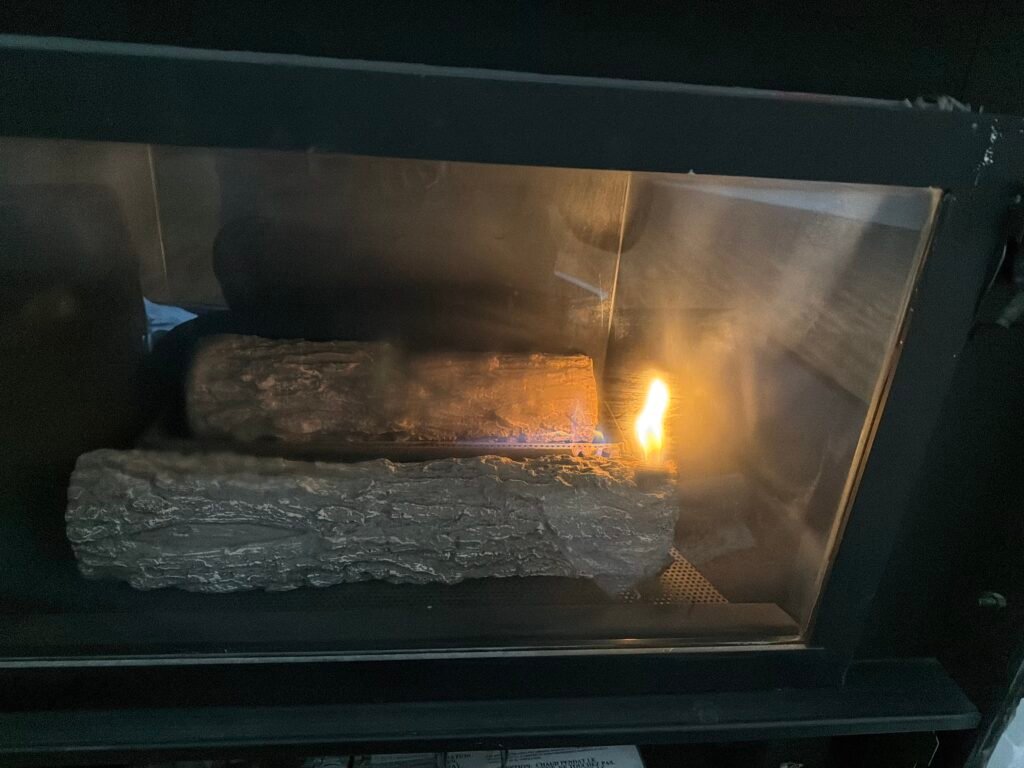
Pilot Stays Lit but Main Burner Won’t Turn On
This symptom is particularly useful because it narrows the diagnostic path. If the pilot is stable, the issue may be in the main burner control circuit rather than the pilot safety circuit.
- Thermopile output under load
- Wall switch or thermostat
- Remote receiver
- Low-voltage wiring and terminals
- Main valve operator
- Electronic ignition/control module on applicable systems
- Model-specific safety devices
If the fireplace does absolutely nothing when commanded on, also see Gas Fireplace Won’t Turn On.
PROFESSIONAL DIAGNOSIS
How a Gas Fireplace Gas Valve Is Diagnosed
- Identify the fireplace and valve system. Standing-pilot millivolt and electronic ignition systems require different diagnostic approaches.
- Reproduce the exact symptom. Pilot failure, no burner response, intermittent operation, and warm shutdown point to different parts of the system.
- Inspect the pilot and flame-safety system. A valve cannot be judged correctly if its required pilot conditions are not established.
- Check the control circuit. Switches, receivers, wiring, terminals, thermopile output, or electronic controls are evaluated as appropriate.
- Verify the required input at the valve. Testing follows the manufacturer’s wiring diagram and service information.
- Evaluate valve response. If correct operating conditions are present but the valve does not respond as specified, the valve becomes a stronger suspect.
- Complete an operational and safety test. After repair, pilot, burner ignition, flame stability, shutdown, and restart are checked as appropriate.
Fireplace designs, valve models, thermopiles, electronic controls, test points, and manufacturer specifications differ. A number without the correct test condition can be misleading.
GAS SAFETY
Do Not Attempt to Bypass or Modify a Fireplace Gas Valve
A fireplace gas valve is a safety-critical fuel-control component. Do not bypass safety terminals, force a valve open, alter internal adjustments, substitute an unapproved valve, or attempt leak-related repairs as a DIY experiment.
If you smell rotten eggs or otherwise suspect a natural-gas leak, FortisBC advises leaving the building immediately, avoiding phones, electronics, switches, flames, smoking, or anything that could create a spark, and calling FortisBC Emergency from a safe distance at 1-800-663-9911 or 911.
REPAIR DECISION
When Does a Gas Fireplace Valve Need Replacement?
A valve should be replaced because testing supports the diagnosis, not simply because the fireplace is old or refuses to light.
Replacement May Be Appropriate When:
- The required pilot, safety, and control conditions have been verified.
- The valve receives the correct model-specific operating input but fails to respond correctly.
- The valve has a confirmed internal fault.
- The valve is physically damaged or has a confirmed leakage issue.
- The manufacturer specifies valve replacement for the diagnosed condition.
Part Compatibility Matters
A replacement valve must be appropriate for the fireplace, fuel, pressure requirements, ignition/control system, and manufacturer specifications. Similar-looking valves are not automatically interchangeable.
WHEN THE ORIGINAL VALVE IS DISCONTINUED
Can an Older Fireplace Use a Different Replacement Gas Valve?
Only when compatibility and the applicable approval requirements can be established—not simply because the replacement fits the pipes or looks similar. A discontinued valve does not automatically make the fireplace unrepairable, but it changes what must be confirmed before a repair is offered. Ask for a documented replacement route rather than an improvised substitution.
Three possible outcomes of the parts review
| What is available | What the recommendation should explain |
|---|---|
| Documented replacement valve | How the approved part applies to the exact fireplace, fuel and control system. |
| Manufacturer replacement or upgrade kit | Which additional controls or components the kit requires, and what installation and certification documentation supports it. |
| No confirmed replacement route | Whether a formal approval route is feasible, or whether the appliance must remain out of service and replacement should be assessed. |
Technical Safety BC’s obsolete-parts directive requires equivalent operational characteristics and preservation of the appliance’s certification requirements. It also describes manufacturer-certified upgrades and a formal approval route where equivalence cannot be confirmed. Those options require assessment; they are not permission to install any aftermarket valve. Read the TSBC obsolete replacement-parts directive.
Before accepting the repair quote
- Confirm the diagnosis. What test supports valve replacement rather than a pilot, wiring or control fault?
- Confirm the part route. Is this a direct replacement, a documented new part number, or a kit that changes several components?
- Confirm the complete scope. Ask which installation requirements, verification checks and any applicable approvals are included.
Keep the fireplace model, fuel type and previous service records available. Do not dismantle the appliance to photograph a valve label. A seller’s “universal” description or matching brand name cannot settle appliance compatibility.
If the part number changed, see replacement part-number guidance. If a compliant repair cannot be established, review repair-versus-replacement considerations. For an unresolved fault, book fireplace diagnosis before purchasing a valve.
BRITISH COLUMBIA GAS SAFETY
Gas Valve Work in British Columbia
Gas valve diagnosis and replacement involve regulated gas-appliance components. In British Columbia, this work should be performed under the applicable gas-safety requirements by properly qualified and authorized people.
CONTINUE TROUBLESHOOTING
Related Gas Fireplace Guides
WHY SKYLIMIT HEATING
Test the Circuit Before Replacing the Valve
A gas valve can be one of the more expensive components in a fireplace. Replacing it without proving the fault wastes money and may leave the original problem untouched. SkyLimit Heating diagnoses the pilot, thermocouple or thermopile, switch circuit, receiver, wiring, ignition control, and valve response as appropriate for the fireplace.
- Licensed and insured gas service
- Component-level fireplace diagnosis
- Millivolt and electronic ignition troubleshooting
- Manufacturer-specific valve and part identification
- Service for major gas fireplace brands
- Metro Vancouver and Fraser Valley coverage
COMMON QUESTIONS
Gas Fireplace Gas Valve FAQ
How do I know if my gas fireplace valve is bad?
A valve becomes a stronger suspect after the required pilot, safety, control, wiring, and model-specific operating inputs have been verified and the valve still fails to respond correctly.
Can a weak thermopile look like a bad gas valve?
Yes. On millivolt fireplaces, weak thermopile output or excessive resistance in the control circuit can prevent the main valve from opening reliably.
Why is the pilot on but the main burner will not light?
Possible causes include thermopile output, wall switch, receiver, wiring, electronic control, safety devices, or the main valve operator itself.
Can a fireplace gas valve work intermittently?
It can, but intermittent operation can also be caused by marginal thermopile output, wiring, switch contacts, receivers, electronic controls, or heat-related operating conditions.
Can I replace a gas fireplace valve myself?
Gas valve replacement involves a safety-critical regulated gas component. The replacement must be correctly specified, installed, leak checked, and tested in accordance with applicable requirements and manufacturer instructions.
Are all fireplace gas valves interchangeable?
No. Fuel type, pressure, ignition system, electrical or millivolt characteristics, physical configuration, and manufacturer specifications all matter.
What should I do if I smell gas near the fireplace?
Leave the building and avoid flames, switches, phones, electronics, or anything that could create a spark. From a safe distance, contact FortisBC Emergency at 1-800-663-9911 or call 911.
Do you diagnose gas fireplace valve problems in Vancouver?
SkyLimit Heating diagnoses gas valve, pilot, thermocouple, thermopile, switch, receiver, wiring, and ignition-control problems across Metro Vancouver and the Fraser Valley.
NEED PROFESSIONAL DIAGNOSIS?
Don’t Replace the Gas Valve Until the Circuit Is Tested
SkyLimit Heating can diagnose the pilot system, thermopile, thermocouple, switch circuit, receiver, ignition controls, wiring, and gas valve to identify the actual failure.