
FIREPLACE COMPONENT GUIDE
Gas Fireplace Thermocouple Problems: Symptoms, Testing & Repair
If a standing-pilot gas fireplace will not keep its pilot lit, the thermocouple may be involved, but it is not automatically the failed part.
A weak pilot flame, dirty pilot assembly, poor sensor position, loose connection, gas-control problem, or venting issue can create almost identical symptoms. Proper troubleshooting means finding out why the flame-safety circuit is dropping out before replacing parts.
✓ Licensed & Insured ✓ Metro Vancouver ✓ Fireplace Diagnostics
QUICK ANSWER
What Does a Fireplace Thermocouple Do?
On many standing-pilot gas fireplaces, the thermocouple is part of the flame-safety system.
The pilot heats the sensor and helps the gas control confirm that a flame is present. If the thermocouple does not receive enough heat, or the gas-control safety circuit cannot hold, the pilot may go out as soon as you release the control knob.
DIAGNOSTIC SNAPSHOT
Common Gas Fireplace Thermocouple Symptoms
Pilot Dies After Releasing the Knob
Possible thermocouple, weak pilot flame, sensor-position, or gas-control problem.
Pilot Needs Several Attempts
The sensor may not be receiving enough heat from the pilot flame.
Pilot Goes Out Intermittently
Pilot stability, sensor condition, gas control, and venting may need inspection.
Pilot Stays Lit but Burner Fails
This often points beyond the thermocouple toward the thermopile or main valve circuit.
COMPONENT BASICS
How a Gas Fireplace Thermocouple Works
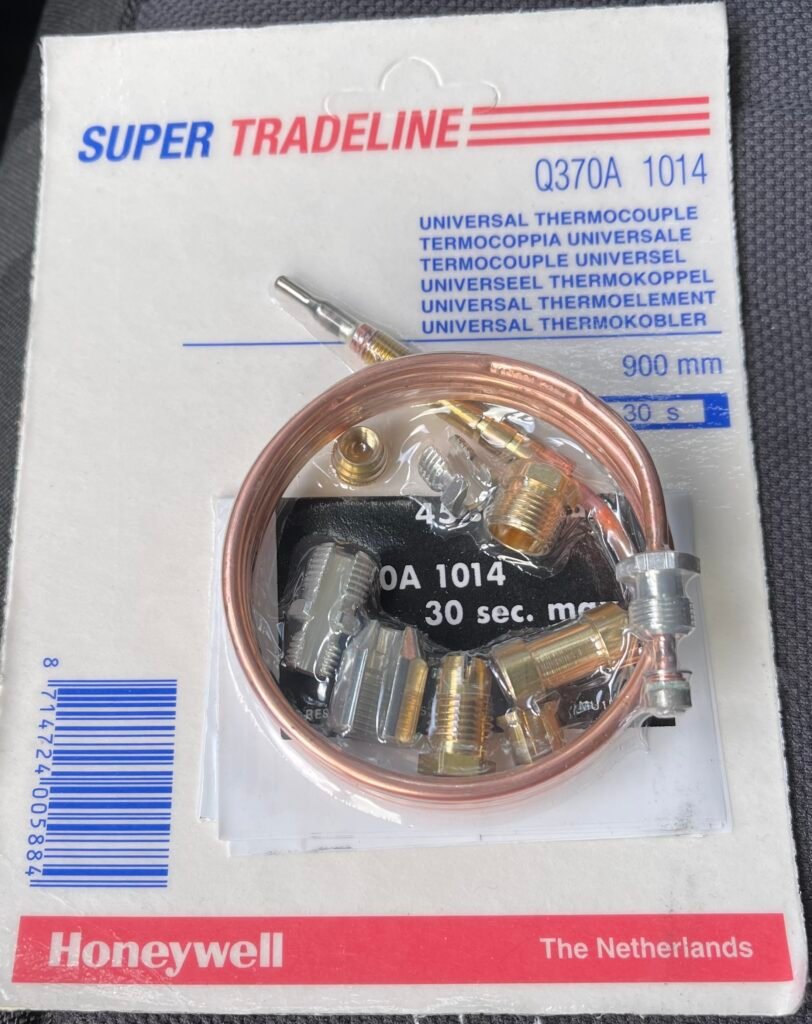
A thermocouple is a small metal sensor positioned beside the pilot flame. On many traditional standing-pilot fireplaces, it performs an important safety function.
When the pilot flame heats the thermocouple, the temperature difference across the device generates a very small electrical signal. That signal helps the gas control confirm that a pilot flame is present.
If the pilot flame disappears, the thermocouple cools. Its signal falls and the safety mechanism is designed to shut off pilot gas flow.
That explains one of the most recognizable fireplace complaints: the pilot lights while you hold the control knob, but goes out immediately after you release it.
A pilot that will not stay lit does not automatically prove the thermocouple is defective. If the pilot flame is weak or poorly aimed, even a healthy sensor may never receive enough heat to maintain the safety circuit.
DON’T CONFUSE THESE COMPONENTS
Thermocouple vs. Thermopile
Thermocouple
On many traditional systems, the thermocouple is primarily associated with proving that the pilot flame is present and helping keep the pilot safety mechanism open.
Thermopile
A thermopile contains multiple thermoelectric junctions and usually produces a larger millivolt output that can support the main burner control circuit.
If your pilot remains lit but the main burner refuses to operate, continue to Gas Fireplace Thermopile Problems.
COMMON FAILURE PATHS
7 Common Causes of Gas Fireplace Thermocouple Problems
1. Weak Pilot Flame
A small, unstable, or poorly directed pilot may not heat the thermocouple properly.
2. Dirty Pilot Assembly
Dust, lint, pet hair, and renovation debris can change pilot flame shape and sensor heating. If repeated pilot failure is your main symptom, see Gas Fireplace Pilot Light Won’t Stay Lit.
3. Incorrect Sensor Position
The sensing tip may no longer sit in the intended part of the pilot flame.
4. Loose or Contaminated Connection
Corrosion, contamination, or poor connection at the gas control can interrupt the flame-safety signal.
5. Aging Thermocouple
Repeated heating and cooling can gradually reduce sensor performance.
6. Gas-Control Safety Magnet
The thermocouple may be working while the safety mechanism inside the gas control no longer holds reliably.
7. Pilot or Venting Instability
Drafting, combustion air, venting, or gas-supply conditions may repeatedly disturb the pilot flame.
MOST COMMON COMPLAINT
Why Does the Pilot Go Out When I Release the Knob?
When you hold the pilot control during lighting, pilot gas is allowed to flow while the thermocouple heats. Once you release the control, the flame-safety system has to prove the pilot flame without your hand holding the valve open.
If the pilot immediately dies, possible causes include:
- The pilot control was not held long enough according to the manufacturer’s lighting procedure.
- The pilot flame is too weak to heat the thermocouple properly.
- The thermocouple is loose, damaged, or weak.
- The pilot assembly is dirty or restricted.
- The sensor is not positioned correctly.
- The gas-control safety mechanism is not holding.
Can a Bad Thermocouple Make the Main Burner Shut Off?
It can contribute to shutdown on some standing-pilot systems if the entire pilot safety circuit drops out, but the exact sequence is what matters.
If Both the Main Burner and Pilot Go Out
The thermocouple, pilot flame, pilot assembly, gas-control safety mechanism, venting, or operating conditions may need investigation.
If the Main Burner Goes Out but the Pilot Stays Lit
The thermocouple becomes less convincing as the sole cause. The problem may instead involve the thermopile, wall switch, remote receiver, wiring, valve circuit, or another control.
For that failure pattern, see Gas Fireplace Turns Off After a Few Minutes.
WHEN A REPLACEMENT HAS NOT SOLVED IT
New Thermocouple, but the Fireplace Pilot Still Goes Out?
A new thermocouple does not rule out a pilot-flame or gas-control problem, and continued failure does not automatically mean the new sensor is defective. The repair needs to establish whether the correct component receives the intended flame heat and whether the complete safety circuit operates as specified. Replacing another sensor without resolving those questions can repeat the same unsuccessful repair.
Does a new sensor prove that the pilot flame is adequate?
No. The pilot must heat the sensing area according to the appliance design. A restricted or unstable pilot, incorrect sensor position, or another operating condition can prevent a new component from doing its job. A visible flame alone is not a measurement of the safety circuit’s performance. Leave flame adjustments and component positioning to the technician.
Does continued failure prove that the gas valve needs replacement?
No. The valve’s safety mechanism is one area to assess after the sensor, pilot and connections have been evaluated using model-specific procedures. A symptom is not enough to select a valve. The repair recommendation should explain what was tested and why the result points to that component.
What to ask when following up on the repair
Keep the repair invoice and approved part number available. Ask whether the replacement was matched to the fireplace model, whether pilot heating and sensor output were checked, and whether the original failure was absent during the final operational test. Report whether the fault returned immediately or only after the appliance warmed; that distinction helps the technician reassess the repair.
Regency directs thermocouple and thermopile replacement to an authorized, factory-trained dealer. Its guidance supports treating these parts as safety-related components rather than choosing them by appearance alone. Read Regency’s fireplace-care FAQ.
Do not hold or wedge the pilot control open to compensate for continued failure, and do not repeatedly relight an abnormal appliance to demonstrate the fault. If the pilot remains lit and only the main burner fails, review thermopile and burner-circuit symptoms. For recurring pilot loss, review pilot assembly problems or arrange fireplace diagnosis with the previous repair details.
PROFESSIONAL DIAGNOSIS
How a Gas Fireplace Thermocouple Is Properly Tested
- Reproduce the failure. Determine whether the pilot fails immediately, after releasing the knob, after warm-up, or intermittently.
- Inspect pilot flame quality. Flame size, stability, direction, and sensor contact must be checked before replacing parts.
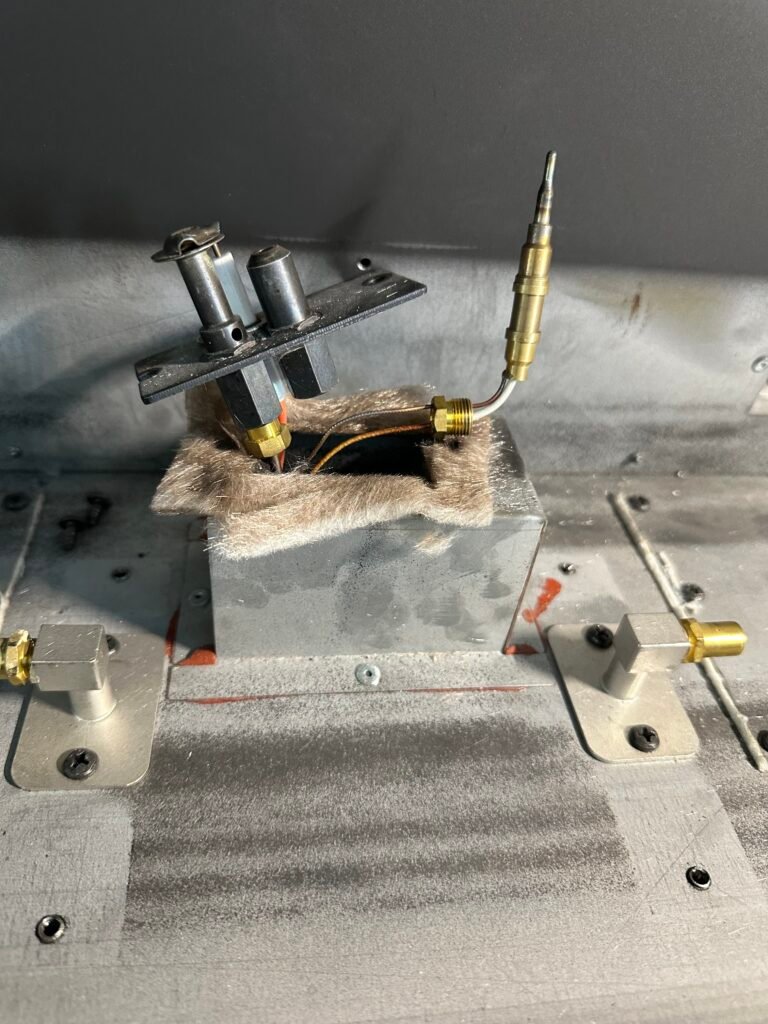
- Inspect the thermocouple. Check position, contamination, physical condition, and the connection at the gas control.
- Measure the thermocouple where appropriate. Testing should follow the manufacturer’s procedure and specifications.
- Evaluate the gas-control safety mechanism. A healthy thermocouple does not rule out a valve or safety-magnet problem.
- Check related operating conditions. Pilot supply, venting, and other safety controls may also require inspection.
- Run a complete operational test. Verify stable pilot and main-burner operation through normal warm-up.
The correct test method and acceptable reading depend on the appliance, gas control, and test conditions. Manufacturer service information is more useful than one generic number.
HOMEOWNER CHECKS
Safe Checks Before Booking Gas Fireplace Repair
- Confirm the fireplace type: not every modern fireplace uses a standing pilot or thermocouple.
- Follow the manufacturer’s lighting procedure: the required sequence varies by model.
- Observe the pilot flame: note whether it appears stable, unusually small, or poorly directed.
- Note when the pilot fails: immediately, after releasing the control, or only after the fireplace heats up.
- Think about recent changes: did the problem start after cleaning, renovation, service, or a long summer shutdown?
- Watch for related symptoms: soot, gas odour, delayed ignition, or abnormal flame behaviour indicate a broader problem.
Do Not Bypass the Thermocouple
The thermocouple is part of a flame-safety system. Do not wedge the pilot control open, bypass safety devices, modify the gas valve, enlarge the pilot orifice, or install an unapproved component simply to keep the fireplace operating.
SAFETY WARNING
When the Problem Is More Than a Thermocouple
If you smell gas, leave the building immediately and call FortisBC at 1-800-663-9911 or 911 from outside. Do not use switches, phones or flames inside. For the following other warning signs, stop using the fireplace and arrange professional inspection:
- Natural gas odour
- Repeated unexplained pilot outages
- Delayed ignition
- A loud pop or boom during ignition
- Black soot
- Abnormal flame appearance
- Signs of appliance or venting damage
For official natural-gas appliance safety information, see FortisBC Natural Gas Appliance Maintenance & Safety.
WHAT A GOOD SERVICE CALL SHOULD INCLUDE
Professional Thermocouple Repair
A good service call should determine why the pilot safety circuit failed before a new sensor is installed.
- Pilot inspection: check flame quality, contamination, direction, and sensor contact.
- Thermocouple diagnosis: inspect and test the component using procedures appropriate for the fireplace model.
- Gas-control check: determine whether the valve safety mechanism is responding correctly.
- Operational test: verify reliable pilot and main-burner operation after repair.
BRITISH COLUMBIA GAS SAFETY
Qualified Gas Fireplace Work in British Columbia
Thermocouple diagnosis can involve the pilot assembly, gas control, burner system, and other regulated gas-appliance components. Repairs beyond simple homeowner observation should follow manufacturer service information and applicable British Columbia gas-safety requirements.
CONTINUE TROUBLESHOOTING
Related Gas Fireplace Guides
WHY SKYLIMIT HEATING
Diagnosis Before Parts Replacement
Repeated component replacement can leave the original fault unresolved. SkyLimit Heating approaches pilot and ignition problems as a complete operating system.
- Licensed and insured gas service
- Pilot and flame-safety diagnosis before replacement
- Thermocouple, thermopile, pilot assembly and gas-valve troubleshooting
- Manufacturer-specific component identification
- Service for major gas fireplace brands
- Metro Vancouver and Fraser Valley coverage
COMMON QUESTIONS
Gas Fireplace Thermocouple FAQ
What does a thermocouple do in a gas fireplace?
On many standing-pilot fireplaces, the thermocouple is part of the flame-safety system that helps the gas control confirm that a pilot flame is present.
What are common symptoms of a bad thermocouple?
A common symptom is a pilot that lights while the control is held but goes out after the knob is released. Weak pilot flame and gas-control faults can create the same symptom.
Why does my pilot go out when I release the knob?
The thermocouple may not be receiving enough heat, may have a poor connection, or may be weak. The pilot assembly and gas-control safety mechanism can cause the same symptom.
Is a thermocouple the same as a thermopile?
No. They are related thermoelectric devices, but they commonly serve different functions in traditional millivolt gas fireplace systems.
Can a weak pilot look like a bad thermocouple?
Yes. If the pilot flame does not heat the sensing tip properly, the flame-safety circuit can drop out even when the thermocouple itself is still usable.
Does every gas fireplace have a thermocouple?
No. Many newer electronic ignition fireplaces use different flame-sensing technology. The fireplace model determines which components are present.
Can I bypass a fireplace thermocouple?
No. The thermocouple is part of a flame-safety system and should not be bypassed simply to keep the fireplace operating.
Do you repair gas fireplace thermocouple problems in Vancouver?
SkyLimit Heating diagnoses thermocouple, pilot, thermopile, gas-valve, and related fireplace problems across Metro Vancouver and the Fraser Valley.
NEED PROFESSIONAL HELP?
Pilot Won’t Stay Lit?
SkyLimit Heating can inspect the pilot flame, thermocouple, thermopile, connections, and gas control to identify the actual cause before unnecessary parts are replaced.