
Gas Fireplace Pilot Light Won’t Stay Lit? Causes and Repair Solutions
When a gas fireplace pilot light won’t stay lit, the fireplace cannot safely open the main burner valve. The problem may be as simple as a weak pilot flame or as involved as a failing thermocouple, thermopile, gas valve, venting issue, or incorrect air-to-gas condition. This guide explains the most common causes, the checks a homeowner can safely make, and when professional gas fireplace repair is the right next step.
Quick Answer
If your gas fireplace pilot light won’t stay lit, the flame may not be heating the thermocouple or thermopile correctly. Common causes include a dirty pilot assembly, weak gas flow, a worn flame-sensing component, loose wiring, a faulty gas valve, downdraft, or inadequate combustion air. You may safely confirm that the gas supply is on, follow the exact lighting instructions on the appliance label, and observe the pilot flame through the glass. Do not hold the pilot valve open for an extended period, bypass a safety device, clean gas ports with a needle, or adjust gas pressure yourself.
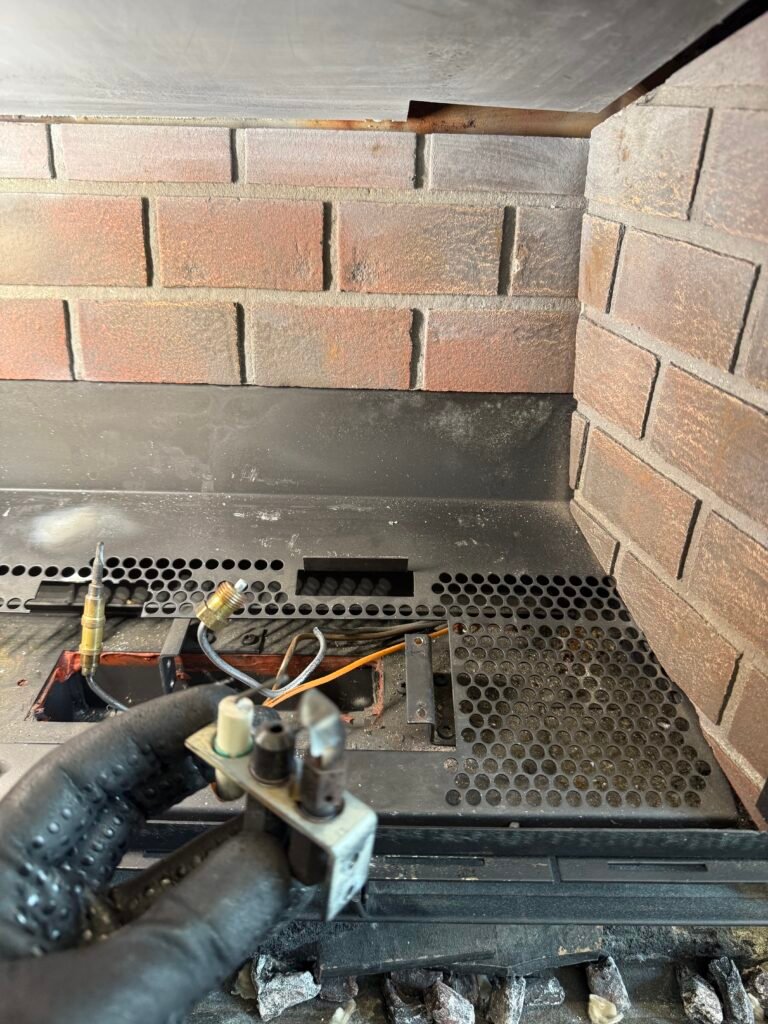
What Does “Pilot Light Won’t Stay Lit” Actually Mean?
A standing-pilot fireplace uses a small flame to heat a safety sensor. When that sensor reaches the required temperature, it produces a small electrical signal that allows the gas valve to remain open. If the flame is weak, misplaced, unstable, or the sensor cannot produce a reliable signal, the pilot drops out as soon as you release the control knob.
Pilot stays on only while holding the knob
Pilot flame looks small or yellow
Pilot works briefly, then shuts off
Main burner will not start
Fireplace shuts off after warming up
Pilot is difficult to relight
Problem returns every winter
Why a Gas Fireplace Pilot Light Won’t Stay Lit
The visible symptom is simple, but several different faults can produce it. During gas fireplace repair in Vancouver, a technician should test the complete pilot safety circuit instead of replacing parts by guesswork.
Dirty Pilot Assembly
Dust, lint, pet hair, oxidation, and renovation debris can restrict the pilot opening or disturb the flame shape. The pilot may still light, but it may not wrap around the thermocouple or thermopile strongly enough to keep the safety circuit energized.
Weak or Misaligned Pilot Flame
A healthy pilot should contact the sensing element in the position specified by the manufacturer. If the flame is too short, lifts away, flickers excessively, or burns mostly yellow, the sensor may cool as soon as the control knob is released.
Worn Thermocouple
The thermocouple generates a very small electrical signal when heated. Age, corrosion, contamination, physical damage, or poor flame contact can reduce its output. A weak thermocouple may allow the pilot to light but fail to hold the safety magnet inside the gas valve.
Weak Thermopile
Many millivolt fireplaces use a thermopile to create enough voltage for the gas valve and wall switch circuit. A weak thermopile can cause intermittent shutdowns, failure of the main burner, or a pilot that becomes unstable as the fireplace warms.
Loose or Corroded Connections
Millivolt systems operate on very low voltage, so even mild corrosion, loose terminals, damaged wire, or poor contact at the valve can cause a significant voltage drop. Cleaning and testing must be done carefully because these circuits are easily misdiagnosed.
Failing Gas Control Valve
The internal safety magnet or pilot valve may be worn, contaminated, or mechanically damaged. A new thermocouple will not solve a defective valve. The technician should test sensor output and valve holding requirements before recommending replacement.
Draft or Venting Problem
Wind, downdraft, blocked venting, a damaged termination, building depressurization, or an exhaust fan can disturb the pilot flame. A pilot that goes out mainly on windy days or when a kitchen fan runs deserves a venting and combustion-air inspection.
Gas Pressure or Supply Issue
Low inlet pressure, regulator trouble, a partially closed shutoff, undersized piping, or another supply problem can produce a weak pilot. Gas pressure must be measured with proper instruments while the appliance is operating.
Overheating or Safety Shutdown
If the pilot stays lit when cold but drops out after the fireplace runs, heat-related issues may be involved. Restricted airflow, misplaced logs, damaged gaskets, excessive temperature, or a failing component can interrupt operation after warm-up.
What You Can Check Before Calling a Technician
Only perform checks that do not require removing gas components, altering the pilot assembly, opening the gas valve, or bypassing safety controls. Follow the lighting label and owner’s manual for your exact fireplace model.
1. Read the lighting instructions
Confirm the control knob sequence and the recommended time for holding the knob after the pilot lights. Different valves use different procedures, so do not rely on instructions from another fireplace.
2. Confirm the gas shutoff is open
If the appliance shutoff is visible and moves normally, verify that it has not been accidentally closed. Do not force a stiff, damaged, or unfamiliar valve.
3. Observe the pilot flame
Through the glass, note whether the flame is steady, mostly blue, and contacting the sensor. Do not remove sealed glass or decorative media simply to get a closer look.
4. Allow the correct hold time
After lighting the pilot, keep the control depressed only for the period specified by the manufacturer. If it still goes out after a normal attempt, stop repeatedly relighting it.
5. Check for obvious airflow changes
Notice whether the problem occurs when a range hood, bathroom fan, dryer, or portable air conditioner is operating. This observation can help the technician identify pressure or venting problems.
6. Record the model and symptom
Take a photo of the rating plate if it is safely accessible. Note how long the pilot remains lit, whether the main burner starts, and whether the problem occurs only when the unit is hot.
Stop Using the Fireplace if You Notice These Warning Signs
Turn the fireplace off and arrange professional service if the pilot outage is accompanied by a rotten-egg odour, hissing, delayed ignition, a booming sound, soot, scorch marks, a damaged glass seal, repeated headaches, nausea, unusual fatigue, or eye irritation. If you smell natural gas, leave the building and call FortisBC at 1-800-663-9911 or 911 from outside. Do not use switches, phones, flames, or anything that could create a spark indoors.
FortisBC identifies frequent pilot outages, yellow or wavering flames, soot, unusual odours, delayed ignition, and possible carbon-monoxide symptoms as reasons to contact a licensed gas contractor. Review the official gas appliance maintenance guidance and Technical Safety BC’s annual gas appliance servicing bulletin.
How a Technician Diagnoses a Pilot That Will Not Stay Lit
A proper diagnosis follows the safety circuit from the flame to the gas valve. Replacing the thermocouple automatically may seem efficient, right up until the actual cause turns out to be poor flame contact, excessive resistance, low gas pressure, or a failing valve.
Confirm the Complaint
The technician operates the fireplace from a cold start and observes the lighting sequence, pilot shape, shutdown timing, control response, and any relationship to heat or household exhaust fans.
Inspect the Pilot and Burner Area
The pilot hood, sensing elements, burner, log placement, wiring, gaskets, venting, and visible signs of soot or overheating are checked against the manufacturer’s requirements.
Measure Sensor Output
Thermocouple or thermopile output is measured under appropriate conditions. The technician also checks whether voltage drops excessively when the valve or wall-switch circuit is connected.
Test Gas Pressure and Valve Operation
When required, inlet and manifold pressure are measured with calibrated equipment. The safety magnet, pilot valve, main valve, regulator, and gas supply are evaluated before parts are condemned.
Complete the Repair and Safety Test
After cleaning, adjustment, or replacement, the fireplace is cycled repeatedly. The technician verifies stable ignition, burner operation, flame pattern, shutoff response, venting condition, and carbon-monoxide safety.
Components That May Need Cleaning, Repair, or Replacement
Thermocouple
Common on standing-pilot systems. It proves that the pilot flame is present and helps prevent unburned gas from continuing to flow if the flame goes out.
Thermopile
Produces millivolt power for the gas valve and control circuit. Weak output can affect both pilot stability and operation of the main burner.
Pilot Assembly
Includes the pilot hood, orifice, tubing, ignitor, and sensing components. Cleaning or replacement must preserve the manufacturer’s specified flame pattern.
Gas Control Valve
Contains safety and operating components that control pilot and burner gas. It should be replaced only after electrical output, pressure, and connections have been tested.
Wiring and Switch Circuit
Loose terminals, corroded connectors, worn wall switches, or excessive resistance can prevent a millivolt fireplace from operating reliably.
Vent and Air Components
Terminations, intake passages, gaskets, and pressure conditions can influence pilot stability. Venting faults are safety issues, not merely nuisance shutdowns.
Gas Fireplace Brands We Diagnose and Repair
SkyLimit Heating services many common gas fireplace brands used throughout Vancouver and the Lower Mainland. Component design and testing values vary by model, so correct identification matters before ordering parts or making adjustments.
Is It Worth Repairing a Fireplace With a Pilot Problem?
In many cases, yes. A dirty pilot assembly, weak thermocouple, damaged thermopile, corroded connection, or worn switch can often be repaired without replacing the entire fireplace. Repair is especially reasonable when the firebox, glass, venting, gas valve availability, and overall appliance condition remain sound.
Replacement becomes more practical when the fireplace has a damaged firebox, unsafe or obsolete venting, repeated gas-valve failures, severe corrosion, unavailable proprietary parts, broken glass no longer supported by the manufacturer, or several expensive faults at the same time. For an older unit that needs more than a pilot repair, review our gas fireplace installation options before committing to a large repair.
Continue Troubleshooting the Correct Symptom
Spark problemGas Fireplace Keeps ClickingLearn why an electronic ignition system keeps sparking or repeatedly retries.Read the guide →
Local serviceFireplace Repair VancouverBook professional diagnosis for pilot, burner, valve, ignition, and safety problems.View repair service →
Brand serviceMontigo Fireplace RepairDiagnosis and repair for common Montigo pilot, ignition, control, and burner faults.Explore Montigo service →
Service areaFireplace Repair BurnabyLocal fireplace troubleshooting and repair for Burnaby homeowners.View Burnaby service →
Book serviceContact SkyLimit HeatingSend the fireplace model, symptom, and preferred appointment details.Contact our team →
Gas Fireplace Pilot Light FAQ
Why does my pilot light go out when I release the knob?
The thermocouple may not be hot enough to hold the gas valve open. This can result from insufficient hold time, a weak or misplaced pilot flame, a dirty pilot assembly, a worn thermocouple, loose connections, or a failing gas valve.
How long should I hold the pilot knob down?
Use the exact time stated on the appliance lighting label or in the owner’s manual. Many systems require a short warm-up period, but holding the valve open far longer than instructed is unsafe and does not repair a defective safety circuit.
Can I clean the thermocouple myself?
Light surface dust may be visible, but aggressive sanding, bending, removal, or cleaning of the pilot opening can damage the assembly or alter the flame. Professional cleaning and electrical testing are safer when the pilot repeatedly goes out.
Does a yellow pilot flame mean something is wrong?
A small amount of colour may vary by design, but a weak, lazy, wavering, or mostly yellow flame can indicate contamination, restricted air, incorrect gas flow, or another combustion issue. Compare it with the manufacturer’s instructions and arrange service if it is abnormal.
Can a bad thermopile make the pilot go out?
Yes. Depending on the fireplace design, a weak thermopile can cause the main valve to drop out, prevent the burner from opening, or contribute to intermittent shutdowns. It should be tested under load rather than replaced solely because of age.
Why does the pilot stay lit until the main burner starts?
The added electrical load, gas-flow change, heat, or draft created during burner operation may expose a weak thermopile, high-resistance connection, marginal pilot flame, valve problem, or venting issue.
Is it safe to leave a gas fireplace pilot on?
A correctly operating standing pilot may be left on according to the manufacturer’s instructions. However, repeated outages, soot, unusual odours, yellow flames, or carbon-monoxide concerns require professional inspection before continued use.
How often should a gas fireplace be serviced?
Annual inspection and servicing are sensible. A professional service normally includes the burner, pilot system, gas valve, ignition components, glass and gaskets, venting, air openings, controls, and safety operation.
Book Gas Fireplace Pilot Light Repair in Vancouver
If your pilot lights but will not remain on, stop repeating the same ignition attempt and have the safety circuit tested properly. SkyLimit Heating provides gas fireplace diagnosis and repair across Vancouver and surrounding Lower Mainland communities.