
FIREPLACE COMPONENT GUIDE · RECEIVER
Gas Fireplace Receiver Problems: Remote Not Working, No Response & Intermittent Operation
When a gas fireplace works manually but refuses to respond to the remote, the receiver becomes an important suspect, but it is not the only one.
Dead batteries, lost pairing, corroded contacts, a failed remote transmitter, loose wiring, a weak millivolt circuit, or a control-module problem can create nearly identical symptoms.
Call 778-892-5119
Book Fireplace Diagnosis
Licensed & Insured • Metro Vancouver & Fraser Valley • Remote & Control Diagnostics
QUICK ANSWER
How Do I Know if My Gas Fireplace Receiver Is Bad?
A receiver problem is more likely when the fireplace operates from its manual control or wall switch but does not respond correctly to a known-good remote, especially after fresh batteries and model-specific pairing steps have been verified. Intermittent response, clicking without burner operation, battery corrosion, or a receiver that only works when moved or tapped can also point toward the receiver or its connections.
FAST DIAGNOSTIC SPLIT
Remote, Receiver, or Fireplace Control Circuit?
Remote Problem
No display, weak signal, damaged buttons, battery-contact issues, or a transmitter that never sends the expected command.
Receiver Problem
Fresh batteries and correct pairing do not restore reliable operation, or the receiver shows corrosion, damaged wiring, or intermittent switching.
Fireplace Problem
The receiver sends the command, but thermopile output, gas valve, wiring, ignition module, or another safety/control component prevents operation.
HOW THE COMPONENT FITS IN
What Does a Gas Fireplace Receiver Do?
The receiver listens for commands from the handheld remote and passes the appropriate control signal to the fireplace. Depending on the appliance, that may mean completing a simple millivolt burner circuit or communicating with an electronic control system that manages ignition, flame height, fan operation, thermostat functions, or other features.
This distinction matters. An older millivolt receiver may behave much like a remote-operated switch. A newer electronic fireplace may use a receiver or control module as part of a much more integrated system. The correct diagnostic method therefore depends on the exact fireplace and remote-control platform.
Useful clue:
If the fireplace works reliably from a manual receiver setting or wall switch but not from the handheld remote, the fault is more likely in the remote/receiver communication path than in the burner itself.
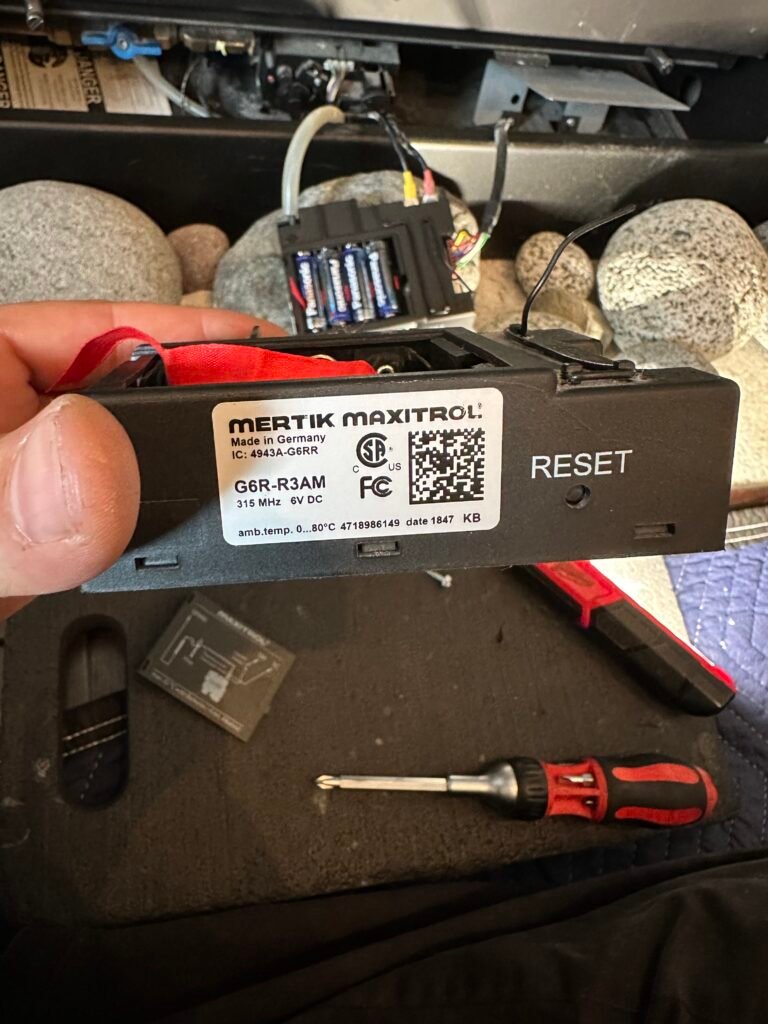
SYMPTOM MAP
Common Gas Fireplace Receiver Problems
Remote Does Nothing
Check batteries, remote display, pairing, receiver mode, and the receiver power source.
Works Only Sometimes
Weak batteries, poor contacts, marginal wiring, receiver failure, or a weak millivolt circuit can be involved.
Receiver Clicks, No Flame
The receiver may be switching correctly while the problem sits farther downstream.
Manual ON Works
This can narrow the problem toward remote pairing, transmitter, receiver electronics, or communication.
Corroded Battery Contacts
Leaking batteries can damage contacts and internal receiver electronics.
Fireplace Turns On Unexpectedly
Stop using the remote system until unintended commands, wiring, or control faults are investigated.
CAUSES
Why a Gas Fireplace Receiver Stops Working
1. Dead or Weak Batteries
Some receivers require their own batteries in addition to the batteries in the handheld remote. Replace them with the type specified by the manufacturer and confirm polarity.
2. Battery Leakage or Corroded Contacts
Old batteries can leak and damage the contact surfaces. Light surface contamination and severe internal corrosion are very different problems, so the receiver should be inspected before assuming fresh batteries will rescue it.
3. Lost Remote Pairing
Some systems require the transmitter and receiver to be paired or learned. Battery replacement, power loss, or control-system changes can sometimes require a model-specific synchronization procedure.
4. Receiver Switch in the Wrong Position
Receivers commonly have OFF, REMOTE, and ON-style operating positions, although layouts vary. A fireplace that works in manual ON but not REMOTE provides a useful diagnostic clue.
5. Loose or High-Resistance Connections
On millivolt fireplaces, even modest resistance in receiver wiring or terminals can matter. A receiver can appear defective when the real problem is a poor connection in the low-energy control circuit.
6. Weak Thermopile Output
A receiver inserted into a marginal millivolt circuit can expose a weakness that is not obvious when testing individual parts. See Gas Fireplace Thermopile Problems.
7. Failed Receiver Electronics
Age, heat exposure, battery leakage, internal relay failure, or electronic damage can eventually make the receiver unreliable or completely unresponsive.
8. Problem Outside the Receiver
If the receiver is sending the correct command but the fireplace still does not operate, continue upstream or downstream as appropriate. The Gas Fireplace Gas Valve Problems guide covers one common next branch.
SAFE HOMEOWNER CHECKS
What You Can Check Before Booking Service
- Replace the remote batteries. Use fresh batteries and confirm polarity.
- Check receiver batteries if your system uses them. Do not assume the remote is the only battery-powered component.
- Inspect for visible battery corrosion. Do not continue forcing damaged contacts to work.
- Confirm the receiver operating position. Follow the owner’s manual because switch labels and procedures differ.
- Try the documented pairing procedure. Use instructions for the exact remote and receiver model.
- Note whether manual operation works. This is valuable information for diagnosis.
Stop at the control boundary.
Do not bypass the receiver, jumper gas-valve terminals, alter safety wiring, or experiment with gas controls.
AFTER CHANGING BATTERIES
Does the Receiver Need Pairing After New Batteries?
Not automatically. First confirm which device received new batteries and use the instructions for the installed remote system. A powered handset does not prove the receiver has power, and no response does not prove that pairing was lost. Some systems need synchronization in certain circumstances; others retain their pairing. Do not apply a reset sequence from a different fireplace.
1 · Handset stays blank
Start with the handset’s specified battery type, polarity and accessible battery compartment. Pairing cannot explain a display that never powers up. Do not assume the receiver batteries also need replacement.
2 · Display works, no response
Check the receiver power source and operating mode only as the owner’s manual allows. If those are correct, consult the matching synchronization instructions. Report any beep or indicator exactly; it has no universal meaning across brands.
3 · Receiver responds, no flame
Communication may be working while ignition or the burner circuit fails. Repeatedly pairing the remote can distract from that fault. Use the remote response with no flame guide.
Match the guide before pressing Reset or Learn
Regency’s Proflame 2 owner guide separates the handset, receiver and battery backup, and limits its instructions to that control platform. It also discusses pairing after power has been confirmed. Battery sizes, access locations and button sequences still need to match your appliance documentation. Read Regency’s Proflame 2 guide.
For a service request, include the fireplace model, handset model, which batteries were changed, and whether the symptom existed beforehand. Photograph an accessible label with the appliance off and cool; do not remove the glass or open wiring compartments to identify the receiver. If there is leakage, visible damage, unintended operation or repeated ignition failure, stop experimenting and book fireplace diagnosis.
TECHNICIAN WORKFLOW
How We Diagnose a Fireplace Receiver Problem
Step 1 — Identify the Control System
We identify the fireplace, receiver, remote, ignition system, and wiring arrangement before testing.
Step 2 — Verify Power and Batteries
Battery condition, polarity, contacts, external power sources, and visible corrosion are checked as applicable.
Step 3 — Compare Manual and Remote Operation
This helps separate communication problems from downstream fireplace faults.
Step 4 — Check Pairing and Command Response
The transmitter and receiver are tested using the manufacturer’s intended procedure.
Step 5 — Test the Control Circuit
Wiring, thermopile output, valve circuit, or electronic control inputs are checked when required.
Step 6 — Confirm Reliable Operation
After repair or replacement, repeated start, stop, thermostat, flame, or auxiliary functions are verified as applicable.
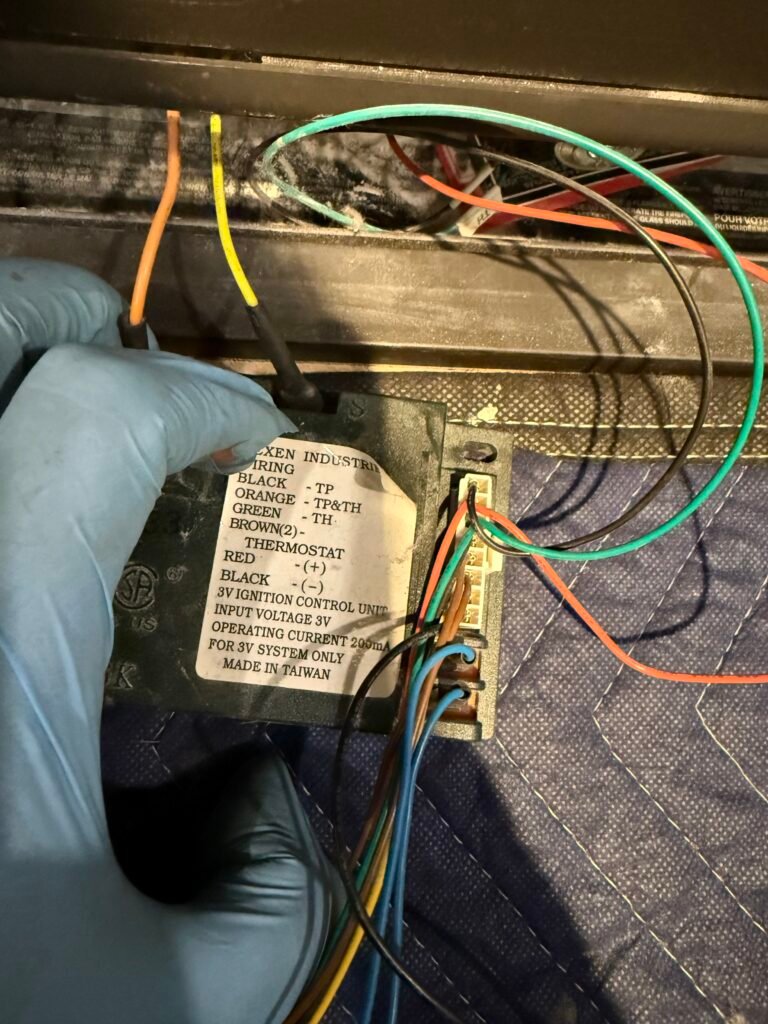
REPAIR DECISION
When Should a Fireplace Receiver Be Replaced?
Replacement makes sense when diagnosis shows the receiver itself is failing, not merely when the remote fails to turn on the fireplace.
- Confirmed internal receiver or relay failure
- Severe battery leakage or corrosion damage
- Intermittent switching after wiring and power issues are ruled out
- Receiver no longer pairs or responds according to manufacturer procedure
- Obsolete receiver replaced by an approved manufacturer-compatible control kit
Compatibility matters. Remote-control systems are not universal. Frequency, control logic, valve type, ignition system, connectors, and approved replacement kits must match the fireplace/control platform.
SAFETY & BC REQUIREMENTS
When Receiver Troubleshooting Becomes Gas-Appliance Work
Changing batteries or following an owner-manual pairing procedure is one thing. Once diagnosis moves into gas-valve wiring, ignition controls, safety circuits, regulated components, or appliance alteration, the work belongs with appropriately qualified professionals.
Technical Safety BC — Gas Licences
·
FortisBC — Appliance Maintenance & Safety
CONTINUE THE DIAGNOSTIC PATH
Related Gas Fireplace Component Guides
WHY SKYLIMIT HEATING
Find the Failed Link Before Replacing the Remote System
A fireplace remote problem can begin in the handheld transmitter and end all the way at the gas valve or ignition controls. SkyLimit Heating traces the command path instead of swapping parts until something happens to work.
✓ Licensed & insured
✓ Remote & receiver diagnosis
✓ Millivolt & electronic systems
✓ Major fireplace brands
My Fireplace Works After a Reset, Then Stops Again. Is the Control Module Bad?
A successful reset does not identify the failed component. It can temporarily clear a lockout while an ignition, power, pilot or flame-sensing problem remains. A recurring failure needs model-specific diagnosis before a receiver or ignition module is replaced.
Regency describes safety lockout during cold start-up on some electronic-ignition systems. This is one possible context, not an explanation for every shutdown. Read its cold-start guidance and use the correct appliance and remote manuals for your model.
Save the Evidence Before Clearing the Error
- Record the signal: note the message, beeps or visible indicator flashes without removing panels.
- Describe the stopping point: no response, spark without pilot, pilot without burner, or flame followed by shutdown. See when fireplace clicking occurs.
- Note the conditions: cold or damp weather, first use after a long break, power interruption or recent battery change.
- Report the result: share the exact owner-manual procedure followed and how long operation lasted afterward.
Can I keep resetting the fireplace?
Follow only the reset and waiting instructions in your exact owner manual. If the fault returns, stop repeated attempts and request service. Never bypass a safety circuit. Compare normal thermostat cycling with an unexpected shutdown.
What should I ask before approving a new board?
Ask what test identified the module as faulty, whether its power supply and connected ignition components were checked, and how the replacement matches the appliance. Consult the replacement part-number guide if the number differs.
Smell gas? Do not reset. Leave the building without operating electrical switches. Call FortisBC at 1-800-663-9911 or 911 from outside. FortisBC emergency contacts.
Request gas fireplace repair in Vancouver with the recorded sequence. Section updated: October 12, 2026.
FAQ
Gas Fireplace Receiver Problems FAQ
Why is my gas fireplace remote not working?
Common causes include dead batteries, receiver batteries, lost pairing, incorrect receiver mode, damaged contacts, a failed transmitter or receiver, wiring issues, or another fireplace control problem.
Why does my fireplace work manually but not with the remote?
That pattern can narrow the fault toward the transmitter, receiver, pairing, batteries, or communication path because the fireplace can still operate from another control method.
Does the fireplace receiver have batteries?
Many receiver systems do, but designs vary. Check the owner’s manual for the exact fireplace or remote-control system.
Why does the receiver click but the fireplace not light?
A click may indicate that the receiver is attempting to switch the circuit. Thermopile output, wiring, the gas valve, ignition controls, or another downstream component may still prevent burner operation.
Can battery corrosion ruin a fireplace receiver?
Yes. Leaking batteries can damage contacts and, in more severe cases, internal receiver electronics.
Are gas fireplace receivers universal?
No. Compatibility depends on the control system, communication method, valve or module design, wiring, connectors, and manufacturer-approved replacement options.
Can a weak thermopile cause remote problems?
On some millivolt systems, weak thermopile output or excessive circuit resistance can prevent reliable operation even when the receiver itself is functioning.
Do you repair fireplace remote and receiver problems in Metro Vancouver?
SkyLimit Heating diagnoses fireplace remotes, receivers, millivolt circuits, ignition controls, gas valves, pilot systems, and related problems across Metro Vancouver and the Fraser Valley.
REMOTE STILL NOT WORKING?
We’ll Trace the Command From the Remote to the Fireplace
Instead of guessing between a remote, receiver, thermopile, gas valve, or control module, we can test the system and identify where the command stops.