
Gas Fireplace Remote Not Working? Causes, Safe Checks & Professional Repair
If your gas fireplace remote is not working, the problem may be as simple as dead batteries or as specific as a failed receiver, lost pairing, damaged wiring, incorrect mode, weak thermopile, or control-module fault. This guide explains the checks you can safely perform and when the fireplace needs professional diagnosis.
Quick Answer
A gas fireplace remote that stops working is commonly caused by dead or reversed batteries, corroded battery contacts, a receiver set to the wrong position, lost remote pairing, weak signal, damaged wiring, a failed receiver, or a fireplace control system that is not generating enough power. Start with fresh batteries and the receiver mode. Do not bypass safety controls or open gas components.
Remote batteries or battery contacts.
Pairing, receiver mode, signal, or receiver fault.
Weak batteries, interference, or antenna issue.
Remote or receiver communication problem.
Table of Contents
How a Gas Fireplace Remote Control System Works
A fireplace remote usually communicates with a receiver located behind the lower access panel or inside the control compartment. Depending on the model, the remote may control only on/off operation or may also manage flame height, thermostat temperature, blower speed, accent lights, comfort mode, timer settings, and child lock.
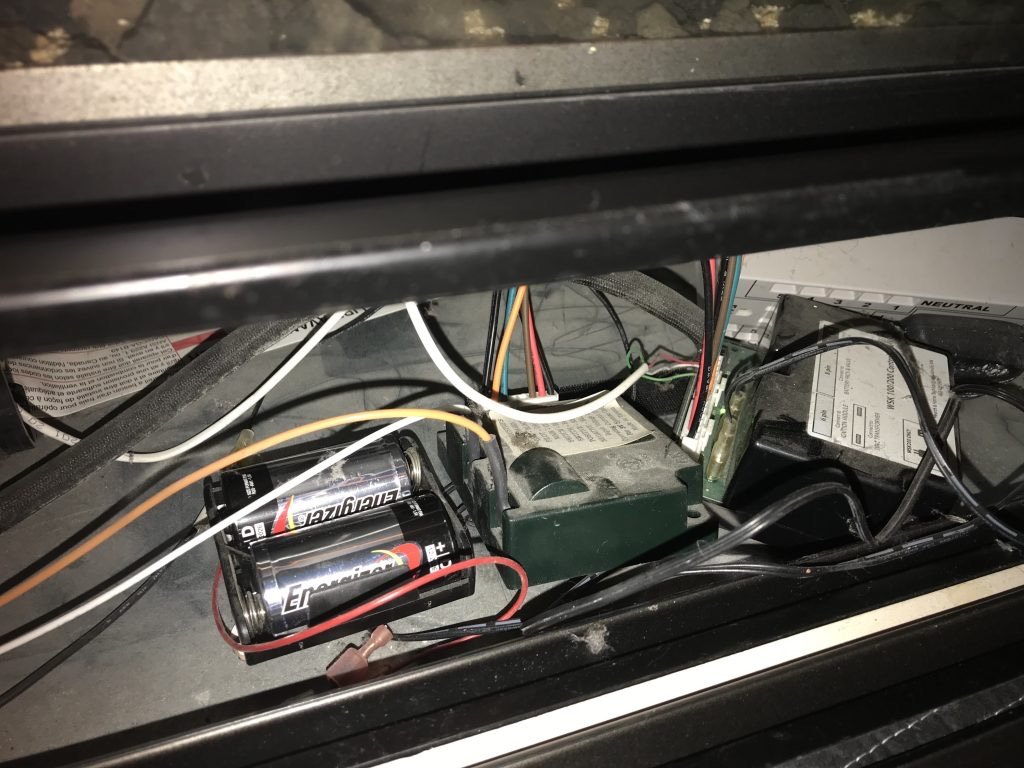
The receiver may run on batteries, household power, or a millivolt circuit generated by the fireplace. Some receivers have a three-position switch marked ON, REMOTE, and OFF. If the switch is not in the correct position, the remote can look perfectly healthy while the fireplace does not respond to commands.
Modern electronic ignition fireplaces may use an integrated control module rather than a simple standalone receiver. Diagnosis depends on the actual fireplace model, wiring diagram, and control system. If the handheld remote appears normal but commands are not reaching the fireplace, our gas fireplace receiver problems guide separates receiver faults from pairing, wiring, power and control-module issues.
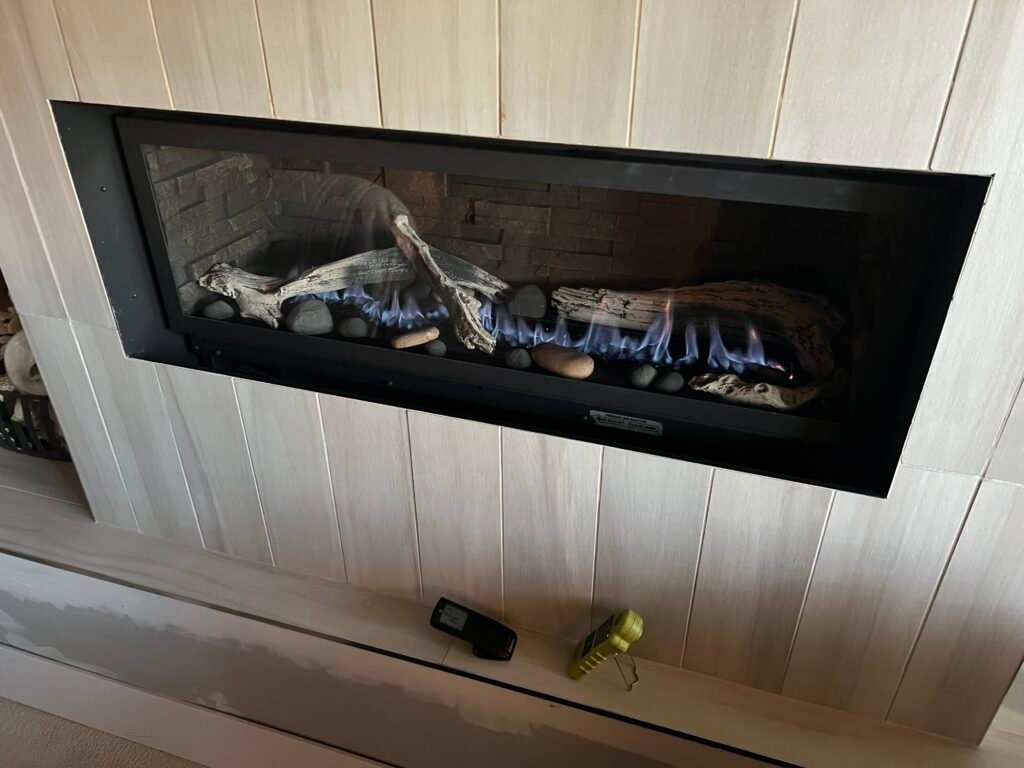
What a Fireplace Remote Problem Looks Like
Remote Screen Is Blank
The remote has no display, backlight, or response. Batteries, contacts, or the handheld unit are the first suspects.
Remote Beeps but Fireplace Does Nothing
The handheld unit may be working while the receiver, pairing, wiring, or fireplace control circuit fails.
Works Only Very Close
Weak batteries, interference, antenna position, or a failing transmitter may reduce range.
Wall Switch Works, Remote Does Not
The burner circuit is probably functional, narrowing the issue to remote communication or receiver control.
Remote Works Intermittently
Loose batteries, corrosion, weak signal, damaged wiring, receiver overheating, or control-module faults may be involved.
Fireplace Turns On by Itself
Thermostat mode, timer settings, another paired remote, receiver fault, or wiring problem may create unexpected operation.
12 Common Reasons a Gas Fireplace Remote Is Not Working
The most common cause is also the least glamorous. Replace all batteries with fresh, matching batteries rather than mixing old and new cells.
Some battery compartments are cramped and markings are tiny. Verify polarity instead of trusting the hurried installation performed in poor light.
Leaking batteries can leave white or green corrosion that interrupts power in the remote or receiver.
A receiver set to OFF will ignore the remote. A receiver set to ON may bypass remote control and keep the burner running manually.
Battery-powered receivers need their own fresh batteries. Replacing only the handheld batteries solves nothing when the receiver has no power.
A battery change, power interruption, replacement remote, or control reset may require the transmitter and receiver to be paired again.
Some remotes disable normal commands when child lock, timer, thermostat, or program mode is active.
Nearby electronics, metal panels, Wi-Fi equipment, or poor antenna position can reduce reliable communication.
Small control wires can loosen, corrode, overheat, or become damaged during cleaning, renovation, or previous service.
Heat, age, battery leakage, internal relay failure, or electronic damage can prevent the receiver from switching the burner circuit.
On millivolt systems, the remote may send the command while insufficient thermopile output prevents the gas valve from opening reliably.
Electronic ignition systems may have an integrated control board, ignition module, or valve system that fails even though the remote appears normal. If the receiver responds but the ignition sequence does not complete, continue with our gas fireplace control module problems diagnostic guide.
Remote Symptom Guide
| Symptom | Possible Cause | Next Step |
|---|---|---|
| Blank remote display | Batteries, contacts, failed handheld | Replace batteries and inspect contacts |
| Display works, no fireplace response | Receiver mode, receiver batteries, pairing, wiring | Check receiver and pairing instructions |
| Works only at short range | Weak batteries, interference, antenna position | Use fresh batteries and reduce interference |
| Manual ON works, REMOTE does not | Remote, pairing, receiver electronics | Test transmitter and receiver communication |
| Receiver clicks, burner does not light | Thermopile, valve, ignition, control circuit | Professional fireplace diagnosis |
Remote Display Works or Receiver Beeps, but the Fireplace Does Not Light
A lit handheld display confirms that the remote has power; it does not confirm that the receiver received a command or that the fireplace completed ignition. Note whether a sound comes from the handheld remote or from the fireplace. A receiver acknowledgement is useful evidence, but its meaning depends on the control system and the command sent.
Check Whether the Thermostat Is Calling for Heat
In thermostat mode, the fireplace may remain off when the room is already warm enough. Review the displayed room temperature, target temperature and mode using your exact owner’s manual. Do not assume that changing a fan or light setting also requests burner operation. For example, Regency’s Proflame 2 remote guide explains thermostat operation and receiver responses specifically for that system; its procedures should not be applied to every fireplace remote.
Tell the Technician What Happens After the Command
- No receiver response: record the receiver mode and any recent battery change, power outage or remote replacement. Follow only the model’s user instructions for accessible batteries and pairing. See our receiver troubleshooting guide.
- Receiver responds but there is no flame: note any spark, pilot flame, error indication or shutdown. Avoid repeated resets or bypassing controls. A working display does not justify replacing the remote without diagnosis.
- Pilot stays on but the main burner does not light: our pilot-on, burner-off guide explains why the next checks depend on the ignition system.
Provide the fireplace model, remote model and a description of the response when booking gas fireplace repair in Vancouver. These details help separate communication problems from an ignition or burner-control fault before parts are ordered.
Safe Checks You Can Perform
Replace All Batteries
Use fresh, matching batteries in both the remote and receiver. Confirm polarity and clean only light surface corrosion safely.
Check Receiver Position
Set the receiver to REMOTE for normal handheld operation. Use the owner’s manual because labels and sequences vary.
Move Closer and Remove Interference
Stand near the fireplace and temporarily move nearby electronics or metal objects that may block the signal.
Review Mode Icons
Check for child lock, thermostat, timer, eco, or program symbols that change normal on/off behaviour.
Do not:
- Jump receiver wires to force the fireplace on.
- Bypass safety switches or ignition controls.
- Open the gas valve or burner assembly.
- Continue repeated ignition attempts when you smell gas.
- Use a non-approved remote or receiver without confirming compatibility.
How We Diagnose a Fireplace Remote Problem
Identify the Control System
We confirm the fireplace model, remote type, receiver, ignition system, and whether the unit uses millivolt or electronic controls.
Test Remote and Receiver Power
Battery voltage, contacts, power supply, receiver switch position, and internal fuse protection are checked.
Verify Pairing and Signal
The transmitter and receiver are synchronized according to the manufacturer’s procedure, then tested at normal operating distance.
Test Receiver Output and Wiring
Receiver relay operation, low-voltage wiring, terminal condition, and command output to the fireplace controls are verified.
Test Fireplace Response
Thermopile output, ignition module, gas valve circuit, wall switch, and safety controls are tested when the receiver sends a valid command.
Common Fireplace Remote Repairs
Battery and Contact Service
Battery replacement and safe contact cleaning may restore power when corrosion is limited.
Remote Reprogramming
The transmitter and receiver may need to be paired or reset according to the manufacturer’s sequence.
Receiver Replacement
A failed relay, heat-damaged board, battery leakage, or internal electronics may require an approved receiver.
Remote Replacement
A damaged transmitter may need an exact or manufacturer-approved replacement compatible with the receiver.
Wiring Repair
Loose, corroded, overheated, or damaged low-voltage connections can be repaired after the fault is confirmed.
Control Module Diagnosis
Electronic ignition modules, valve controls, and integrated boards may need model-specific testing or replacement.
Gas Fireplace Brands We Service
Related Fireplace Guides and Services
Gas Fireplace Won’t Turn OnIgnition, pilot, receiver, switch, and gas valve troubleshooting.
Gas Fireplace Keeps ClickingRepeated ignition attempts, spark, and flame-sensing faults.
Gas Fireplace Not Producing HeatBlower, burner, airflow, and low-heat problems.
Gas Fireplace Making NoisePopping, buzzing, whistling, humming, and fan noise.
Book Fireplace ServiceRequest a service appointment with SkyLimit Heating.
Trusted Safety Resources
FortisBC recommends regular maintenance by a licensed gas contractor and professional inspection of the burner, gas valve, ignition system, door gaskets, venting, and air openings. Technical Safety BC states that regulated gas work in British Columbia must be performed by authorized or properly licensed parties.
Frequently Asked Questions
Why is my gas fireplace remote not working?
Common causes include dead batteries, corroded contacts, receiver batteries, incorrect receiver mode, lost pairing, radio interference, damaged wiring, a failed receiver, weak thermopile output, or a fireplace control-module fault.
Why does the remote display work but the fireplace does nothing?
The handheld transmitter may be working while the receiver has no power, lost pairing, incorrect mode, failed electronics, damaged wiring, or a downstream fireplace control problem.
How do I reset a gas fireplace remote?
Reset and pairing procedures vary by manufacturer. Check the owner’s manual for the correct sequence rather than using a generic procedure that may not match your receiver.
Why does the remote work only when I stand close?
Weak batteries, radio interference, a blocked or poorly positioned antenna, metal shielding, or a failing transmitter can reduce range.
Can a weak thermopile make the remote stop working?
On millivolt systems, the remote may send the command correctly while low thermopile voltage prevents the gas valve from operating reliably.
Why does the wall switch work but the remote does not?
This usually narrows the fault to the handheld remote, receiver power, pairing, receiver mode, or receiver electronics rather than the main burner circuit.
Can I buy a universal fireplace remote?
Some universal systems are compatible with certain millivolt fireplaces, but voltage, wiring, valve type, features, safety approvals, and physical installation must match the appliance.
Why does my fireplace turn on by itself?
Thermostat mode, timer programming, another paired transmitter, receiver fault, wiring problems, or control-module failure may cause unexpected operation.
Do fireplace receivers need batteries?
Many do, but some use household power or an integrated control module. Check the owner’s manual and receiver compartment for the correct power source.
Do you repair fireplace remotes in Vancouver?
Yes. SkyLimit Heating diagnoses remote transmitters, receivers, pairing, batteries, low-voltage wiring, thermopile output, ignition modules, and gas-valve control problems across Metro Vancouver and the Fraser Valley.
Remote Works, Fireplace Doesn’t?
SkyLimit Heating can test the remote, receiver, batteries, pairing, wiring, thermopile, ignition module, and gas-valve circuit to identify where the command is being lost.