
Gas Fireplace Blower Not Working? Causes, Safe Checks & Professional Repair
If your gas fireplace is burning but the blower is not moving warm air into the room, the problem may involve the fan motor, temperature switch, speed control, remote settings, wiring, dust buildup, or power supply. Some checks are simple. Internal electrical and gas-appliance repairs should be left to a qualified technician.
Quick Answer
A gas fireplace blower that does not work is commonly caused by a fan that has not warmed up yet, a low or disabled fan setting, dead remote batteries, a faulty temperature sensor, failed speed control, loose wiring, heavy dust buildup, seized bearings, or a worn motor. The flame may still operate normally because the burner and blower use different controls. Homeowners often call the same component a fireplace fan, so symptoms such as a gas fireplace fan not working, starting late, running after shutdown, weak airflow, rattling or speed-control problems belong to this same diagnostic path.
Wait until the fireplace has been running long enough for the blower’s temperature switch to activate. If the firebox is hot and the fan remains silent, professional electrical and component testing is the sensible next step.
Check settings, temperature switch and motor.
Motor or bearings may be seized.
A short warm-up delay may be normal.
Dust, speed control or motor wear may be involved.
Table of Contents
How a Gas Fireplace Blower Works
A gas fireplace blower pulls cooler room air into a convection space around the firebox, moves that air across heated metal surfaces, and pushes warmer air back into the room. It does not usually affect whether the burner lights. That is why a fireplace can display a healthy flame while the room remains disappointingly cold.
Most fireplace blowers do not start immediately. A heat-sensitive switch or control module waits until the firebox reaches a set temperature. This delay prevents the fan from blowing cool air during startup. Depending on the fireplace, the delay may last several minutes.
The blower may also continue running after the flame turns off. That is normally intentional. The fan removes stored heat from the firebox and stops only after the temperature falls below the control’s threshold.
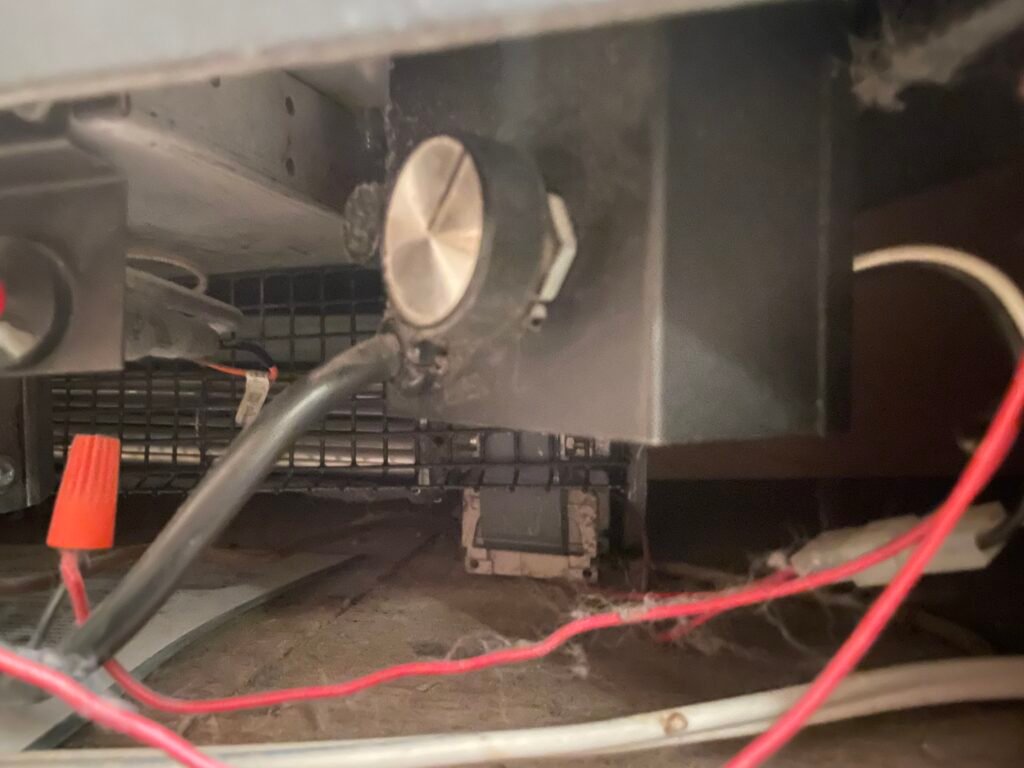
Signs the Fireplace Blower Has a Problem
The Flame Is On but the Fan Is Silent
The blower never starts, even after the fireplace has been operating long enough to become fully hot.
The Fan Hums but Does Not Spin
Electrical power may be reaching the motor, but seized bearings, a blocked wheel, or a failing motor prevents movement.
The Blower Runs Very Slowly
Dust buildup, worn bearings, a failing speed controller, or low motor performance can reduce airflow.
The Fan Starts and Stops Randomly
Loose wiring, an intermittent temperature switch, receiver problem, or overheating motor may interrupt operation.
The Blower Is Loud
Rattling, grinding, scraping, buzzing, or vibration often points to dirt, loose mounting, worn bearings, or motor wear.
The Fireplace Feels Hot but the Room Does Not
The burner may be producing heat normally, but the failed fan is not distributing it into the room.
12 Common Reasons a Gas Fireplace Blower Is Not Working
A blower problem can be mechanical, electrical, control-related, or simply a setting issue. Testing the sequence prevents unnecessary parts replacement.
The fan may wait five to fifteen minutes, depending on the model and control temperature. A delay by itself is not a failure.
Many remotes control flame and fan separately. The blower may have been turned off accidentally or left at its lowest speed.
Weak batteries can cause incomplete commands, intermittent fan control, or a receiver that stops responding.
A tripped breaker, switched outlet, unplugged cord, blown fuse, or loose power connection can leave the fan circuit dead.
The heat-sensitive switch may fail to close after the firebox warms, so the blower never receives the signal to start.
A damaged rheostat, module, or remote-control circuit may prevent the motor from receiving usable voltage.
Dust adds resistance to the fan wheel, blocks airflow, and can overheat the motor. Homes with pets often collect debris faster.
A motor may hum, grind, or start only after being disturbed when bearings are dry or worn.
Debris, a shifted wire, insulation, or a damaged fan wheel may physically stop the assembly from turning.
Repeated heating and cooling can loosen terminals or damage insulation, creating intermittent or complete fan failure.
A worn or dirty motor may run briefly, overheat, shut off internally, and restart only after cooling.
A universal blower or control that does not match the fireplace’s voltage, airflow, size, or mounting requirements may perform poorly or fail early.
Blower Symptom Guide
| Symptom | Possible Cause | Recommended Action |
|---|---|---|
| Fan never starts | Power, temperature switch, speed control, wiring, motor | Check settings and power, then arrange testing |
| Fan hums but will not spin | Seized bearings, blocked wheel, failing motor | Stop repeated operation and inspect assembly |
| Fan starts, then stops | Overheating motor, loose wiring, control fault | Test under full operating temperature |
| Fan is noisy | Dust, vibration, loose mount, worn bearing | Clean, secure, and evaluate motor condition |
| Fan runs but airflow is weak | Dust buildup, low speed setting, damaged wheel, weak motor | Inspect airflow path and measure motor performance |
Safe Checks Before Calling a Technician
Allow Enough Warm-Up Time
Run the fireplace long enough for the firebox to heat. Some blowers need several minutes before they activate.
Check Remote Settings
Confirm fan speed is not off or at minimum. Replace remote and receiver batteries when applicable.
Check the Breaker and Plug
Verify the fireplace outlet has power and the breaker has not tripped. Do not open internal electrical compartments.
Listen Carefully
A hum, click, scrape, rattle, or brief attempt to start can help identify where the sequence fails.
Do not:
- Reach into the blower while the fireplace is connected to power.
- Bypass a temperature switch or speed controller.
- Lubricate a sealed motor unless the manufacturer specifically permits it.
- Use compressed air in a way that drives dust into burners or controls.
- Operate the fireplace when wiring is scorched, insulation is damaged, or a burning smell is present.
How We Diagnose a Fireplace Blower That Will Not Work
Confirm Heat and Control Settings
We verify the firebox reaches operating temperature and confirm the remote, receiver, wall switch, thermostat, and fan settings.
Inspect the Fan Assembly
Dust, debris, wheel damage, loose mounts, wiring contact, and bearing condition are checked before electrical parts are blamed.
Test Power and Switching
Voltage, continuity, temperature switch operation, speed-control output, and wiring connections are tested under safe conditions.
Evaluate Motor Performance
The motor is checked for startup, speed, noise, heat, current draw, and reliable operation after warming.
Repair and Verify Airflow
After cleaning, adjustment, wiring repair, control replacement, or motor replacement, the fireplace is run through a full heat cycle.
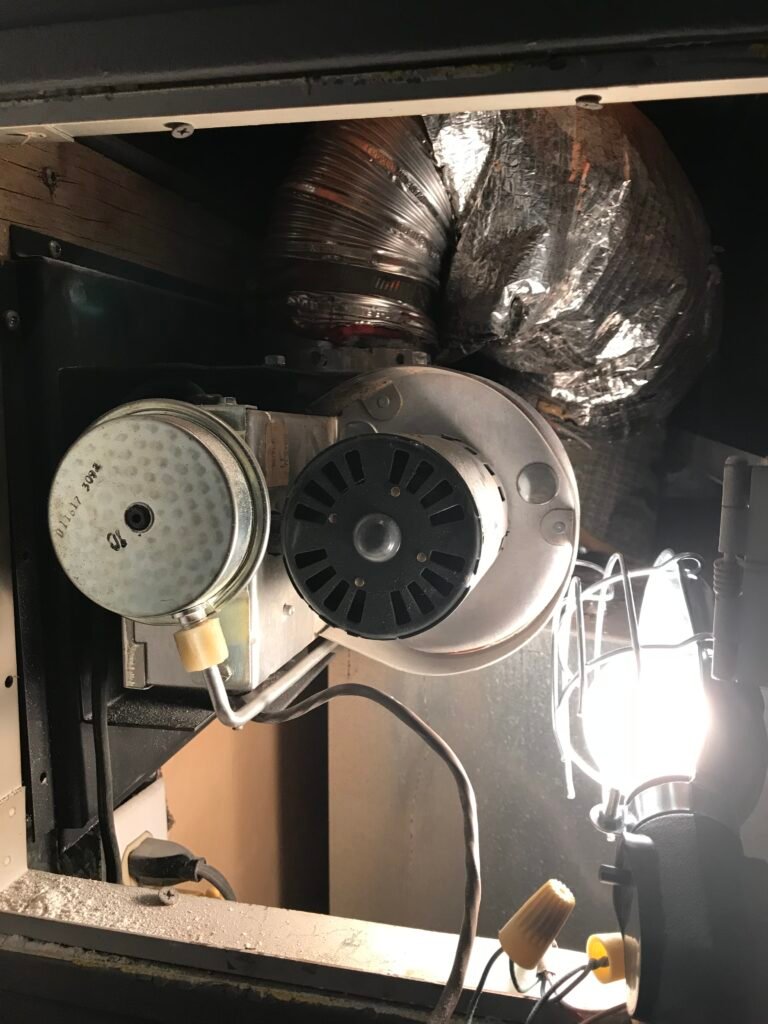
Common Fireplace Blower Repairs
Professional Cleaning
Removing dust and debris from the blower wheel, motor area, intake, and convection path may restore airflow and reduce noise.
Temperature Switch Replacement
A failed thermal switch can prevent a healthy motor from receiving power after the fireplace warms.
Speed Control Repair
A faulty rheostat, module, remote receiver, or control board may need repair or replacement.
Wiring Repair
Loose terminals, damaged insulation, overheated connectors, and poor grounding can interrupt the fan circuit.
Blower Motor Replacement
Replacement is appropriate when bearings, windings, thermal protection, or the motor shaft has failed.
Complete Blower Assembly
On some models, replacing the complete approved assembly is more reliable than mixing individual universal parts.
Repair or replace the fireplace?
A failed blower alone rarely justifies replacing the entire fireplace. Replacement becomes more reasonable when the unit is obsolete, approved parts are unavailable, the firebox or venting has significant damage, or several major components are failing together.
Can You Add a Blower to a Gas Fireplace That Has No Fan?
Only if the exact fireplace supports a suitable fan kit and the installation requirements can be met. First establish whether a blower is installed, optional or unnecessary for that appliance’s heating design. A silent fireplace is not proof that a motor has failed.
Regency’s blower explainer describes how a fan circulates heated room air. Valor’s gas-insert information describes radiant heat and natural convection without requiring a fan. These are different approaches to heat delivery; adding a fan is not automatically the right solution.
Before Ordering a Fan Kit
- Confirm the application: use the full fireplace model and applicable parts or accessory documentation.
- Check the complete assembly: identify the approved motor, mount, control, temperature switch and wiring arrangement where required.
- Confirm installation access: the kit must fit the intended location without obstructing air passages, controls or service access.
- Review the power requirement: confirm the required electrical supply and which functions are available during an outage.
Would a Fan Solve the Cold-Room Complaint?
A blower redistributes heat; it does not correct a burner fault or guarantee that an undersized fireplace will heat a large room. If the fireplace previously warmed the room and now does not, start with the gas fireplace not producing heat guide. If an existing blower has failed, request diagnosis before buying an accessory kit.
For part matching, see our gas fireplace parts guide. When booking fireplace repair in Vancouver, tell us whether you are replacing a confirmed failed fan or assessing an optional upgrade. Keep those two scopes clear in the quote.
Gas Fireplace Brands We Service
Related Fireplace Guides and Services
Gas Fireplace Not Producing HeatBlower, burner, airflow, gas pressure, and room-heating problems.
Gas Fireplace Making NoiseBuzzing, grinding, rattling, whistling, and humming explained.
Fireplace Turns Off After a Few MinutesIntermittent shutdown, heat-related faults, and safety controls.
Gas Fireplace Won’t Turn OnIgnition, pilot, remote, receiver, and gas valve troubleshooting.
Book Fireplace ServiceContact SkyLimit Heating to request a service appointment.
Trusted Safety and Maintenance Resources
FortisBC recommends keeping the area and air openings around gas appliances clear. Its fireplace maintenance guidance also notes that construction dust can harm fans, motors, and burners, and that professional service should include inspection of the burner, gas valve, ignition system, gaskets, venting, and air openings.
Frequently Asked Questions
Why is my gas fireplace on but the blower is not working?
The blower may still be waiting for the firebox to warm, or the fan setting may be off. Other causes include dead batteries, loss of power, a failed temperature switch, speed control, wiring problem, seized motor, or heavy dust buildup.
How long should a gas fireplace blower take to start?
Many blowers start several minutes after ignition, once the firebox reaches the temperature required by the thermal switch. The exact delay depends on the fireplace model.
Why does my blower hum but not spin?
The fan wheel may be blocked, the bearings may be seized, or the motor may be failing. Stop repeated operation and have the assembly inspected.
Can dust stop a fireplace blower?
Yes. Dust and pet hair can restrict the fan wheel, reduce airflow, create vibration, and contribute to motor overheating.
Can I replace the fireplace blower myself?
Homeowners should avoid internal electrical work unless the manufacturer explicitly allows a simple plug-in accessory replacement. Correct motor, voltage, airflow, wiring, and mounting must be verified.
Why does the blower start and then stop?
A motor may overheat and open its internal protection. Loose wiring, an intermittent thermal switch, or a failing controller can produce the same symptom.
Does the blower affect whether the fireplace lights?
Usually no. The burner and blower commonly operate through separate circuits. A fireplace can light normally while the fan remains off.
Should the blower run after the flame turns off?
Yes. Many blowers continue running until the firebox cools. This removes stored heat and is normally controlled by a temperature switch.
How often should a fireplace blower be cleaned?
The blower should be inspected during annual fireplace service. Homes with pets, renovation dust, or heavy fireplace use may require more frequent cleaning.
Do you repair fireplace blowers in Vancouver?
Yes. SkyLimit Heating diagnoses and repairs fireplace blower motors, thermal switches, speed controls, receivers, wiring, airflow problems, and noisy fan assemblies across Metro Vancouver and the Fraser Valley.
Fireplace Is Burning but the Room Is Still Cold?
SkyLimit Heating can test the blower motor, thermal switch, speed control, receiver, wiring, airflow, burner, and safety systems to identify why heat is not reaching the room.