
Gas Fireplace Burning Smell? Causes, Safety Steps & Professional Repair
A brief dusty smell when a gas fireplace starts for the first time in months can be normal. A persistent burning smell, sharp chemical odour, melting-plastic smell, smoke-like odour, or rotten-egg gas smell is not something to ignore. Turn the fireplace off and identify the type of smell before using it again.
Quick Answer
A gas fireplace burning smell may come from dust burning off, pet hair on the blower, renovation debris, overheated wiring, melting plastic, a dirty burner, soot, delayed ignition, venting trouble, or natural gas. A mild dusty odour that fades quickly after seasonal startup may be harmless. Strong, persistent, sharp, electrical, smoky, or rotten-egg odours require the fireplace to be turned off and professionally inspected.
May be seasonal residue burning off.
Turn off power and arrange inspection.
Possible combustion or venting issue.
Leave the area and follow gas emergency guidance.
Table of Contents
When a Burning Smell Can Be Normal
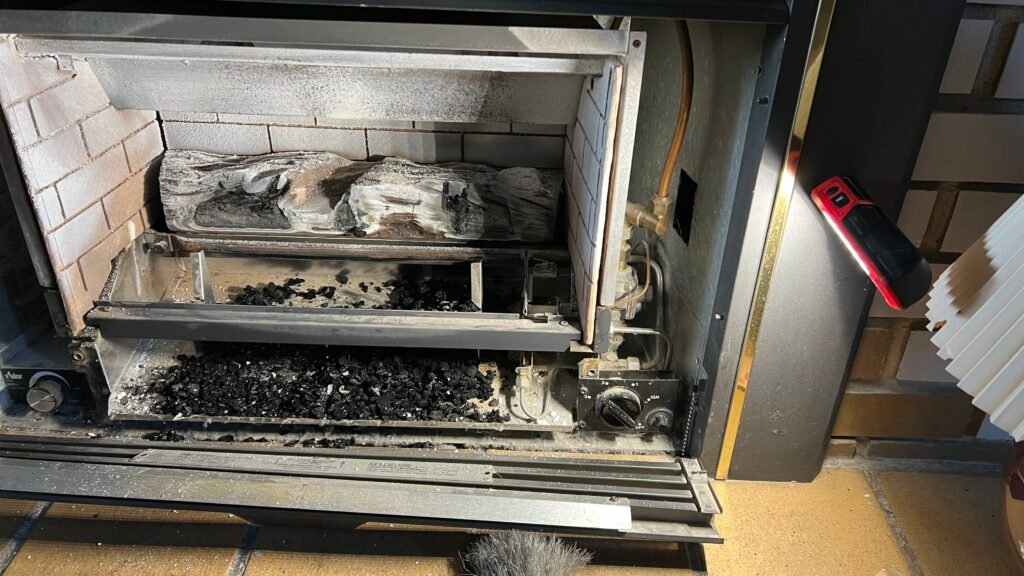
After sitting unused through spring and summer, a fireplace can collect dust on the burner compartment, convection surfaces, fan blades, louvers, and nearby metal. During the first seasonal startup, some of that dust may heat up and produce a dry, warm, dusty smell.
This odour should be mild, should not smell like gas or melting plastic, and should fade as the dust burns off. A small amount of visible dust near exterior louvers is one thing. A sharp or worsening smell that fills the room is something else entirely.
New fireplaces can also produce temporary curing odours from paint, sealants, oils, and manufacturing residues. Follow the manufacturer’s break-in instructions and ventilate the room as directed. If the smell remains strong after the recommended curing period, have the unit inspected.
What Different Fireplace Smells Can Mean
Dusty or Dry Heat Smell
Often caused by seasonal dust, pet hair, or residue heating on metal surfaces and the blower.
Burning Plastic or Electrical Smell
May indicate overheated wiring, a failing blower motor, damaged insulation, a control module, or foreign material touching a hot surface.
Sharp Chemical Odour
Can come from paint curing, cleaning products, renovation residue, overheated materials, or combustion problems.
Smoke or Soot Smell
May point toward incomplete combustion, black soot, blocked venting, or flame contact with logs.
Rotten-Egg Odour
Treat this as possible natural gas. Leave the building and contact the gas utility or emergency services from outside.
Eye-Stinging Odour
A sharp odour that irritates eyes or throat may indicate combustion products, contaminated materials, or venting trouble.
12 Common Reasons a Gas Fireplace Smells Like Something Is Burning
Dust on hot metal and convection surfaces can create a temporary dry smell during the first startup after months of inactivity.
Pet hair collects around intake openings, fan blades, and the lower compartment. Heating or motor friction can create a strong unpleasant smell.
Drywall dust, sawdust, paint residue, and construction debris can settle inside burners, motors, and air passages.
Paint, sealants, oils, and manufacturing coatings can release odours during the manufacturer’s initial break-in period.
A dirty, seized, or failing motor may overheat and produce a hot electrical or varnish-like smell.
Loose terminals, damaged insulation, or overheated connectors can smell like melting plastic and require the unit to be turned off.
Plastic, paper, toy parts, insulation, packaging, or decorative materials can fall near the firebox or convection openings.
Blocked burner ports and restricted combustion air can create soot, odour, unstable flame, and poor performance.
Flames hitting ceramic logs in the wrong position can create soot and a smoky odour.
Leaves, nests, snow, debris, damaged termination, or vent defects can affect combustion and exhaust flow.
Gas that does not ignite promptly may create a short odour, clicking, popping, or a small booming sound.
A rotten-egg smell may indicate natural gas escaping from a fitting, valve, connector, pilot assembly, or piping.
| Odour | Possible Cause | What to Do |
|---|---|---|
| Mild dusty smell on first seasonal use | Dust on hot surfaces | Ventilate and monitor; service if it persists |
| Melting plastic or electrical smell | Wiring, motor, connector, control fault | Turn off fireplace and electrical power |
| Smoky smell with black glass | Incomplete combustion, logs, burner, venting | Leave unit off and arrange inspection |
| Sharp odour that stings eyes | Combustion products, contamination, venting | Stop use, ventilate, and seek service |
| Rotten-egg odour | Possible natural gas leak | Leave building and call from outside |
Safe Immediate Steps
Identify the Smell
Dust, electrical heat, smoke, sharp chemicals, and natural gas smell different. Do not keep testing the fireplace when the odour is strong.
Turn the Fireplace Off
Use the normal control only when it is safe to do so. If you smell gas, do not operate electrical switches.
Ventilate When Appropriate
For mild dust or curing odours, open windows if safe. For suspected gas, leave the building instead of staying inside to ventilate it.
Check for Other Symptoms
Note soot, clicking, delayed ignition, blower noise, shutdowns, eye irritation, headache, nausea, or unusual heat.
If you smell rotten eggs or suspect gas:
- Do not turn lights, switches, appliances, or phones on or off inside.
- Do not relight the fireplace.
- Leave the building immediately.
- Call FortisBC emergency service or 911 from outside and away from the building.
Why Does the Burning Smell Begin When the Fireplace Fan Starts?
The timing is a useful clue, but it does not prove the fan motor is faulty. Report that the odour appeared when airflow began. The inspection may need to consider dust, nearby materials, the blower and its electrical connections, as well as the fireplace itself. Do not run repeated tests to recreate a strong or unusual smell.
| When you noticed it | What to tell the technician |
|---|---|
| Before the fan started | Whether the pilot or burner had lit, and whether this was the first use after a long break. |
| As airflow began | Whether the fan sounded different, airflow seemed weaker, or there was visible dust or damage. |
| After the flame went out | Whether the fan was still running and whether the odour faded or became stronger. |
Can I Leave the Flame On and Turn Off the Fan?
Turning off the fan does not establish that continued fireplace operation is safe. Leave the appliance off if there is a persistent, electrical, melting-plastic or smoky odour, visible damage or unusual operation, and arrange inspection. For fan behaviour without an unusual smell, use the gas fireplace blower troubleshooting guide.
FortisBC lists sharp eye-stinging odours and excessive soot among signs that appliances need attention. Carbon monoxide has no smell, so an odour check cannot establish that CO is absent. Read FortisBC’s appliance-safety information. If you smell gas, leave the building without operating switches and call 1-800-663-9911 or 911 from outside.
A Useful Service-Request Example
“The burner lit first. The odour became noticeable when the fan started, and the fan sounded louder than usual. I turned the fireplace off and have not tried it again. The model is [model number].”
Include only what you actually observed. Share any recent cleaning, renovation or service work when you request gas fireplace repair in Vancouver. Section updated: October 12, 2026.
How We Diagnose a Gas Fireplace Burning Smell
Identify the Odour Source
We determine whether the smell is strongest near the blower, burner, wiring, vent, glass, lower compartment, or surrounding materials.
Inspect the Firebox and Burner
Burner ports, logs, pilot, soot patterns, contamination, delayed ignition, and flame behaviour are checked.
Inspect Blower and Electrical Components
The motor, wheel, wiring, connectors, temperature switch, receiver, and control module are checked for dust, heat damage, or overheating.
Test Gas and Venting Safety
Gas connections, valve behaviour, pressure, ignition sequence, vent condition, seals, and combustion-air openings are evaluated.
Repair and Verify
After cleaning or repair, the fireplace is operated through a complete cycle to confirm that the odour does not return.
Common Repairs for Fireplace Burning Odours
Professional Cleaning
Dust, pet hair, renovation residue, and debris are removed from the blower, burner area, convection path, and accessible controls.
Blower Motor Repair
A noisy, overheating, or seized fan motor may need cleaning, adjustment, or replacement.
Wiring and Connector Repair
Heat-damaged insulation, loose terminals, burned connectors, and faulty controls are repaired or replaced.
Burner and Log Correction
Dirty ports, incorrect log placement, or flame impingement are corrected according to manufacturer instructions.
Ignition and Gas Valve Repair
Delayed ignition, pilot problems, gas valve faults, or leaking connections are diagnosed and repaired safely.
Venting or Gasket Repair
Damaged vent components, blocked termination, glass seals, and door gaskets are repaired where required.
Gas Fireplace Brands We Service
Related Fireplace Guides and Services
Gas Fireplace Smells Like GasRecognize possible leaks and respond safely.
Gas Fireplace Glass Turning BlackSoot, log placement, burner, pressure, and venting problems.
Gas Fireplace Making NoisePopping, buzzing, humming, grinding, and blower noise.
Gas Fireplace Blower Not WorkingFan motors, thermal switches, wiring, and airflow problems.
Book Fireplace ServiceRequest professional service from SkyLimit Heating.
Trusted Safety Resources
FortisBC identifies continuous or intermittent odours, eye-stinging sharp odours, nausea, headaches, pilot outages, delayed ignition, yellow or wavering flames, excessive soot, and abnormal heat as reasons to contact a licensed gas contractor. Technical Safety BC states that regulated gas work in British Columbia must be completed by an authorized person or licensed contractor.
Frequently Asked Questions
Why does my gas fireplace smell like something is burning?
Common causes include seasonal dust, pet hair, renovation residue, new-appliance curing, an overheating blower motor, heat-damaged wiring, foreign material near hot surfaces, incomplete combustion, venting problems, or natural gas.
Is a dusty smell normal when I first use the fireplace?
A mild dusty odour that fades during the first seasonal startup can be normal. It should not smell like gas, melting plastic, electrical insulation, or heavy smoke.
Why does my fireplace smell like burning plastic?
Possible causes include overheated wiring, a failing blower motor, damaged insulation, a hot connector, control-module failure, or plastic material near the firebox. Turn the fireplace off and arrange inspection.
Can pet hair cause a burning smell?
Yes. Pet hair can collect around the blower, air openings, and convection compartment, creating odour, restricting airflow, and increasing motor temperature.
Can renovation dust damage a gas fireplace?
Yes. Fine construction dust can contaminate burners, fans, motors, ignition components, and air passages. Do not operate the fireplace until the renovation area is thoroughly cleaned.
Should I keep using the fireplace if the smell fades?
A mild seasonal dust smell that disappears may be acceptable. Repeated, strong, electrical, smoky, sharp, or gas-like odours still require inspection even if they fade after shutdown.
Can a dirty burner create a burning smell?
Yes. Dirty or restricted burner ports can create incomplete combustion, soot, unstable flame, and smoky odours.
What should I do if I smell rotten eggs?
Do not operate switches or relight the fireplace. Leave the building immediately and contact FortisBC emergency service or 911 from outside and away from the building.
How often should a gas fireplace be professionally serviced?
Annual service is commonly recommended to inspect the burner, gas valve, ignition system, glass and door gaskets, venting, air openings, blower, and safety controls.
Do you repair fireplace odour problems in Vancouver?
Yes. SkyLimit Heating diagnoses burning smells, gas odours, blower overheating, wiring damage, burner contamination, soot, ignition problems, and venting issues throughout Metro Vancouver and the Fraser Valley.
A Burning Smell Should Have an Explanation
SkyLimit Heating can inspect the blower, wiring, burner, logs, ignition system, gas valve, seals, and venting to identify the source before the problem grows.