
Gas Fireplace Glass Turning Black? Causes, Safety Risks & Professional Repair
Black soot on gas fireplace glass is usually a sign of incomplete combustion, incorrect log placement, restricted burner ports, poor airflow, delayed ignition, or venting trouble. Wiping the glass may improve the view, but it does not correct the cause. Persistent soot should be professionally inspected before the fireplace is used again.
Quick Answer
If your gas fireplace glass is turning black, the burner is likely producing soot instead of completing clean combustion. Common causes include ceramic logs placed incorrectly, flames touching the logs, dirty burner ports, restricted combustion air, blocked venting, incorrect gas pressure, a damaged burner, or delayed ignition. Shut the fireplace off if soot returns quickly, the flame is yellow and unstable, or you notice gas odour.
Combustion or log-placement problem.
Flame impingement or uneven burner pattern.
Dust, residue, or mild combustion imbalance.
Go outside and call FortisBC or 911 from outside.
Table of Contents
Black Soot or White Film: Does the Glass Need Cleaning or Diagnosis?
Black deposits that return after cleaning need the cause investigated. A pale film is a different observation and should not automatically be called soot. Describe the colour, location and timing rather than trying to diagnose the burner from a photograph alone.
Pale or White Haze
Regency’s care FAQ notes that white film can develop after initial break-in. Follow the exact manual for cooling, glass handling and approved cleaning products. Persistent haze may need assessment; colour alone cannot confirm that a deposit is harmless or removable.
Best route: discuss the condition during gas fireplace service if there are no warning signs.
Black Patches or Repeated Soot
Cleaning removes a deposit but does not establish why it formed. Leave the fireplace off when black soot returns quickly. A technician needs to compare the burner, logs, fuel setup, air supply and venting with the appliance specifications.
Best route: request fireplace repair in Vancouver for diagnosis before further use.
Save These Details Before the Glass Is Cleaned
- A photograph of the deposit with the fireplace off and cool.
- Whether the mark appeared after one use or accumulated gradually.
- Any recent cleaning, log movement, renovation or part replacement.
- The fireplace model and whether ignition, odour or heat output also changed.
Do not run the fireplace again just to create a new photograph, move logs to experiment, or remove sealed glass unless the manual permits the task and you can complete it correctly. A localized mark is a clue, not proof that one particular part needs replacing.
If You Smell Gas, Act Before Booking Service
Stop, go outside and call the FortisBC emergency line at 1-800-663-9911 or 911 from outside. Do not operate electrical switches or use a phone inside. Follow FortisBC’s gas-leak instructions; a routine appointment is not the first response to suspected leaking gas.
Is Black Soot on Gas Fireplace Glass Normal?
A light grey haze that develops slowly over a season can sometimes be ordinary residue. Thick black soot, dark streaks, or glass that turns black shortly after cleaning is not normal. It means carbon particles are being created and deposited before the fuel burns completely.
Gas fireplaces are designed around a specific burner, log arrangement, air supply, gas pressure, vent system, and sealed glass assembly. Moving one part, blocking an opening, or allowing the burner to become contaminated can change the flame enough to create soot.
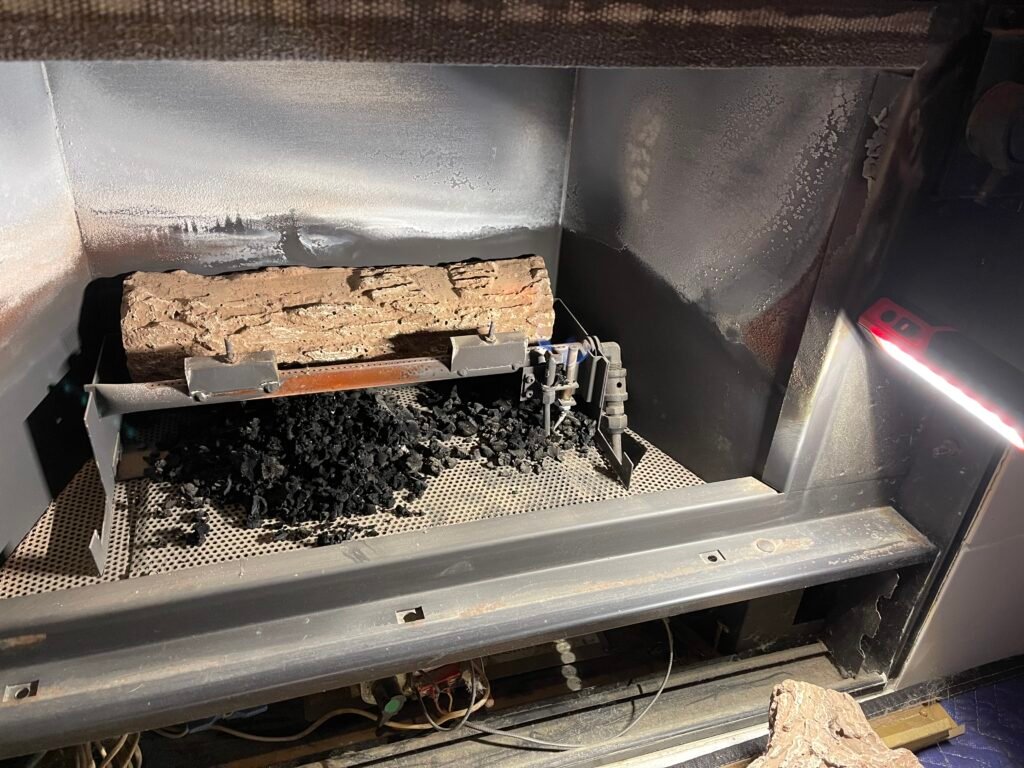
What Different Soot Patterns Can Mean
Black Patch Above One Log
A flame may be contacting the log directly because the log is misplaced, damaged, or the burner flame is distorted.
Entire Glass Turns Dark
Widespread soot may indicate restricted combustion air, dirty burner ports, incorrect gas pressure, or venting trouble.
Black Streaks Near the Top
Hot soot-laden gases may be moving unevenly through the firebox or contacting the upper glass area.
Soot Returns Immediately
The underlying combustion problem remains active. Cleaning alone will not solve it.
Yellow, Lazy Flame
Insufficient primary air, blocked burner ports, pressure problems, or incorrect burner setup may be involved.
Soot with Odour or Eye Irritation
Stop using the fireplace and arrange prompt professional inspection.
12 Common Reasons Gas Fireplace Glass Turns Black
Ceramic logs must sit exactly where the manufacturer specifies. A small shift can force flame against the log and create soot.
When flame repeatedly hits a solid surface, it cools before combustion finishes and leaves carbon behind.
Dust, pet hair, insects, and residue can block ports and produce an uneven or fuel-rich flame.
Blocked air shutters, dirty intake areas, or debris can reduce the oxygen available for clean combustion.
Too little primary air can create a soft, yellow flame that forms soot. Adjustment must follow manufacturer specifications.
Incorrect inlet or manifold pressure changes flame shape, fuel-air mixing, and burner performance.
Natural gas and propane systems use different components and settings. Incorrect conversion parts can create dangerous combustion.
Corrosion, cracks, warping, or damaged ports may send flame where it was never intended to go.
Debris, snow, nests, damaged caps, or vent defects can affect combustion air and exhaust flow.
Gas may collect briefly before lighting, creating a sudden flame pattern and incomplete combustion.
A damaged or improperly seated gasket can disturb the designed airflow through a sealed fireplace.
Drywall dust and fine debris can settle in burners, fans, controls, and air passages, changing performance.
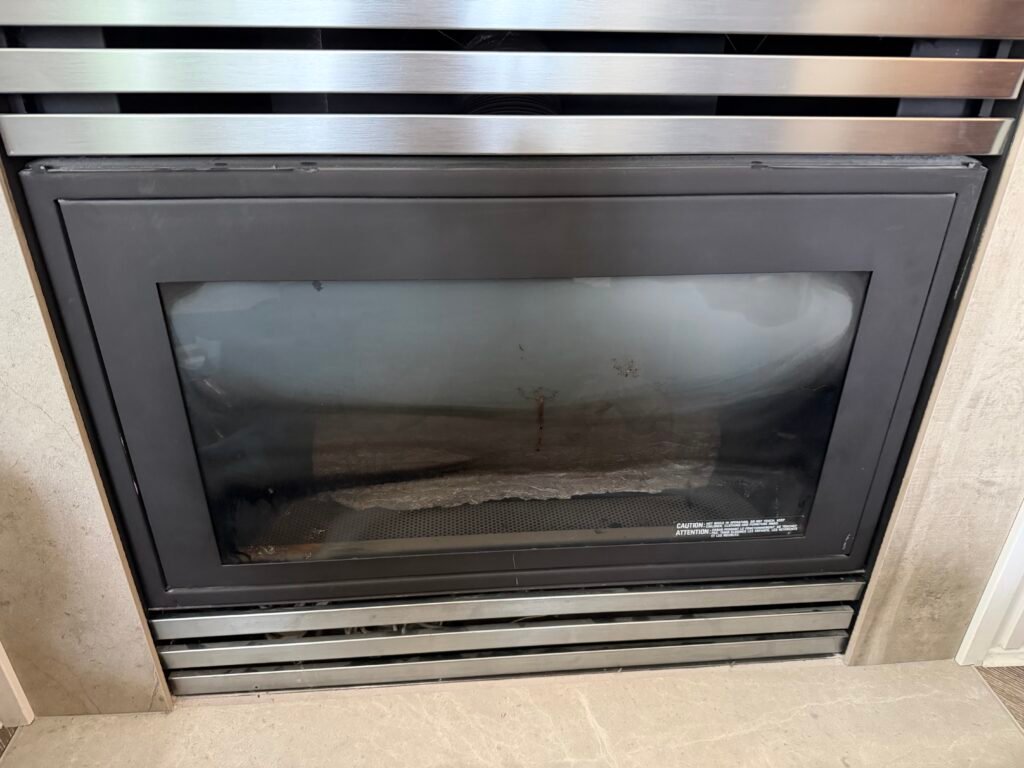
Soot Pattern Guide
| Pattern | Possible Cause | Recommended Action |
|---|---|---|
| One localized black spot | Flame hitting a log or panel | Check approved log placement and burner pattern |
| Entire glass darkens | Airflow, pressure, burner, or venting problem | Professional combustion diagnosis |
| Soot after recent cleaning | Active underlying fault | Stop repeated cleaning and repair the cause |
| Soot plus delayed ignition | Pilot, ignition, burner, or gas pressure problem | Stop use and arrange prompt inspection |
| Soot plus odour or symptoms | Potential combustion or venting safety issue | Leave the unit off and contact a licensed contractor |
Safe Checks You Can Perform
Observe the Flame
Look for lazy yellow flame, lifting, uneven burner sections, delayed ignition, or flame contacting a log.
Check Whether Soot Returns
If cleaned glass becomes black again quickly, leave the fireplace off and arrange service.
Inspect the Outside Vent from a Safe Location
Look for obvious snow, leaves, nests, or damage without climbing or dismantling the vent.
Record Recent Changes
Note recent cleaning, renovation, log movement, part replacement, fuel conversion, or weather events.
Do not:
- Move logs by guesswork.
- Adjust the air shutter or gas valve.
- Drill or enlarge burner ports.
- Operate with damaged glass or a loose door gasket.
- Keep using the fireplace when soot, gas odour, delayed ignition, or unstable flame continues.
Can You Clean Black Fireplace Glass Yourself?
Light residue can often be cleaned after the fireplace is completely cool and the gas appliance is off. Follow the manufacturer’s manual. Use products approved for high-temperature fireplace glass and a soft, non-abrasive cloth.
Do not scrape ceramic glass with metal tools, use harsh abrasive pads, or apply household chemicals that the manufacturer does not approve. Some fireplace glass has coatings that can be damaged permanently.
How We Diagnose Soot and Black Glass
Read the Soot Pattern
Location, density, colour, and timing help identify whether the fault is local flame contact or a system-wide combustion problem.
Inspect Logs, Burner, and Pilot
Log position, burner ports, pilot flame, contamination, corrosion, and flame contact are checked against the manufacturer’s layout.
Check Gas Pressure and Fuel Setup
Inlet pressure, manifold pressure, orifice, fuel type, conversion components, and air settings are verified.
Inspect Venting and Seals
Accessible venting, exterior termination, glass seating, door gasket, and combustion-air path are reviewed.
Clean, Repair, and Retest
After correcting the cause, the glass and firebox are cleaned and the fireplace is operated long enough to confirm that soot does not return.
Common Repairs for Black Fireplace Glass
Log Repositioning
Logs are returned to the exact manufacturer-approved location after checking for damage.
Burner Cleaning
Blocked ports and contamination are cleaned without enlarging or altering the burner.
Airflow Correction
Combustion-air restrictions and model-specific air settings are corrected where appropriate.
Gas Pressure Adjustment
Pressure is tested and adjusted only to the manufacturer’s specified range.
Burner or Pilot Replacement
Damaged, corroded, or distorted components may need approved replacement parts.
Venting or Gasket Repair
Damaged vent termination, glass seals, or door gaskets are repaired or replaced as required.
Gas Fireplace Brands We Service
Related Fireplace Guides and Services
Gas Fireplace Smells Like GasUrgent warning signs and safe response steps.
Gas Fireplace Keeps ClickingRepeated ignition attempts and delayed flame problems.
Fireplace Turns Off After a Few MinutesVenting, overheating, sensors, and intermittent shutdown.
Gas Fireplace Making NoisePopping, booming, clicking, buzzing, and blower noise.
Book Fireplace ServiceRequest professional inspection from SkyLimit Heating.
Trusted Safety Resources
FortisBC identifies excessive soot, black streaks, yellow or wavering flames, delayed ignition, unusual odours, and possible carbon monoxide symptoms as reasons to contact a licensed gas contractor. Its fireplace service guidance also calls for inspection of the burner, gas valve, ignition system, gaskets, venting, and air openings.
Frequently Asked Questions
Why is my gas fireplace glass turning black?
The most common causes are incorrect log placement, flame contact with the logs, dirty burner ports, restricted combustion air, gas pressure problems, damaged burner components, delayed ignition, or venting issues.
Is black soot on gas fireplace glass dangerous?
Persistent soot can indicate incomplete combustion or venting trouble. Leave the fireplace off if soot returns quickly, the flame is unstable, or you notice gas odour, delayed ignition, eye irritation, headache, or nausea.
Can incorrect log placement cause black glass?
Yes. When flames strike ceramic logs in the wrong location, combustion can cool and produce soot that deposits on the glass.
Can I keep using the fireplace after cleaning the glass?
Only if the residue was minor and does not return. If the glass darkens again, the underlying cause remains and the fireplace should be inspected.
What should a healthy gas fireplace flame look like?
The exact appearance varies by model, but the flame should be stable and follow the manufacturer’s design without heavy soot, lifting, delayed ignition, or abnormal contact with logs.
Can a blocked vent cause black soot?
Yes. Vent restrictions can affect combustion air and exhaust movement, producing unstable flame, shutdowns, odours, or soot.
Can low gas pressure cause soot?
Incorrect pressure can change burner performance and fuel-air mixing. Pressure must be measured and compared with the manufacturer’s specifications.
How often should gas fireplace glass be cleaned?
Clean it as recommended by the manufacturer and during annual service. Frequent heavy soot is not a cleaning schedule issue; it is a repair issue.
Can renovation dust make fireplace glass black?
Yes. Fine construction dust can contaminate burners, fans, and air passages, changing flame quality and creating residue.
Do you repair soot problems in Vancouver?
Yes. SkyLimit Heating diagnoses black glass, soot, burner contamination, incorrect log placement, gas pressure, ignition, gasket, and venting problems across Metro Vancouver and the Fraser Valley.
Black Glass Is a Symptom, Not the Repair
SkyLimit Heating can inspect the burner, pilot, logs, gas pressure, air settings, glass seal, ignition sequence, and venting to find out why soot is forming.