
Gas Fireplace Smells Like Gas? Causes, Warning Signs and Safe Next Steps
A faint odour for a moment during ignition may have a simple explanation. A smell that lingers, returns repeatedly, or appears while the fireplace is off needs a very different response.
Quick Answer
If your gas fireplace smells like gas, the safest response depends on the strength and timing of the odour. A very brief smell during startup can be linked to delayed ignition. A strong, persistent, or unexplained smell may indicate unburned gas or a leaking component. Turn the fireplace off. If the odour is strong, leave the building and contact FortisBC or emergency services from outside.
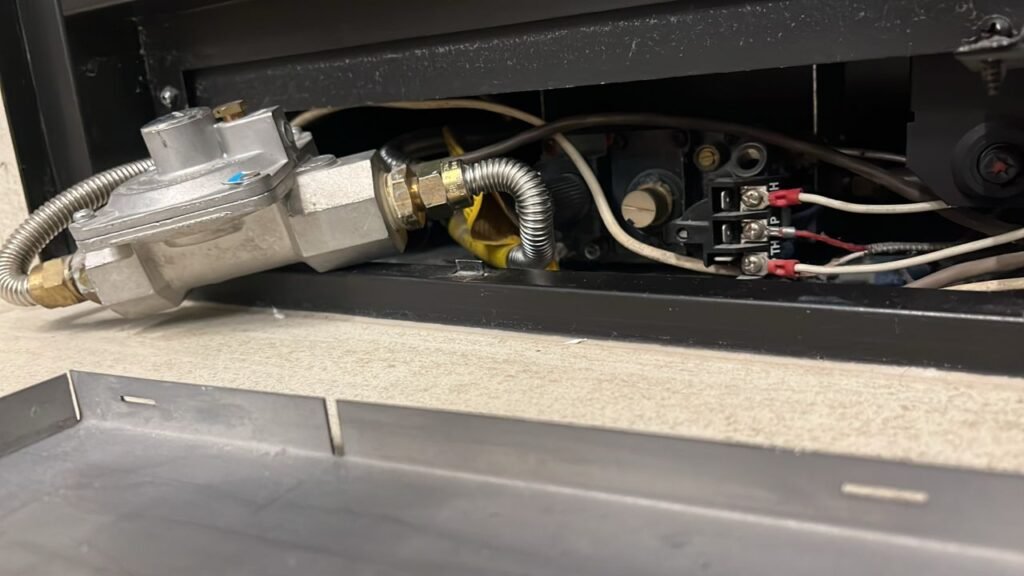
Is the Smell Actually Natural Gas?
Homeowners use the phrase “gas smell” for several different odours. Some come from dust, coatings or household products. Others deserve immediate attention.
Rotten Egg or Sulphur Odour
This is the classic warning smell associated with natural gas. People also describe it as sewage, burnt cabbage or a sharp chemical odour.
Dusty or Burnt Smell
A fireplace used for the first time in months may burn off dust. The smell should fade fairly quickly and should not resemble sulphur.
Paint or Plastic Odour
New fireplaces or newly replaced parts may release a temporary manufacturing smell. Good ventilation usually helps it disappear after initial use.
Do not rely on your nose alone. People can become less sensitive to an odour after staying in the room. Someone entering the home may notice it immediately even when the occupants no longer do.
Immediate Safety
When You Should Leave the Home
A strong gas smell is not the moment to continue troubleshooting. Do not keep pressing the ignition button to “see whether it catches.” Each failed attempt can release more unburned gas.
- Do not operate light switches or electrical devices.
- Do not use matches, candles or lighters.
- Do not start a vehicle in an attached garage.
- Leave the building and move to a safe location.
- Call FortisBC at 1-800-663-9911 or call 911 from outside.
Read the official FortisBC natural gas safety guidance.
Why a Gas Fireplace May Smell Like Gas
The gas valve gets blamed for almost everything, but it is only one possible cause. Timing, flame behaviour and the location of the odour provide useful clues.
Loose Gas Connection
A fireplace contains several fittings between the shutoff, connector, valve, pilot and burner. Age, vibration or previous service work can leave a small leak at one connection.
Delayed Pilot Ignition
Gas may reach the pilot before the spark lights it. A short puff of odour at startup can point to a weak spark, dirty pilot hood or poor flame position.
Dirty Pilot Assembly
Dust, pet hair and tiny spider webs can disturb gas flow through the pilot. The flame may become weak, uneven or slow to establish.
Blocked Burner Ports
Debris or corrosion can prevent flame from travelling smoothly across the burner. Gas may collect briefly before all sections ignite.
Worn Gas Valve
Internal valve components can deteriorate after years of heating cycles. A suspected gas valve problem requires testing, not guesswork or adjustment by hand.
Damaged Flex Connector
Older connectors may leak at a fitting or develop damage after the appliance has been moved. The complete connector and its joints should be inspected.
Incorrect Gas Pressure
Pressure that is too high or too low can affect ignition and flame stability. It must be measured with the correct instrument at the specified test points.
Poor Combustion
An incorrect air-to-fuel mixture may create soot, unstable flames and unusual odours. Venting, burner condition and log placement may all be involved.
Repeated Failed Ignition
A fireplace that clicks again and again without lighting may continue releasing small amounts of gas. Stop retrying and have the ignition sequence checked.
What We Pay Attention to During a Service Call
The smell alone rarely tells the whole story. A technician also looks at when it starts, how the flame behaves and whether the problem changes as the fireplace warms up.
Odour while running
Odour while fireplace is off
Repeated clicking
Small boom at ignition
Black soot on glass
Weak or lifting pilot flame
Uneven burner flame
One pattern appears often after a fireplace has sat unused through spring and summer: dust or debris affects the pilot, ignition becomes slower, and the owner notices a brief odour each time the unit starts. That may be simpler than a leaking valve, but it still needs proper inspection if it happens repeatedly.
Another common situation is the opposite. The fireplace lights normally, yet the smell continues while it runs. That moves combustion, venting and gas connections much higher on the diagnostic list.
Checks You Can Make Without Opening the Fireplace
Only perform these observations when there is no strong gas odour. Do not remove sealed glass, loosen fittings or adjust gas controls.
Notice when the smell begins. Does it appear for one second at startup, continue while running, or exist when the fireplace is completely off?
Watch the ignition sequence. The pilot and burner should light smoothly. Repeated clicking or a delayed “whoosh” should not be treated as normal.
Look at the glass and logs. Fresh black soot, sudden discolouration or unusual flame contact can indicate a combustion problem.
Check nearby odour sources. Paint, cleaning products, drains and stored chemicals can confuse the diagnosis. Do not let that possibility delay action when the smell resembles sulphur.
Repairs that should not be DIY: Do not tighten gas fittings, adjust the gas valve, move the pilot assembly, clean burner ports with sharp tools, alter the air shutter or test for leaks with an open flame.
How a Technician Finds the Actual Source
Replacing the first suspicious part is not a proper diagnosis. A good service call follows the gas path and ignition sequence in a deliberate order.
Confirm the complaint
The technician asks when the odour occurs and whether it is accompanied by clicking, soot, delayed ignition or shutdown.
Inspect the appliance and venting
Visible connections, firebox condition, log placement, burner condition and venting are checked before parts are disturbed.
Perform leak detection
Appropriate electronic and approved solution-based methods are used around fittings and components.
Test ignition and flame behaviour
Pilot strength, spark location, burner crossover and shutdown controls are observed through a complete operating cycle.
Verify gas pressure where required
Pressure is measured at specified points and compared with manufacturer requirements.
Repair, retest and document
After cleaning or replacing the failed component, the system is tested again. A repair is not complete until operation and safety are verified.
Can the Fireplace Be Repaired, or Is Replacement Better?
Repair Usually Makes Sense When
The firebox and venting remain sound, replacement parts are available, and the problem is limited to a pilot, valve, connector, ignition component or burner cleaning.
Replacement May Be Smarter When
Several major parts have failed, the manufacturer no longer supports the model, the venting is unsuitable, or repair cost is approaching the value of a modern replacement.
Age alone does not decide the answer. Some older Valor, Regency, Napoleon, Montigo and Heat & Glo fireplaces remain perfectly serviceable. Others become impractical because one discontinued component prevents a reliable repair.
Gas Fireplace Brands Commonly Found in BC Homes
Control systems, pilot assemblies and burner layouts vary by brand and model. Correct identification matters before ordering parts or interpreting the ignition sequence.
Related Fireplace Repair Guides
These pages cover symptoms that often appear alongside gas odours.
Main Service Page
Fireplace Repair Vancouver
Professional diagnosis, repair and safety testing for common gas fireplace problems.
View service page →
Troubleshooting Guide
Gas Fireplace Won’t Turn On
Learn why the pilot, ignition module, remote or gas controls may prevent startup.
Read the guide →
Ignition Problem
Gas Fireplace Keeps Clicking
Repeated clicking can point to weak ignition, dirty components or failed flame sensing.
Read the guide →
Pilot Problem
Pilot Light Won’t Stay Lit
Understand thermocouple, thermopile, pilot flame and gas valve-related shutdowns.
Read the guide →
Brand Service
Montigo Fireplace Repair
Diagnosis and repair support for Montigo ignition, pilot and control problems.
View brand service →
Book Service
Contact SkyLimit Heating
Request a fireplace inspection anywhere in Metro Vancouver or the Fraser Valley.
Contact us →
Frequently Asked Questions
Is it normal to smell gas when a fireplace starts?
A very brief odour during ignition can occur when ignition is slightly delayed. A smell that lasts more than a moment, returns often or becomes stronger should be inspected.
Can a dirty pilot cause a gas smell?
Yes. Debris can weaken or distort the pilot flame and delay ignition, allowing a small amount of unburned gas to escape before the flame establishes.
Why does the smell continue after the fireplace lights?
A continuing odour may be related to poor combustion, venting, gas pressure, a leaking fitting or another component. Stop using the fireplace until it is inspected.
Can I test fireplace fittings with soap and water?
Gas-system testing should be handled by a qualified technician. Accessing fittings or disturbing connections can create new problems, and one negative spot test does not prove the system is safe.
How long does a gas fireplace inspection take?
Many inspections take about 45 to 90 minutes, although access, fireplace design and intermittent problems can increase the time required.
Will annual cleaning prevent gas odours?
Maintenance reduces the chance of delayed ignition and identifies aging parts early, but it cannot guarantee that a component will never fail. Any new gas odour still deserves attention.
Can an older gas fireplace still be repaired safely?
Often, yes. The decision depends on the condition of the firebox and venting, availability of approved parts and the total repair cost.
Who should I call for a strong natural gas smell?
Leave the building and call FortisBC at 1-800-663-9911 or call 911 from a safe location. Do not remain inside to search for the leak.
Professional Fireplace Service
Concerned About a Gas Smell?
SkyLimit Heating provides gas fireplace inspection, leak detection and repair across Metro Vancouver and the Fraser Valley. We identify the cause before recommending parts.