
A gas fireplace not producing heat may still ignite and show a normal-looking flame, yet leave the room cold because the heat is not being created, transferred, or circulated correctly. Common causes include incorrect remote settings, a weak or delayed blower, restricted convection airflow, dirty burner ports, low gas pressure, venting problems, or a unit that is undersized for the room. SkyLimit Heating and Gas provides professional diagnosis across Metro Vancouver and the Fraser Valley. Call 778-892-5119 or book a fireplace assessment if the fireplace has lost heating performance or shows any unsafe symptoms.
Quick Answer: Why Is My Gas Fireplace Not Producing Heat?
A gas fireplace can burn without delivering enough useful heat. If the flame looks healthy but the room remains cold, the problem is often related to the blower, airflow path, fan settings, room conditions, or the fireplace’s original heating capacity. If the flame itself is unusually small, uneven, yellow, unstable, or repeatedly disappears, the burner, gas supply, pilot system, regulator, venting, or combustion setup may require professional testing.
- Normal flame but little room heat: Check the blower setting, warm-up time, airflow openings, and remote mode.
- Weak or incomplete flame: The burner, gas pressure, pilot assembly, or gas supply may need testing.
- Hot glass but cold room: The fireplace may be producing heat but failing to circulate it.
- Heat fades after several minutes: A control, venting, overheating, or flame-sensing problem may be interrupting normal operation.
- Fireplace has never heated the room well: The appliance may be decorative or undersized rather than defective.
If your fireplace produces a normal flame but the fan remains silent after the unit warms up, follow our focused guide to a gas fireplace blower not working. If the burner will not ignite at all, the more relevant next step is our guide for a gas fireplace that won’t turn on.
How Much Heat Should a Gas Fireplace Produce?
Not every gas fireplace is designed to heat the same amount of space. Some models are primarily decorative and create ambience with limited heating capacity. Other units are approved room heaters with higher input ratings, effective heat exchangers, adjustable blowers, and thermostatic controls. Comparing a decorative fireplace with a high-output direct-vent heater can create unrealistic expectations even when both appliances are operating as designed.
A technician should consider the appliance model, rated input, room dimensions, ceiling height, window area, insulation, exterior-wall exposure, and airflow between rooms. An open-plan living area with vaulted ceilings will usually need more heat than a smaller enclosed room. The fireplace may also struggle if warm air immediately rises into a stairwell or moves into an adjoining space.
The most useful question is whether the performance has changed. A fireplace that comfortably heated the room last winter but now feels weak probably has a service or component issue. A unit that has never provided meaningful warmth may be too small for the space or designed mainly for appearance.
Technician insight: “The fireplace is on, but the room stays cold” is not a complete diagnosis. We first determine whether the burner is generating the expected heat. We then check whether the heat exchanger and convection system are delivering that heat into the room.
Symptoms That Help Identify Where the Heat Is Being Lost
The way the fireplace behaves often narrows the problem before any parts are removed. Note what the flame, blower, remote, glass temperature, and room temperature are doing. These observations help a technician choose the correct tests instead of replacing parts by guesswork.
The Flame Looks Normal, but the Room Stays Cold
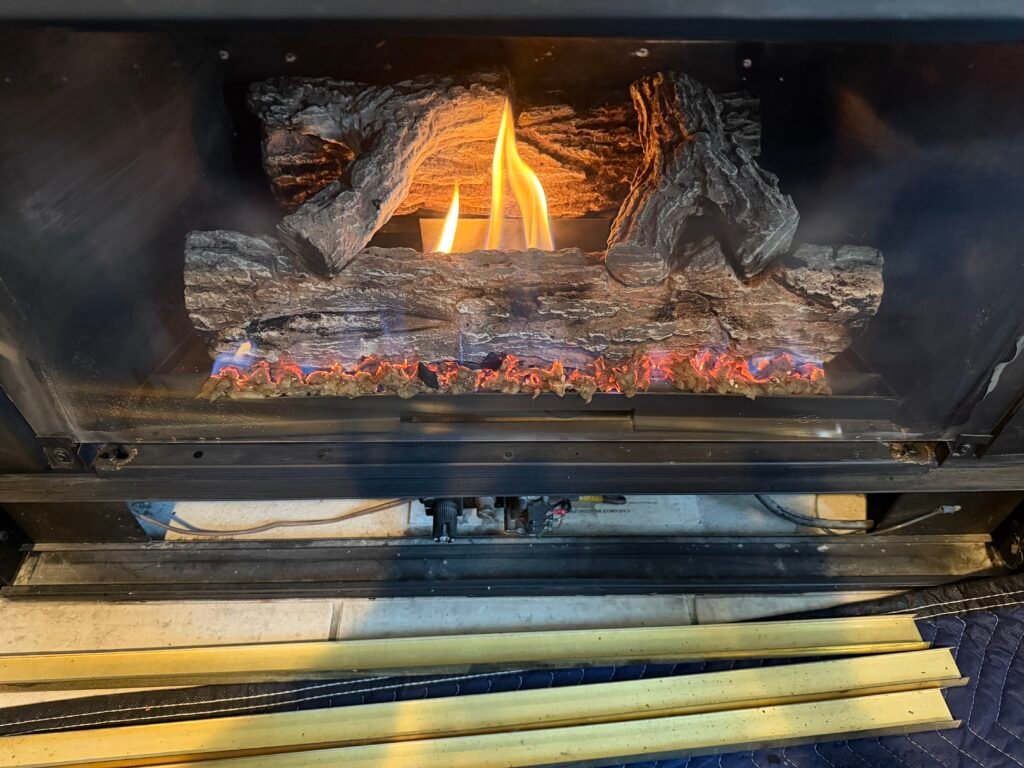
If the glass and upper fireplace area become hot but little warmth reaches the room, the combustion side may be working normally. The likely concern shifts toward the blower, blocked convection passages, fan-speed setting, heat-exchanger airflow, or room circulation.
The Flame Is Smaller Than It Used to Be
A visibly weak flame may indicate dirty burner ports, incorrect ember placement, restricted gas flow, a pressure issue, regulator trouble, or a partially closed supply valve. Flame appearance varies by model, so the comparison should be made against the manufacturer’s instructions and the fireplace’s previous operation.
The Blower Starts Late or Does Not Start
Many fireplace blowers do not start immediately. A temperature-sensitive switch may delay the fan until the firebox warms up. A brief delay can therefore be normal. If the unit has operated long enough to become hot and the blower remains silent, hums without turning, runs slowly, or stops unexpectedly, it should be inspected.
The Fireplace Heats at First and Then Becomes Weak
Heat that drops after several minutes can point to an unstable burner, overheating control, venting condition, failing flame sensor, intermittent gas valve, remote thermostat setting, or a blower that stops after warming up. Watch whether the flame changes at the same time as the heat output.
The Fireplace Shuts Off Before the Room Feels Warm
A remote or thermostat may be sensing temperature near the fireplace rather than across the room. It can reach its set point early and turn the burner down or off while the seating area remains cold. If the pilot also goes out or the main burner repeatedly drops out, see the troubleshooting steps for a gas fireplace pilot light that won’t stay lit.
Common Causes of a Gas Fireplace Not Producing Heat
1. The Remote or Thermostat Is in the Wrong Mode
Modern fireplace remotes can control flame height, thermostat operation, blower speed, and scheduled modes. A low flame setting or thermostat mode can make the unit appear defective when it is following a programmed command. Some remotes also lose or reset settings after battery replacement.
Confirm that the remote is calling for heat, the target temperature is above room temperature, the flame level is not reduced, and the blower is enabled. Only use the controls described in the owner’s manual for your exact model.
2. The Blower Has Not Reached Its Start Temperature
A heat-activated blower switch prevents the fan from circulating cool air immediately after ignition. Depending on the appliance, the blower may take several minutes to start. Turning the fireplace off before the sensor warms up can create the impression that the fan has failed.
If the firebox is fully warm and the blower never starts, further testing may reveal a faulty temperature switch, speed controller, motor, wiring connection, remote receiver, or power-supply problem.
3. Dust Is Restricting Convection Airflow
Gas fireplaces draw cooler room air through lower openings, warm it around the firebox or heat exchanger, and return it through upper openings. Dust, pet hair, renovation debris, or objects placed too close to the grille can reduce this airflow. The burner may operate, but useful heat stays trapped around the appliance instead of moving into the room.
Keep accessible exterior openings clear without removing sealed glass, logs, burner components, or internal panels. If the appliance is due for cleaning and safety checks rather than showing a confirmed component failure, a professional gas fireplace service is the appropriate path.
4. The Blower Motor Is Weak, Noisy, or Seized
A worn blower may turn too slowly to distribute heat effectively. Bearings can become noisy, the motor may hum without starting, or the fan wheel may collect enough dust to lose performance. A damaged fan blade can also create vibration while moving very little air.
A technician can confirm whether the blower is receiving the correct power, whether its controls are working, and whether cleaning, adjustment, or replacement is justified.
5. Burner Ports or the Pilot Assembly Are Dirty
Dust and deposits can change the way gas passes through small burner and pilot openings. A restricted burner may produce an incomplete or uneven flame pattern. A weak pilot may also fail to heat the flame-sensing components properly, leading to unstable main-burner operation.
Do not insert needles, drill bits, wire, or compressed air into burner or pilot openings. Changing an opening can affect gas flow and combustion. Internal cleaning should follow the manufacturer’s procedure and be completed by a qualified gas technician.
6. Logs, Embers, or Media Are Incorrectly Positioned
Ceramic logs, stones, glass media, and ember materials are not decorative pieces that can be arranged freely. Their specified positions control flame movement and help prevent impingement, soot, delayed ignition, and overheating. Media placed over burner ports may interfere with flame distribution and reduce performance.
If logs or media have been moved during cleaning, use only the placement diagram for the exact model. Stop operating the unit if flames strike the logs abnormally, soot appears on the glass, or ignition becomes delayed.
7. Gas Pressure or Supply Is Insufficient
A gas fireplace requires the correct inlet and manifold pressures to produce its rated flame and heat output. Low pressure, regulator trouble, incorrect line sizing, a supply restriction, or competing appliance demand can reduce burner performance. These conditions cannot be diagnosed by flame appearance alone.
Gas pressure must be measured with proper instruments at the specified test points. If the flame has become noticeably smaller or unstable, arrange professional gas fireplace repair instead of adjusting the valve or regulator yourself.
8. The Venting System Is Affecting Combustion
Direct-vent fireplaces rely on a correctly installed sealed vent system for combustion air and exhaust. A damaged termination, vent restriction, incorrect configuration, loose connection, downdraft, or pressure imbalance can interfere with stable operation. B-vent and natural-draft units can respond differently to house depressurization, exhaust fans, and chimney conditions.
Venting problems may be accompanied by unstable flames, shutdowns, condensation, soot, unusual odours, or changes during windy weather. Vent components and sealed combustion systems should be inspected rather than altered by the homeowner.
9. The Gas Valve, Regulator, or Control System Is Failing
A gas valve or electronic control can operate intermittently as it warms. The fireplace may ignite normally, then lose flame height or shut down. Millivolt systems can also suffer from weak thermopile output, resistance in switches or wiring, or poor connections that prevent the valve from remaining fully energized.
Because several faults can create similar symptoms, the correct diagnosis requires voltage, resistance, pressure, and combustion-related checks appropriate to the fireplace design.
10. The Heat Exchanger or Convection Path Is Restricted
Some fireplaces transfer heat through metal passages around the firebox. Dust accumulation, damaged baffles, blocked openings, or internal deterioration can reduce heat transfer. A hot firebox with weak room heating often points toward this side of the appliance.
The technician should inspect the complete air path and not assume that installing a new blower will solve every low-heat complaint.
11. Cold-Weather and Room Conditions Are Overwhelming the Unit
Large windows, poor insulation, open doors, high ceilings, and strong drafts can remove heat faster than the fireplace supplies it. Ceiling fans set in the correct winter direction may help return warm air to the occupied zone, but they cannot compensate for an undersized appliance or a mechanical fault.
Compare fireplace performance under similar weather conditions. If the appliance heats normally during mild weather but cannot keep up during colder periods, capacity and building heat loss should be considered alongside equipment condition.
12. The Fireplace Is Undersized or Mainly Decorative
A fireplace can be working correctly and still be unsuitable as the primary heat source for a large room. The appliance rating, efficiency, room layout, and building heat loss determine how much comfort it can provide. Increasing flame height beyond the approved settings is not a safe solution.
If testing confirms that the existing unit is operating correctly but cannot meet the room’s needs, compare properly sized options through our gas fireplace installation and replacement service. That link belongs at this stage because replacement should follow a capacity assessment—not be the first recommendation for a repairable fault.
Safe Checks You Can Make Before Booking Service
Homeowners can make a few non-invasive observations without opening the gas system. Stop if the owner’s manual gives different instructions or if you are uncertain about any control.
- Confirm the fireplace is in heat mode rather than flame-only, pilot-only, or thermostat standby.
- Increase the remote or thermostat set point above the current room temperature.
- Check whether flame height and blower speed have been reduced in the remote settings.
- Replace remote or receiver batteries with the type specified by the manufacturer.
- Allow enough warm-up time for a temperature-controlled blower to activate.
- Keep accessible lower and upper convection openings free from furniture, dust, and stored items.
- Observe whether the flame is stable, evenly distributed, and similar to its normal appearance.
- Check whether heat loss is increased by open doors, drafts, high ceilings, or a nearby exhaust fan.
- Locate the model and serial number so the technician can identify the correct controls and parts.
Do not remove sealed glass, reposition logs without the model-specific diagram, clean internal burner ports, adjust gas pressure, bypass a switch, or alter venting. These actions can change combustion and safety performance.
When Low Heat Becomes a Safety Concern
Low heat alone is often a performance problem, but certain accompanying symptoms require immediate caution. Turn the fireplace off and seek qualified help if you notice:
- A persistent natural gas or rotten-egg odour
- Black soot on the glass, logs, walls, or ceiling
- Delayed or forceful ignition
- Flames rolling outside the intended burner area
- Repeated shutdowns or pilot failure
- A damaged or improperly seated glass assembly
- Unusual exhaust, scorching, melting, or overheating
- A carbon monoxide alarm
- Headache, dizziness, nausea, weakness, or confusion that improves after leaving the area
If you smell natural gas, do not operate electrical switches, use a phone near the suspected leak, light a flame, or attempt to locate the leak yourself. Leave the area and follow the emergency instructions provided by FortisBC natural gas safety. A burning or dusty odour without the characteristic smell of natural gas has different possible causes; see our guide to a gas fireplace burning smell for the correct next checks.
How a Technician Diagnoses a Gas Fireplace Not Producing Heat
A professional diagnosis should separate the complaint into three areas: heat generation, heat transfer, and room distribution. Replacing a blower will not correct low gas pressure. Cleaning a burner will not repair a failed fan control. Good troubleshooting confirms the failed stage before recommending parts.
Step 1: Confirm the Appliance and Customer Complaint
The technician identifies the model, fuel type, control system, input rating, venting category, and expected heating function. They also ask whether performance changed suddenly or gradually and whether the problem occurs in specific weather or control modes.
Step 2: Observe Ignition and Flame Operation
The complete operating sequence is checked from the call for heat through pilot ignition, main-burner operation, flame stability, modulation, and shutdown. Flame appearance is assessed against manufacturer information rather than a generic picture.
Step 3: Inspect Burner, Pilot, Media, and Airflow
The burner area, pilot assembly, logs or media, convection passages, blower wheel, accessible wiring, and control components are inspected. Any cleaning is performed without changing calibrated openings or approved component placement.
Step 4: Test Controls and Heat Distribution
The technician checks remote commands, thermostat response, blower activation, fan-speed control, temperature switches, electrical supply, and warm-air movement. Temperature measurements can help show whether the fireplace is generating heat but failing to deliver it.
Step 5: Perform Gas and Safety Testing Where Required
When symptoms indicate a combustion or supply concern, the technician may perform gas-pressure, leak, venting, draft, flame-signal, electrical, and carbon monoxide-related tests appropriate to the appliance. Testing methods depend on the fireplace design and manufacturer requirements.
Step 6: Explain the Repair Before Replacing Parts
The homeowner should understand what failed, why it reduced heat, which repair is recommended, and whether parts are still available. A professional recommendation also considers the appliance’s age, condition, repair history, and realistic future reliability.
Does the Fireplace Need Service, Repair, or Replacement?
The correct destination depends on what the diagnosis shows. This is where internal links should help the customer make a decision—not send everyone to the same generic sales page.
- Choose fireplace service when the unit operates but needs cleaning, inspection, control checks, media correction, or routine maintenance. Book a complete gas fireplace service.
- Choose fireplace repair when testing identifies a failed blower, sensor, switch, pilot component, valve, receiver, wiring component, or another repairable fault. Request professional gas fireplace repair in Greater Vancouver.
- Consider replacement when the firebox or venting is unsafe, essential parts are obsolete, repair costs are disproportionate, failures are recurring, or the appliance cannot meet the room’s heating needs. Review properly sized gas fireplace replacement options.
Age alone does not automatically justify replacement. A well-maintained older fireplace with available parts may still be economical to repair. Conversely, repeated repairs on an obsolete unit with poor heat output can cost more over time than a planned replacement.
Gas Fireplace Permits, Codes, and Safety in British Columbia
Cleaning an accessible exterior grille or changing remote batteries is different from altering gas, venting, or combustion components. Gas-system repair, component replacement, gas-pressure adjustment, and vent modifications must be handled by qualified professionals following applicable British Columbia requirements and manufacturer instructions.
SkyLimit Heating and Gas uses licensed gas technicians and maintains insurance appropriate to professional HVAC and gas work. When a repair or replacement requires regulated gas work, the scope should be assessed for applicable permit, code, and inspection requirements before the work begins.
Homeowners can review gas-appliance safety information through Technical Safety BC and natural gas emergency guidance through FortisBC.
Gas Fireplace Brands We Diagnose and Repair
Heat-delivery systems vary by brand and model. Some units use millivolt controls, while others use electronic ignition, remote modules, modulating valves, heat-activated fans, or integrated control boards. The correct part number and testing procedure must be matched to the appliance data plate.
SkyLimit Heating and Gas services major fireplace brands commonly installed across Metro Vancouver and the Fraser Valley, including:
- Valor
- Regency
- Napoleon
- Montigo
- Heat & Glo
- Heatilator
- Kingsman
- Archgard
- Majestic
- Superior and Lennox
Before booking, take a clear photo of the model and serial-number plate if it is safely accessible. This helps identify the correct manual, approved media arrangement, control system, and possible replacement parts.
Why Choose SkyLimit Heating and Gas?
A low-heat complaint needs more than a quick visual inspection. Our approach is to determine whether the fireplace has a combustion-output problem, a heat-transfer problem, a control fault, or a capacity limitation before recommending a solution.
- Licensed gas technicians serving Metro Vancouver and the Fraser Valley
- Insured HVAC and gas-service company
- Diagnosis based on the complete operating sequence
- Service for all major gas fireplace brands and control systems
- Blower, pilot, burner, valve, remote, wiring, and venting checks as required
- Clear explanation of findings before parts are replaced
- Repair-versus-replacement guidance based on safety, condition, and value
- Gas leak and carbon monoxide-related safety checks where appropriate
- Same-day appointment availability based on technician scheduling
We aim to restore safe, useful heating rather than simply make the flame appear. If routine service can solve the problem, we say so. If a component has failed, we explain the repair. If the fireplace is functioning correctly but cannot heat the space, we discuss capacity and replacement options without disguising a sizing problem as a repair.
Service Area
SkyLimit Heating and Gas provides gas fireplace diagnosis, service, and repair throughout Metro Vancouver and the Fraser Valley, including Vancouver, Burnaby, Richmond, Coquitlam, Port Coquitlam, Port Moody, New Westminster, Surrey, Delta, Tsawwassen, Ladner, Langley, North Vancouver, West Vancouver, White Rock, Maple Ridge, Pitt Meadows, Mission, and Abbotsford.
For a location-specific appointment, use our fireplace service booking page and include your city, fireplace brand, model number, and a short description of the heat problem.
Frequently Asked Questions
Why is my gas fireplace on but not heating the room?
The fireplace may have a disabled or failed blower, blocked convection airflow, a low flame setting, dirty burner ports, low gas pressure, incorrect thermostat settings, or insufficient capacity for the room. A hot firebox with little warm airflow usually points toward heat distribution, while a visibly weak flame suggests a burner, supply, or combustion issue.
How long should a gas fireplace run before the blower starts?
Many blowers use a temperature-sensitive switch and do not start immediately. A delay of several minutes may be normal, but the exact timing depends on the model. If the firebox is fully warm and the blower remains silent, the fan, temperature switch, speed control, wiring, receiver, or power supply may require testing.
Can a gas fireplace work without a blower?
Some fireplaces can operate safely without a blower and still provide radiant or natural-convection heat. However, room-heating performance may be noticeably lower. Whether operation without the blower is expected depends on the appliance design and manufacturer instructions.
Why is the fireplace glass hot but the room cold?
The burner may be creating heat normally while the blower or convection system fails to move it into the room. Restricted airflow, a failed fan, low fan speed, room layout, high ceilings, and drafts can all reduce perceived warmth.
Can I increase the gas pressure to get more heat?
No. Gas pressure and burner input must remain within the manufacturer’s specifications. Incorrect adjustment can cause unsafe combustion, soot, overheating, carbon monoxide, delayed ignition, or equipment damage. Pressure testing and adjustment require proper instruments and a qualified gas technician.
Does a weak flame always mean the gas valve is failing?
No. A weak flame can have several causes, including control settings, dirty burner ports, supply restrictions, regulator problems, low inlet pressure, or incorrect media placement. The gas valve should not be replaced until testing confirms the fault.
Should I repair or replace a fireplace with poor heat output?
Repair is usually appropriate when the cause is a serviceable blower, sensor, control, pilot, burner, or wiring issue and the firebox and venting remain sound. Replacement becomes more practical when critical parts are obsolete, failures are recurring, the appliance is unsafe, or it cannot meet the room’s heating requirements.
Who should inspect a gas fireplace that is not heating properly?
A qualified gas technician familiar with fireplace burners, controls, blowers, venting, gas-pressure testing, and combustion safety should perform the diagnosis. The technician should identify whether the problem involves heat generation, heat transfer, or room distribution before recommending parts.
Restore Your Fireplace’s Heat Safely
If your gas fireplace is burning but no longer warming the room, book a professional assessment before another cold evening. SkyLimit Heating and Gas diagnoses burner, blower, airflow, control, venting, and capacity problems across Metro Vancouver and the Fraser Valley.
Call 778-892-5119 or book your gas fireplace assessment online. We will explain whether the right next step is service, repair, or replacement.